

A mocktail alternative is a crafted non-alcoholic beverage designed to deliver the flavor complexity, balance, and social experience of a cocktail without any alcohol. The industry term for this category is “zero-proof drink,” though mocktail alternative has become the common shorthand adults use when searching for what to drink instead of alcohol at bars, parties, and gatherings. The non-alcoholic drink category grew 35% in bar and restaurant menu placements between 2016 and 2019. That growth reflects a real cultural shift, not a passing trend. Brands like Seedlip and Smug AF helped push zero-proof drinks from an afterthought into a genuine craft category, and the sober-curious movement has kept that momentum going strong.
What is a mocktail alternative, exactly?
A mocktail alternative is any non-alcoholic drink built with the same structural intent as a cocktail. That means it has a base, a modifier, a lengthener, and a garnish. The difference is that none of those components contain ethanol. Mocktails require the same structural elements and bar skills as their alcoholic counterparts. That structural discipline is what separates a well-made zero-proof drink from a glass of fruit punch.
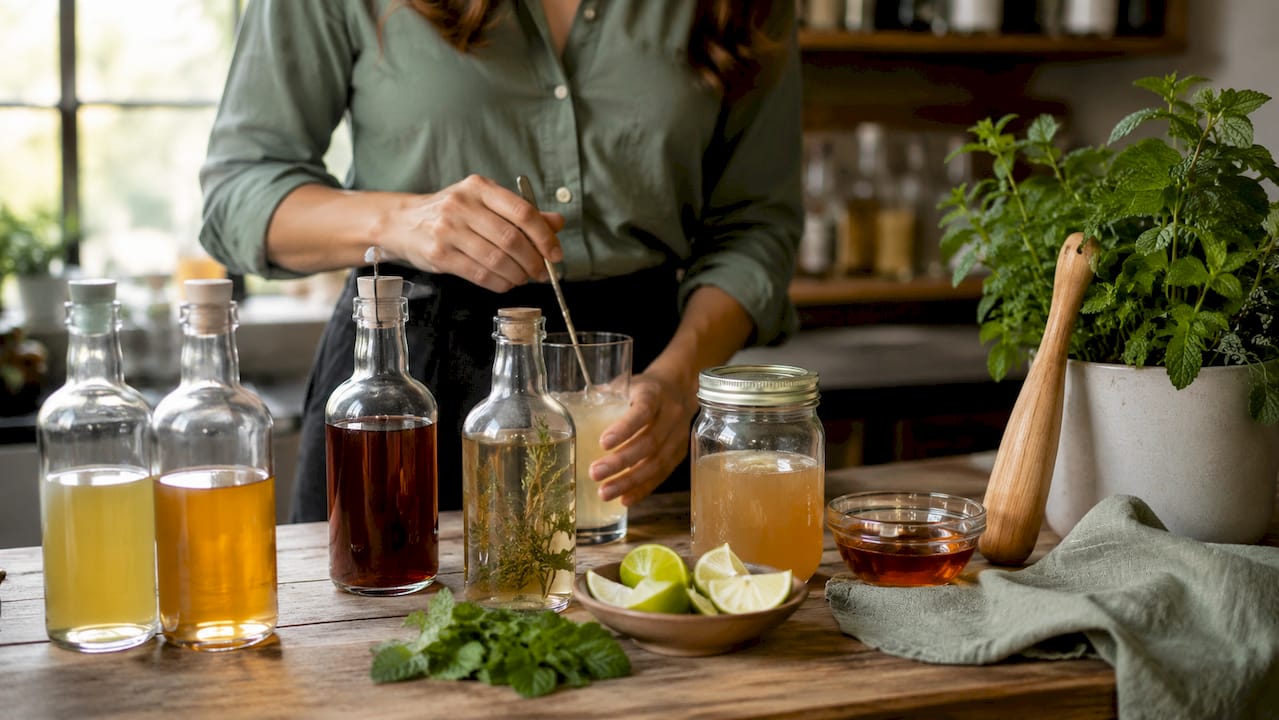
The category breaks into three main types. Traditional mocktails are non-alcoholic versions of classics like the Mojito or Paloma. Non-alcoholic spirits, such as Seedlip, replicate the flavor profiles of gin, rum, or tequila without any fermentation. Functional beverages go further by adding adaptogens, nootropics, or cannabinoids to deliver a physiological effect alongside the taste. Each type serves a different need, and knowing the difference helps you choose the right drink for any occasion.
What ingredients and techniques create authentic mocktail alternatives?
The biggest mistake people make with mocktail recipes is removing alcohol and replacing it with nothing. Removing alcohol without substitution results in a flat drink with no depth or mouthfeel. Alcohol carries bitterness, warmth, and texture. You have to replace all three deliberately.
The core structural components
A well-built zero-proof drink uses these building blocks:
- Base: A botanical distillate, cold-brew tea, or non-alcoholic spirit that anchors the flavor
- Modifier: Citrus juice, shrubs (drinking vinegars), or non-alcoholic bitters that add acidity and complexity
- Lengthener: Sparkling water, tonic water, or botanical soda that adds volume and carbonation
- Garnish: Fresh herbs, citrus wheels, or edible flowers that signal craft and elevate presentation
Techniques that make the difference
Shaking a mocktail with ice chills and dilutes it the same way it does a cocktail. Muddling fresh mint or basil releases essential oils that you cannot get from a syrup. Layering creates visual contrast and controls how flavors hit your palate. Non-alcoholic bitters, such as those from Angostura’s alcohol-free line or brands like Lyre’s, add the bitter backbone that most zero-proof drinks lack.
Mocktail construction requires creative compensation for the loss of ethanol’s mouthfeel. Vinegar-based shrubs, cold-brew teas, and botanical sodas each restore a different dimension of that lost texture. A shrub adds tartness and body. Cold-brew tea adds tannins that mimic the drying sensation of a spirit. Botanical soda adds effervescence and aroma.
Pro Tip: Make your syrups and infused teas 24 hours before your event. Flavors meld overnight, and you will spend your party assembling drinks rather than cooking components from scratch.
How do different categories of mocktail alternatives compare?
Not every alcohol-free alternative serves the same purpose. The right choice depends on your flavor preferences, your budget, and what kind of social experience you want to create.
| Category | Flavor complexity | Prep style | Best occasion | Cost range |
|---|---|---|---|---|
| Traditional mocktail | High (when crafted well) | Bartender-style mixing | Dinner parties, bars | Low to moderate |
| Non-alcoholic spirits | High, spirit-forward | Simple mixing or sipping | Cocktail hours, tastings | Moderate to high |
| Functional beverages | Moderate to high | Ready-to-drink or light mix | Casual gatherings, wellness events | Moderate to high |
| Botanical sodas | Moderate | Pour and serve | Everyday drinking, quick hosting | Low |
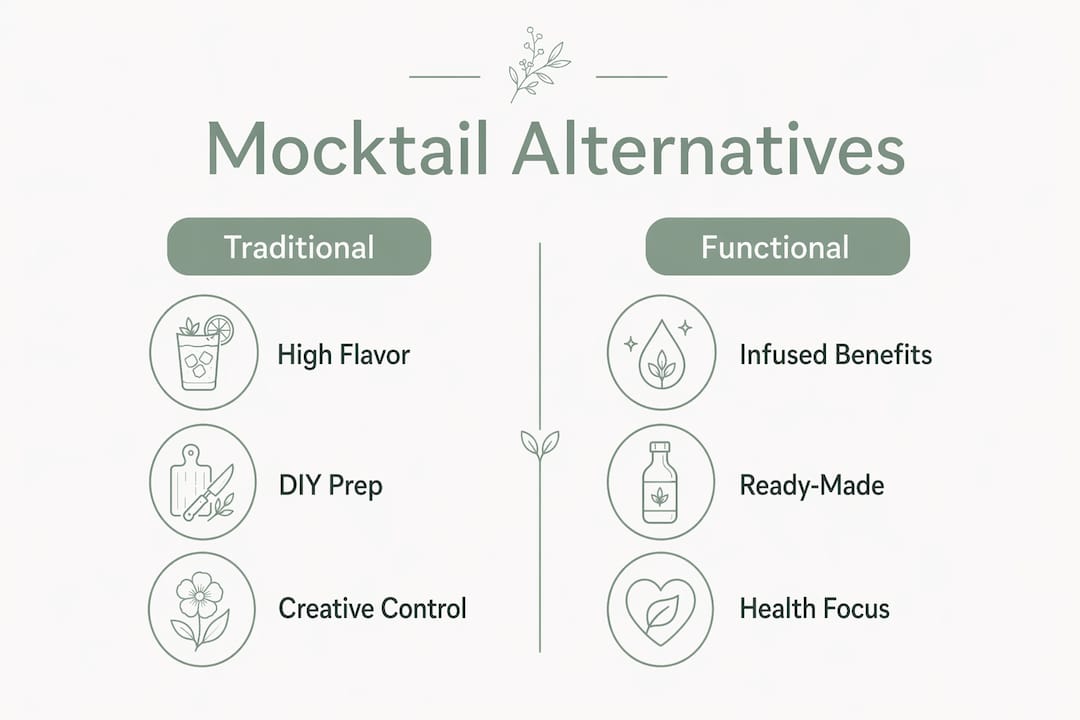
Traditional mocktails give you the most creative control. You build every layer yourself, which means you can tailor the drink to any guest’s preference. Non-alcoholic spirits like Seedlip offer sugar-free and calorie-free profiles with distinct flavor notes that stand on their own rather than imitating a specific spirit. Seedlip’s Notas de Agave, for example, carries notes of prickly pear, damiana, and peppercorn.
Functional beverages are a major growth driver in the social drinks market. Consumers are choosing drinks infused with adaptogens and botanicals not just for taste but for mood and focus benefits. THC-infused seltzers fall into this category and represent the newest frontier in zero-proof social drinking.
What are popular non-alcoholic ingredients used as mocktail substitutes?
The best mocktail substitutes work because they address specific sensory gaps left by removing alcohol. Each ingredient below solves a different problem.
Botanical distillates and non-alcoholic spirits
Seedlip is the most recognized name in this space. Its distillates are made from botanicals and contain no sugar, calories, or alcohol. They do not try to taste like gin or vodka. They taste like themselves, which is a more honest and often more interesting approach to non-alcoholic drink options.
Shrubs and bitters
A shrub is a drinking vinegar made from fruit, sugar, and apple cider vinegar. It adds acidity, sweetness, and a slight fermented depth that mimics the complexity of a spirit. Non-alcoholic bitters from brands like Angostura’s alcohol-free line add the aromatic backbone that most zero-proof drinks miss entirely. Orange blossom water is another overlooked ingredient that adds floral aroma and a slight bitter edge.
Savory and unexpected additions
Pickle juice is one of the most underused ingredients in mocktail recipes. A small amount adds brine, salt, and umami that replicate the savory warmth of a spirit. Cold-brew tea adds tannins and a dry finish. Fresh herbs like rosemary and thyme, when muddled or used as a garnish, add aromatic complexity that no syrup can fully replicate.
Calorie-free and low-sugar options
For health-conscious adults, calorie-free mocktails are a real priority. Sparkling water, tonic water, and botanical sodas add volume without sugar. Seedlip and similar distillates add flavor without calories. Combining these with fresh citrus and herbs gives you a drink that is genuinely satisfying and light. You do not have to choose between flavor and health when you build your drink with the right ingredients.
Pro Tip: Use a kitchen scale to measure shrubs and bitters. A few extra milliliters of a strong bitter can overpower an entire drink. Precision here matters more than it does with juice.
How to best prepare and serve mocktail alternatives for social occasions?
Serving zero-proof drinks at a party is as much about presentation as it is about taste. Guests who see a beautifully garnished drink in a proper coupe glass are far more likely to enjoy the experience than those handed a plastic cup of juice.
- Prep components 24 hours ahead. Infused syrups and teas prepared in advance allow flavors to develop fully. Batch your shrubs, simple syrups, and cold-brew teas the night before. Store them in labeled mason jars in the fridge.
- Use the same glassware as alcoholic cocktails. A Negroni-style zero-proof drink served in a rocks glass with a large ice cube and an orange peel reads as sophisticated. The same drink in a plastic cup reads as an afterthought.
- Offer a mocktail menu. Write out two or three options on a small card or chalkboard. Named drinks with interesting descriptions get ordered more than a vague “non-alcoholic option.”
- Normalize the choice. Place zero-proof drinks at the same station as alcoholic ones. Separating them signals that they are a lesser option. They are not.
- Garnish with intention. Fresh herbs, citrus twists, edible flowers, and flavored salts on the rim all communicate that the drink was made with care. Guests notice.
Preparation efficiency is key for social occasions. When your components are ready, you spend your event hosting rather than bartending. That shift in focus makes the whole experience better for everyone.
Key takeaways
A mocktail alternative is a crafted zero-proof drink built with the same structural discipline as a cocktail, using botanical distillates, shrubs, bitters, and functional ingredients to replace alcohol’s flavor, mouthfeel, and complexity.
| Point | Details |
|---|---|
| Structure matters | Build every mocktail with a base, modifier, lengthener, and garnish for real flavor depth. |
| Replace what alcohol does | Use shrubs, bitters, and cold-brew teas to restore mouthfeel and bitterness lost without ethanol. |
| Know your categories | Traditional mocktails, non-alcoholic spirits, and functional beverages each serve different occasions. |
| Prep in advance | Make syrups and infusions 24 hours ahead so flavors develop and serving stays easy. |
| Presentation is half the drink | Use proper glassware, garnishes, and a named menu to make zero-proof drinks feel intentional. |
Why the mocktail alternative conversation has finally grown up
The sober-curious movement did not create demand for better zero-proof drinks. It revealed demand that was always there. For years, adults who did not drink alcohol at social events were handed a Shirley Temple or a glass of sparkling water and told to be grateful. That era is over.
What changed is not just consumer preference. The ingredients got better. Brands like Seedlip proved that a non-alcoholic drink could be genuinely complex and worth savoring. The rise of sober-curious culture pushed bartenders and brands to treat zero-proof drinks with the same craft they apply to cocktails. Nitro dosing, real fruit, and botanical distillation changed what was possible.
What I find most interesting is the functional beverage category. Functional mocktail alternatives infused with adaptogens and cannabinoids are shifting the conversation from taste to effect. Adults are not just asking “does this taste good?” They are asking “how will this make me feel?” That is a fundamentally different relationship with a drink, and it opens up a category that alcohol simply cannot compete in. You can explore functional beverage options to understand how that category is developing.
The best mocktail alternatives I have encountered do not try to be alcohol. They try to be themselves. That confidence in their own identity is exactly what makes them worth drinking.
— Adam
Tryfloral’s THC seltzers: a premium mocktail alternative
Tryfloral makes farm-to-fridge THC seltzers that fit naturally into the functional beverage category. Each can is zero calories, made with real ingredients, and designed for adults who want a social drink that does something beyond quench thirst.
Tryfloral’s THC seltzer lineup includes flavors like Harvest Apple, Tropical, and Strawberry Mango. Every option is built for sharing at parties, keeping in your fridge for casual nights, or bringing to events where you want something more interesting than sparkling water. Tryfloral is transparent about ingredients, dosing, and sourcing. You know exactly what you are drinking and why. For adults looking for a zero-proof drink with real flavor and a mild, functional effect, Tryfloral is worth trying. Please enjoy responsibly. You must be of legal age to purchase.
FAQ
What is the difference between a mocktail and a mocktail alternative?
A mocktail is a non-alcoholic version of a specific cocktail recipe. A mocktail alternative is a broader term covering any crafted zero-proof drink, including non-alcoholic spirits, functional beverages, and botanical sodas, not just cocktail replicas.
Are mocktail alternatives calorie-free?
Not always. Traditional mocktails made with syrups and juice contain calories. Calorie-free mocktails use botanical distillates like Seedlip, sparkling water, and fresh citrus to keep the calorie count at zero or near zero.
What can I use instead of alcohol in a mocktail recipe?
The best mocktail substitutes are non-alcoholic spirits for flavor, shrubs or bitters for complexity, and cold-brew tea or botanical soda for mouthfeel and depth. Each replaces a different quality that alcohol provides.
Do functional beverages like THC seltzers count as mocktail alternatives?
Yes. Functional beverages infused with cannabinoids or adaptogens are a growing subcategory of mocktail alternatives. They deliver both flavor complexity and a physiological effect, making them a direct alternative to alcoholic drinks at social events.
How do I make mocktail ideas for parties work for all guests?
Prep components in advance, use proper glassware, and offer a named drink menu. Placing zero-proof options at the same station as alcoholic drinks removes any stigma and makes every guest feel equally considered.
Recommended
- What makes a beverage non-alcoholic? A guide for health-conscious sipp – Floral Beverages
- Best Low Calorie Non-Alcoholic Party Drinks in 2026 – Floral Beverages
- Non-Alcoholic Beverage Options Explained for Adults 21+ – Floral Beverages
- Non-Alcoholic Beverage Party Checklist for Hosts – Floral Beverages
