

Non-alcoholic beverages are carefully crafted drinks that deliver complex flavors and social enjoyment without alcohol’s effects, covering everything from zero-proof spirits to functional wellness drinks. The non alcoholic beverage options explained here span six distinct categories, each with its own flavor profile, regulatory status, and social use case. Whether you are sober-curious, designated driving, or simply cutting back, understanding these categories helps you make confident choices at any gathering. Brands like Seedlip, Ritual Zero Proof, and Tryfloral have pushed this market well beyond sparkling water and soda, giving adults over 21 genuinely sophisticated alternatives.
What do “zero-proof” and “non-alcoholic” actually mean?
These two terms are not interchangeable, and the difference matters more than most people realize.
Zero-proof means the drink contains 0.0% alcohol by volume, intentionally formulated from botanicals, natural extracts, or fruit juices with no fermentation step. Think of it as alcohol-free by design, not by removal.
Non-alcoholic is a legal label in the United States that allows up to 0.5% ABV. That threshold exists because trace fermentation occurs naturally in products like kombucha, certain juices, and dealcoholized wines. The European Union uses the same 0.5% ceiling, while the UK applies a stricter 0.05% threshold for “alcohol-free” labeling, which is why some imported products carry different claims depending on the market.
Dealcoholized drinks start as fully alcoholic products, typically wine or beer, and then have alcohol removed through vacuum distillation or reverse osmosis. The result usually sits below 0.5% ABV but retains more of the original flavor compounds than a drink built from scratch without alcohol.
Here is a quick breakdown of the key distinctions:
- Zero-proof: 0.0% ABV, no fermentation, built from botanicals or extracts
- Non-alcoholic: legally up to 0.5% ABV in the US and EU, may include fermented or dealcoholized products
- Alcohol-free (UK standard): 0.05% ABV or below, stricter than US labeling
- Dealcoholized: originally alcoholic, alcohol removed post-production, typically below 0.5% ABV
- Low-alcohol: generally 0.5% to 1.2% ABV, a separate category not covered by “non-alcoholic” claims
If you are avoiding alcohol completely for health, pregnancy, or personal reasons, always check the ABV on the label rather than relying on the product name alone.
Popular types of non-alcoholic beverages and their flavor profiles
The six main categories each deliver a distinct drinking experience. Knowing what sets them apart helps you pick the right drink for the right moment.
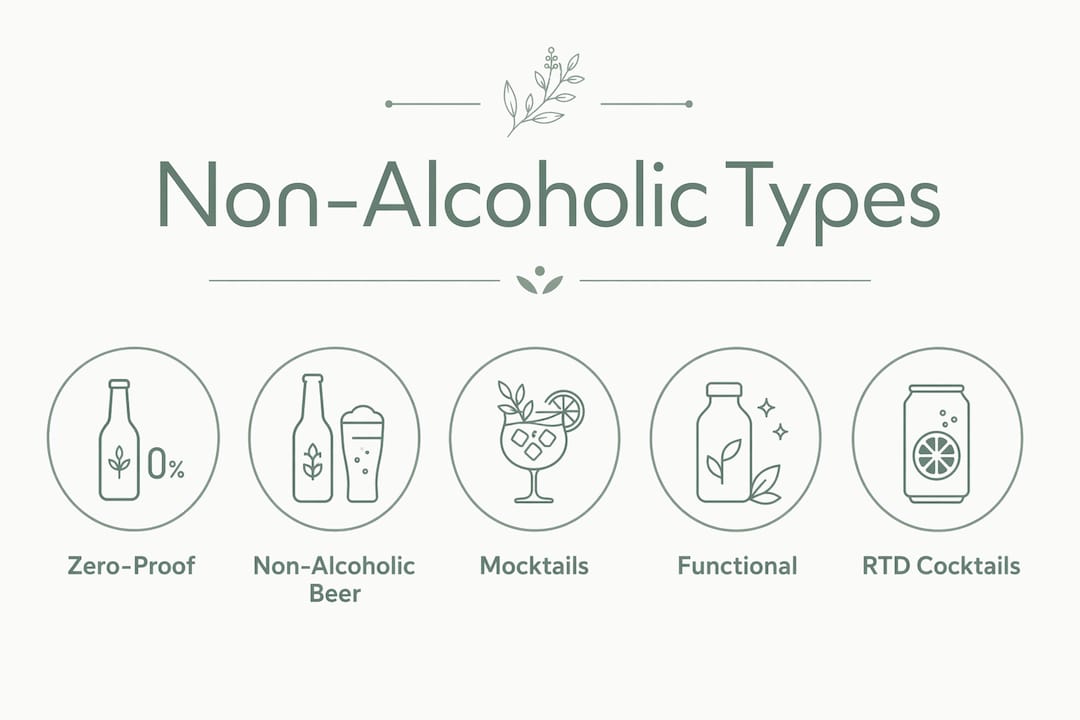
| Category | ABV | Flavor Profile | Best For |
|---|---|---|---|
| Non-alcoholic beer | Up to 0.5% | Malty, hoppy, fermented | Casual settings, sports events |
| Hop water | 0.0% | Bitter, floral, sparkling | Low-calorie refreshment |
| Zero-proof spirits | 0.0–0.5% | Botanical, herbal, complex | Cocktail replication |
| Mocktails / zero-proof cocktails | 0.0% | Varied, layered, fruit-forward | Formal occasions, bars |
| Functional beverages | 0.0% | Earthy, adaptogenic, subtle | Wellness and relaxation |
| Dealcoholized wine | Under 0.5% | Fruity, tannic, wine-like | Dinner pairing |
Non-alcoholic beers like those from Athletic Brewing use standard fermentation, which is why they land at roughly 0.5% ABV and still contain some gluten. Hop water, by contrast, is a non-fermented, 0.0% ABV sparkling water infused with hops. It is zero calories, gluten-free, and gives you the bitter, floral notes of an IPA without any alcohol or carbohydrates. That distinction matters if you are managing calorie intake or celiac disease.
Zero-proof spirits are where the category gets genuinely interesting. Brands like Seedlip and Ritual Zero Proof use botanical distillation and herbal infusions to replicate the complexity of gin, whiskey, or tequila. These are not juice. They are adult drinks designed to be mixed, sipped slowly, and appreciated for their layered flavor.
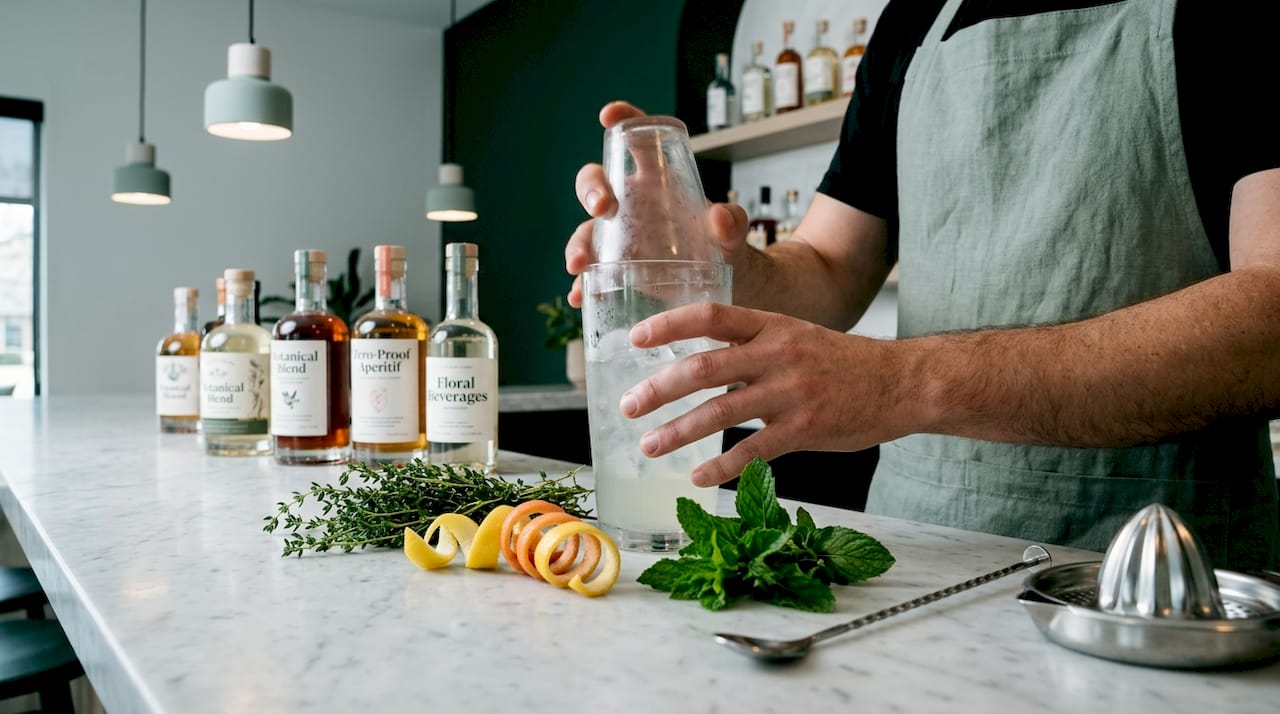
Mocktails take zero-proof spirits or fresh ingredients and build cocktail-level complexity through technique: muddling, shaking, layering, and garnishing. A well-made mocktail at a bar like Getaway in New York or Hana in Los Angeles is indistinguishable in presentation from its alcoholic counterpart.
Functional beverages add a wellness dimension. Drinks containing ashwagandha, lion’s mane, or L-theanine promise relaxation or focus without alcohol. The effects are real but subtle, and the formulation is technically demanding.
Pro Tip: If you want the full cocktail ritual without alcohol, start with a zero-proof spirit that mirrors your favorite base liquor. A non-alcoholic tequila alternative works directly in a margarita recipe with lime and agave, giving you the same sipping experience.
How do regulatory and labeling rules affect your choice?
Federal regulation in the US splits non-alcoholic beverages into two oversight lanes based on that 0.5% ABV threshold, and knowing which lane a product sits in tells you a lot about what is on the label.
The FDA treats beverages below 0.5% ABV as food products, which means brands must follow standard food labeling rules: a Nutrition Facts panel, a full ingredient list, and allergen disclosures. This is actually good news for consumers because it means the same transparency standards that apply to your cereal box apply to your non-alcoholic beer.
The Alcohol and Tobacco Tax and Trade Bureau (TTB) takes over for products at or above 0.5% ABV, including malt beverages even when they are marketed as low-alcohol. TTB-regulated products display different label formats and are subject to excise taxes. Non-alcoholic beers regulated as food must include ingredient disclosure, Nutrition Facts, and allergen information, which gives you more data per label than a standard alcoholic beer ever would.
Key regulatory points to keep in mind when shopping:
- Products labeled “non-alcoholic” can legally contain up to 0.5% ABV under US federal law
- Dealcoholized wines and beers may still be TTB-regulated depending on their production method
- State laws vary significantly. Some states restrict where you can purchase non-alcoholic beers, treating them similarly to alcoholic products
- FDA requires brands to avoid making alcohol-specific claims (like “pairs well with spirits”) on food-regulated products
- Allergen labeling is mandatory, which matters for gluten-sensitive consumers choosing between hop water and non-alcoholic beer
The practical takeaway: read the ABV and the regulatory panel. A product with a Nutrition Facts label is FDA-regulated food. A product with a “Serving Facts” or TTB-style label is in a different regulatory category entirely.
How to choose non-alcoholic drinks for any occasion
Selecting the right drink comes down to three variables: the occasion, your flavor preferences, and your wellness goals. Here is a practical framework you can apply immediately.
-
Identify the occasion type. A backyard cookout calls for something cold, carbonated, and easy to drink. A dinner party deserves a dealcoholized wine or a crafted mocktail. A networking event benefits from something that looks like a cocktail so you can hold it naturally without fielding questions.
-
Build variety into group settings. Offering one drink from each category, such as a sparkling option, a beer-style option, a spirit-style mocktail, a ready-to-drink option, and a functional beverage, covers the full range of taste preferences and reduces waste. Not everyone wants carbonation, and not everyone wants something sweet.
-
Match the drink to the time of day. Adults often match beverage type to occasion and desired wellness benefit, balancing hydration, relaxation, and social ritual. Hydration-forward drinks like iced tea or non-carbonated options work well in the afternoon. Botanical or adaptogenic drinks suit evenings when you want to wind down.
-
Replicate your favorite cocktail. Selecting a non-alcoholic spirit that mirrors your preferred base liquor, such as a non-alcoholic gin for a G&T or a non-alcoholic rum for a mojito, gives you the most satisfying substitution. The ritual stays intact even when the alcohol does not.
-
Check calories, sugar, and allergens. Non-alcoholic does not automatically mean low-calorie. Some mocktail mixes and dealcoholized wines carry significant sugar loads. If you are calorie-conscious, hop water and zero-proof seltzers are your best options.
Pro Tip: For alcohol-free social gatherings, prepare at least one drink that looks visually impressive in a glass. Presentation removes the social awkwardness of holding a plain water bottle at a party.
What’s new in the non-alcoholic beverage market?
The non-alcoholic category is moving fast, and the most interesting developments are happening at the intersection of flavor science and wellness.
Functional beverages are the fastest-growing subcategory. Drinks containing adaptogens like ashwagandha, reishi mushroom, or rhodiola promise stress reduction or cognitive support. Formulating these drinks is technically difficult because bitter botanicals require taste masking and precise dosage to be both effective and palatable. The brands getting it right are charging premium prices and earning loyal followings.
Zero-proof spirits as standalone drinks represent a genuine shift in consumer expectations. The growth of zero-proof spirits reflects a consumer desire for genuinely complex, adult-targeted options that stand apart from sugary soft drinks. People are sipping Seedlip Spice 94 neat over ice, not just using it as a mixer.
Ready-to-drink (RTD) zero-proof cocktails have made the category accessible. Canned mocktails from brands like Curious Elixirs and Ghia remove the need for any bartending skill. You crack the can and get a layered, sophisticated drink instantly.
The sober-curious movement, popularized through Dry January and the broader wellness culture, has pulled millions of adults into this category who previously had no interest in non-alcoholic drinks. That audience shift is what is funding the innovation.
Pro Tip: If you are new to functional beverages, start with a product that has a single active ingredient like L-theanine rather than a blend of five adaptogens. Single-ingredient products make it easier to understand what you are actually responding to.
Key takeaways
The most effective approach to choosing non-alcoholic beverages is to match category, ABV transparency, and occasion type rather than defaulting to a single product.
| Point | Details |
|---|---|
| Know the ABV threshold | “Non-alcoholic” legally allows up to 0.5% ABV in the US; always read the label if you need 0.0%. |
| Match category to occasion | Use sparkling, beer-style, spirit-style, RTD, and functional options together to cover all preferences at group events. |
| Zero-proof spirits offer real complexity | Brands like Seedlip and Ritual Zero Proof deliver botanical depth suitable for sipping neat or mixing. |
| FDA labeling gives you more data | FDA-regulated non-alcoholic drinks (below 0.5% ABV) carry Nutrition Facts and allergen info that alcoholic drinks do not. |
| Functional drinks require patience | Adaptogen and nootropic beverages offer real but subtle effects; start with single-ingredient products to gauge your response. |
Why I think the non-alcoholic category deserves more credit than it gets
I have spent a lot of time in bars and at social events where the non-alcoholic options were an afterthought: a Coke, a sparkling water, maybe a lemonade. The assumption was that people choosing not to drink were making a sacrifice. That framing is outdated and, frankly, wrong.
What I have noticed over the past few years is that the best non-alcoholic drinks do not ask you to give anything up. A well-made zero-proof gin with tonic and a slice of cucumber delivers the same sensory ritual as its alcoholic counterpart. The glass feels right. The flavor is there. The social signal is identical. The only thing missing is the next-day headache.
The label literacy piece is where most people still fall short. Plenty of adults assume “non-alcoholic” means zero alcohol, then wonder why a dealcoholized wine tastes so close to the real thing. Reading the ABV takes three seconds and removes all the guesswork. It also helps you make smarter choices if you are managing health conditions, taking medications, or simply want to know exactly what you are putting in your body.
My honest recommendation: do not limit yourself to one category. Try a hop water one evening, a zero-proof spirit the next, and a functional adaptogen drink the weekend after. The market has matured enough that you will find something genuinely enjoyable in each lane. The alcohol-free social life is not a lesser version of the social life. It is just a different one, and in many ways a more intentional one.
— Adam
Explore what Tryfloral has to offer
Tryfloral is a farm-to-fridge THC beverage brand built for adults who want something more interesting than a soda at their next gathering. Every product goes from source to your fridge with quality and freshness as the priority, not shelf life.
If you are curious about what that approach actually looks like in practice, the farm-to-fridge difference page walks through exactly how Tryfloral sources and produces its drinks. For something ready to crack open at your next event, the THC seltzer range covers zero-calorie options in flavors like Harvest Apple, Tropical, and Strawberry Mango. These are adult drinks designed for social occasions, low in calories, and built to be shared responsibly with friends who are 21 and older.
FAQ
What is the difference between zero-proof and non-alcoholic?
Zero-proof means 0.0% alcohol by volume, with no fermentation involved. Non-alcoholic is a legal label in the US that permits up to 0.5% ABV, so the two terms are not identical.
Can non-alcoholic beer still contain gluten?
Yes. Most non-alcoholic beers are fermented from barley and contain gluten unless specifically labeled gluten-free. Hop water is a gluten-free alternative at 0.0% ABV.
How do I know which regulatory body oversees my non-alcoholic drink?
If the label shows a Nutrition Facts panel, the FDA regulates it as a food product, meaning it contains less than 0.5% ABV. A TTB-style label indicates the product falls under alcohol beverage regulation.
Are functional beverages with adaptogens safe to drink daily?
Most adaptogen beverages are safe for healthy adults, but effects are subtle and formulations vary widely. Consult a doctor before using them regularly, especially if you take medications or have underlying health conditions.
What is the easiest way to replicate a cocktail without alcohol?
Choose a zero-proof spirit that mirrors your preferred base liquor, such as a non-alcoholic gin or tequila alternative, then follow the same recipe you would use for the alcoholic version.
Recommended
- What makes a beverage non-alcoholic? A guide for health-conscious sipp – Floral Beverages
- Non-Alcoholic Networking Drinks Explained for Modern Events – Floral Beverages
- Low Calorie Cannabis Drink Explained for Adults 21+ – Floral Beverages
- Top benefits of alcohol-free social drinks for gatherings – Floral Beverages
