

You deserve to know what’s in your drink.
From our farm to your fridge.
Farm
A new, viable crop for the Midwest.
 Soil
Soil
Pre-Planting Soil Testing
Every field is regularly tested for harmful chemicals and heavy metals before the crop is planted.
Dig Deeper
Fun fact: hemp is commonly planted in brownfields to purify the soil. Those toxins are accumulated in the plant. Thus, the importance of clean soil when growing for human consumption.

Greenhouse to Field
Our hemp seeds begin in a greenhouse where they grow for five weeks before being hand planted in our fields.

Vegetative Growth
As days get longer, hemp plants are in a vegetative growth cycle where the plant uses its energy to get as big as possible.
Dig Deeper
Fun fact: About one in every 5,500 of our plants is a male.

Inspected, Then Harvested
State regulators inspect and test our crop for THC content before harvest. Once approved, we cut and remove each plant by hand.

Slowly Cured
We hang dry our harvested plants, apply gentle heat and remove humidity to naturally cure the hemp.

Hemp Flower Milling
Hemp flowers are removed from the plant and milled to a smaller size. The milled flower is called ‘hemp biomass’.

Purify
We purify the natural extracts in the plant.
Extract
Extraction
We load the hemp biomass from our farms into our extraction booths to separate the naturally occurring hemp oils from the plant material. The result is an approximately 60% pure ‘crude hemp extract’.
Dig Deeper

Filtration & Decarboxylation
The crude hemp oil is filtered to remove naturally occurring fats, lipids, and plant waxes from the oil. Then, the filtered crude is ‘decarboxylated’ — the process of heating the filtered hemp extract to remove an ‘-OH’ molecule.
Dig Deeper

Distillation
The filtered, decarbed crude is run through distillation equipment that (similar to bourbon) removes the ‘head’ and ‘tail’ fractions to create a product called ‘full spectrum distillate’. This product is between 90-95% pure cannabinoids and looks like honey.

Chromatography
We run our purified hemp extracts through a process called chromatography. This machine acts as a sorting machine, separating each cannabinoid (e.g., CBD and THC) by their molecular weight. We prefer chromatography because it separates natural hemp extracts, rather than converting them from a different molecule.
Dig Deeper
Sold already? The case builder is waiting.
Build My Case
Manufacture
We turn our purified extracts into finished drinks.
 Sonicate
Sonication
Cannabinoid oil doesn’t naturally mix with water. Ultrasonic processing reduces particle size and pairs the hemp particles with proprietary, beverage-grade emulsifier to stabilize the oil in water.
Dig Deeper

Recipe Development
All of our recipes were developed in-house.
Nationally Awarded
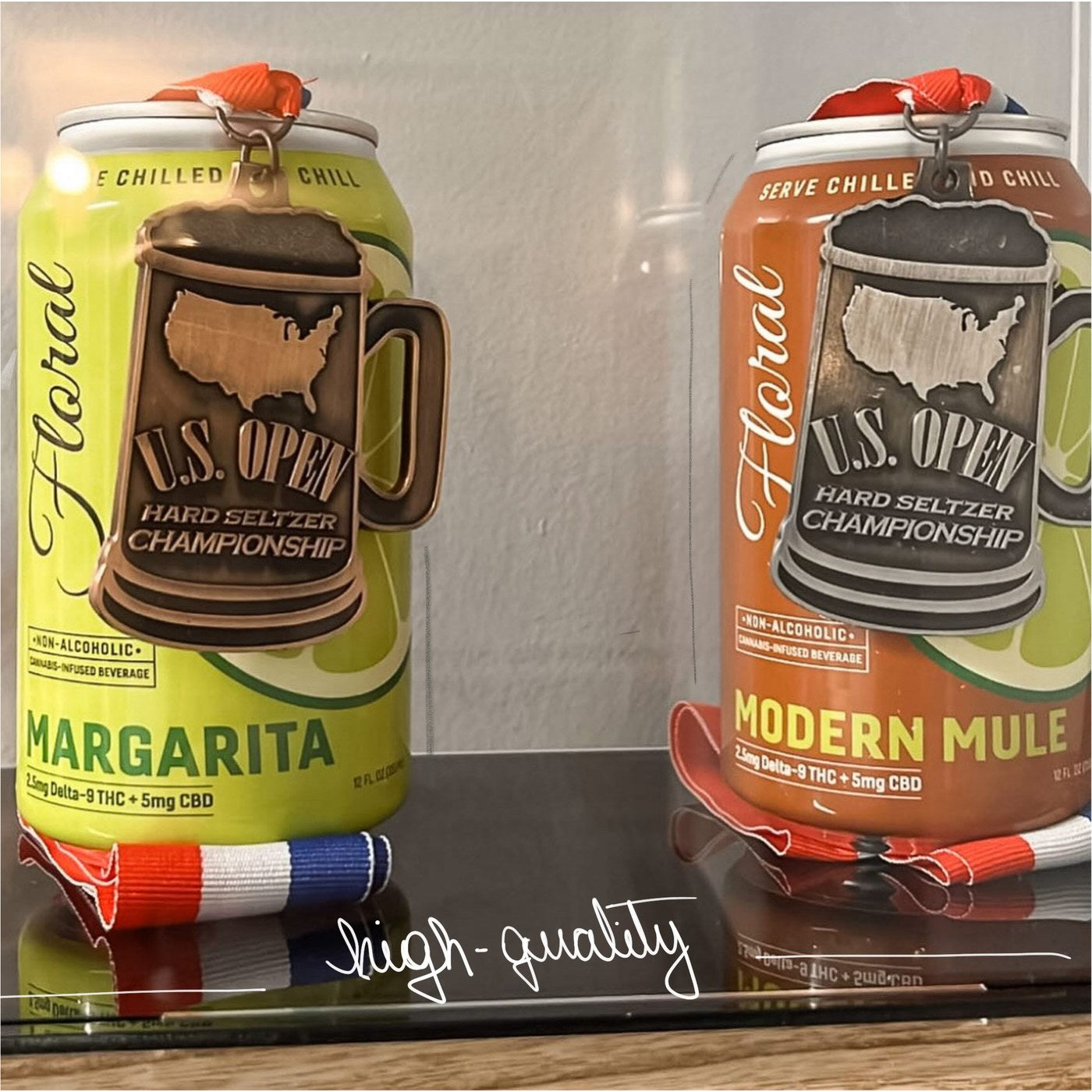
Canning
Carbonated, canned, and sealed on our own line — steps from where it grew.

Third-Party Validation
Internal QA plus independent third-party lab reports are conducted on our extracts and consumer products.

Fulfill
We store, pack, and ship every order ourselves.
 Warehouse
Warehousing
Finished goods are stored in our warehouse to await fulfillment. By avoiding external logistics and 3PL costs, we are able to deliver cans to our customers at the highest value.

Fulfillment
Each order gets filled by one of our teammates. We ship out every weekday for quick delivery to your door.

The family staking their name on it
Four generations of family farming in every can. If you want to see it for yourself, watch how we work — or come find us at the farm.
