

A functional beverage is any non-alcoholic drink formulated to deliver specific health, cognitive, or performance benefits beyond basic hydration or nutrition through bioactive ingredients. Think Red Bull for energy, Kevita kombucha for gut health, or Vitamin Water for micronutrient support. These drinks sit in a fast-growing category that now spans everything from probiotic sodas to nootropic teas to THC seltzers. The functional beverage category covers energy, focus, calm, gut health, mood, and recovery. Understanding what separates a genuinely functional drink from a cleverly marketed sugar water is the most useful thing you can learn before buying one.
What is a functional beverage, really?
A functional beverage is defined by its intent and its ingredients, not just its label. According to research on commercial plant-based drinks, functional beverages provide additional health benefits through bioactive ingredients sourced from plants, animals, or microorganisms as part of a normal diet. That definition matters because it draws a clear line between a drink that happens to contain vitamin C and one specifically formulated to support immune function at a clinically relevant dose.
There is also an important industry distinction worth knowing. A functional brand promises a specific health outcome. An enhanced brand simply adds nutrients without making any promise. Vitamin Water adds vitamins. A probiotic soda like Olipop promises gut support. Functional brands promise outcomes; enhanced brands just add ingredients. Knowing which category you are buying from changes how you should evaluate the product.

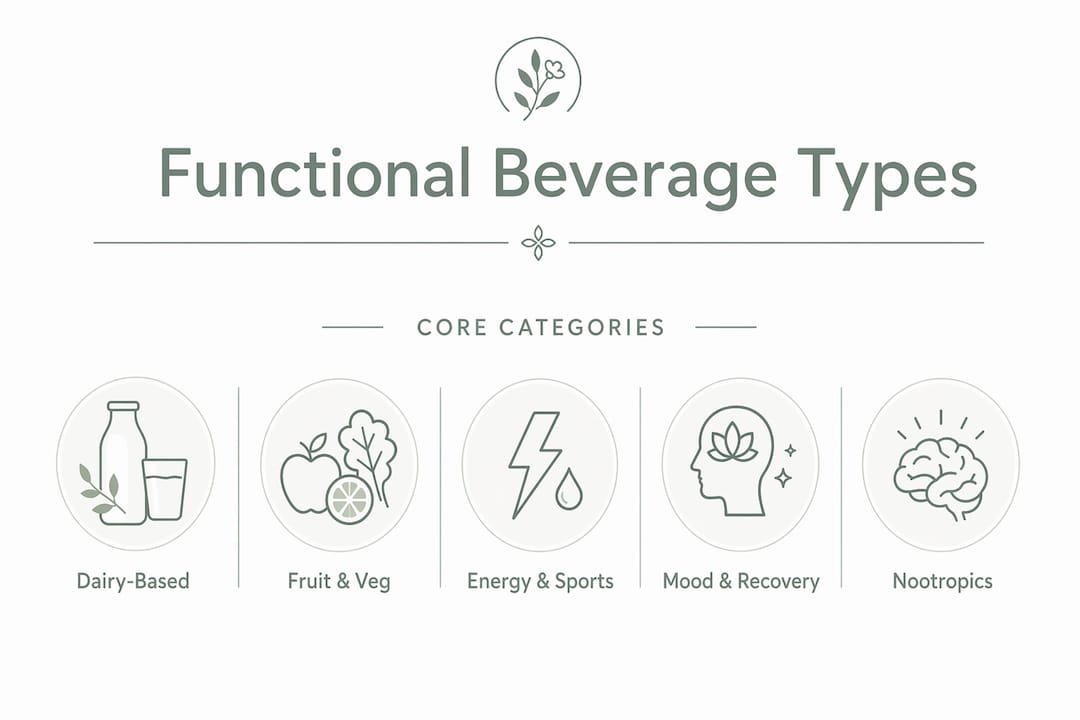
The three main structural categories are dairy-based drinks, vegetable and fruit drinks, and sports or energy drinks. Each uses a different delivery matrix, which affects how well your body absorbs the active ingredients inside.
What ingredients actually make a drink functional?
Bioactive compounds are the core of any functional beverage. These are ingredients that produce a measurable effect in the body at the right dose. Common examples include vitamins and minerals, probiotics, antioxidants, caffeine, adaptogens like ashwagandha, and electrolytes like sodium and potassium.
The key word is dose. Bioactive ingredient effectiveness depends on dose, bioavailability, and how well the ingredient interacts with other compounds in the drink. A beverage listing “ashwagandha extract” on the label means nothing if the dose is too low to produce any effect. Formulation details like stability and solubility determine whether the ingredient actually reaches your bloodstream.
Here is a quick breakdown of the most common functional ingredients and what they target:
- Caffeine: Supports focus and alertness. Low-to-moderate doses of 40–300 mg per day may boost concentration without overstimulation.
- Probiotics: Live bacteria strains like Lactobacillus that support gut microbiome balance.
- Electrolytes: Sodium, potassium, and magnesium that support hydration and muscle function.
- Adaptogens: Plant compounds like ashwagandha or reishi that may help the body manage stress responses.
- Antioxidants: Compounds like polyphenols from green tea or berries that reduce oxidative stress.
- Vitamins and minerals: Added nutrients like B vitamins for energy metabolism or vitamin D for immune support.
Pro Tip: Check the serving size before evaluating any ingredient claim. A drink may list a beneficial compound but deliver it across two or three servings, which most people consume as one.
The distinction between fortified nutrients and true bioactives also matters. Fortified drinks add nutrients to replace what processing removes. Functional drinks add bioactives specifically to produce a targeted effect. Both can appear on the same shelf, but they are not the same product.
What types of functional beverages are available?
The functional beverage category now includes energy drinks, prebiotic sodas, nootropics, mood and recovery drinks, and fortified waters. Each type targets a different outcome, and choosing the right one starts with knowing what you actually want from the drink.
| Category | Primary Purpose | Common Examples |
|---|---|---|
| Energy drinks | Alertness, physical energy | Red Bull, Monster, Celsius |
| Sports drinks | Hydration, electrolyte replacement | Gatorade, Liquid I.V. |
| Probiotic and prebiotic drinks | Gut health, digestion | Olipop, Poppi, Kevita |
| Nootropic drinks | Focus, cognitive performance | Kin Euphorics, Recess |
| Mood and recovery drinks | Calm, stress relief, sleep | Recess Mood, THC seltzers |
| Fortified waters | General nutrient support | Vitamin Water, Propel |
Energy drinks are a subset of functional beverages, not the whole category. That distinction is easy to miss because energy drinks dominate shelf space and marketing budgets. Not every functional drink promises energy. Some promise the opposite: calm, relaxation, or better sleep.
The mood and recovery segment is growing fastest in 2026. THC-infused seltzers, adaptogen drinks, and magnesium-based relaxation beverages are all competing in this space. If you are looking for a social drink that does not involve alcohol, non-alcoholic functional options now cover nearly every occasion and benefit territory.
Pro Tip: Match the drink to the time of day and your goal. A nootropic with caffeine makes sense at 9 a.m. A magnesium or THC-based recovery drink makes more sense at 9 p.m.
What are the real benefits and risks?
Functional beverages offer a real but limited range of benefits. Research confirms that these drinks can support rehydration, energy recovery, improved performance, immunity, digestion, and mood enhancement. The strength of evidence varies significantly by ingredient and claim.
The most evidence-backed benefits are straightforward:
- Hydration and electrolyte replacement. Sports drinks with sodium and potassium genuinely support rehydration after exercise or heat exposure.
- Energy and focus. Caffeine at the right dose reliably improves alertness. The effect is well-documented and dose-dependent.
- Gut health support. Probiotic drinks with live cultures at sufficient colony counts can support microbiome diversity.
- Mood and stress management. Adaptogens and compounds like THC show consumer-reported benefits for calm and relaxation, though individual responses vary.
- Immune support. Drinks with zinc, vitamin C, or elderberry extract may support immune function, particularly during periods of stress or illness.
The risks are just as real. Some consumers misunderstand “functional” to mean wholly healthy. Many functional drinks contain high sugar, significant caffeine, or both. A drink marketed for energy recovery might carry 30 grams of sugar per can. That sugar load can undermine the very health goal the drink claims to support.
Marketing often overpromises. The most trustworthy claims are those backed by established science: electrolytes for hydration, caffeine for focus. Everything else deserves a closer look at the evidence behind the specific ingredient and dose.
To evaluate any functional beverage honestly, check the total sugar content, the caffeine amount, and whether the active ingredient appears at a dose that research supports. If the label lists an adaptogen at 50 mg and studies use 300 mg, the drink is not delivering a functional dose. It is delivering a marketing claim.
How do FDA rules shape functional beverage labels?
The FDA classifies beverages as either conventional foods or dietary supplements based on their labeling and the claims they make. This classification determines which label panel appears on the bottle and what the brand is legally allowed to say. FDA rules distinguish beverages based on labeling and claims, and that distinction has major consequences for both brands and buyers.
Here is what the two label types mean for you as a consumer:
- Nutrition Facts panel: The drink is classified as a conventional food. The brand cannot make specific health claims about treating or preventing disease. Most mainstream functional beverages use this panel.
- Supplement Facts panel: The drink is classified as a dietary supplement. The brand can make structure/function claims like “supports immune health” but faces stricter ingredient and dosage rules.
The challenge is that structure/function claims in beverages risk changing the product’s regulatory category from food to supplement. Brands walk a careful line. A drink that says “boosts immunity” may be making a claim that requires supplement classification, which triggers a different set of FDA requirements.
What this means for you: a Supplement Facts panel signals that the brand is making a more specific health claim and has accepted the regulatory responsibility that comes with it. A Nutrition Facts panel on a drink marketed for “wellness” may be using language that implies benefits the label is not actually allowed to promise. Reading both the panel type and the claim language together gives you a clearer picture of what the brand is actually delivering versus what it is suggesting.
To identify clean ingredients in any functional drink, look for transparent dosing, recognizable ingredient names, and claims that match the label panel type.
Key takeaways
Functional beverages deliver real benefits when the right bioactive ingredients appear at the right dose, but label claims and marketing language require critical reading.
| Point | Details |
|---|---|
| Definition matters | A functional beverage targets a specific health outcome through bioactive ingredients, not just added nutrients. |
| Dose determines effect | An ingredient listed on a label only works if it appears at a dose supported by research. |
| Category shapes expectation | Energy, gut health, mood, and recovery drinks each promise different outcomes. Match the type to your goal. |
| Regulatory labels signal intent | A Supplement Facts panel means the brand is making a specific health claim with regulatory accountability. |
| Risks are real | High sugar and caffeine content in some functional drinks can undermine the health goals they claim to support. |
What i’ve learned from years of reading functional beverage labels
The functional beverage space rewards skeptical, curious consumers. After spending years evaluating these products, the single most useful habit I have developed is reading the ingredient list before the front-panel claim. The front panel is marketing. The ingredient list is the product.
Most people buy a drink because the front says “focus” or “calm” or “recovery.” But the ingredient list tells you whether the dose is real, whether the sugar content contradicts the wellness claim, and whether the bioactive compound is actually present in a form your body can use. A drink with 500 mg of a proprietary blend could contain 490 mg of filler and 10 mg of the active ingredient. You would never know from the front panel.
The trend I find most interesting in 2026 is the shift toward low-calorie, mood-oriented functional drinks. THC seltzers and adaptogen beverages are filling the space that alcohol used to occupy for many adults who want a social drink without the hangover. The hangover-free appeal of THC beverages is a real and growing reason adults are switching. That is not marketing. That is a genuine lifestyle shift.
My practical advice: use functional beverages to complement a solid diet, not replace it. No drink replaces sleep, vegetables, or consistent hydration. But the right drink at the right time, with a transparent label and a real dose, can genuinely support your goals. Choose based on what you actually need, not what the front panel tells you to feel.
— Adam
Why Tryfloral stands out in the functional beverage space
If you want a functional beverage that takes clean ingredients seriously, Tryfloral is worth your attention. Tryfloral is a farm-to-fridge THC beverage brand that controls its production from hemp cultivation through bottling, so you know exactly what goes into every can.
Tryfloral’s zero-calorie THC seltzers, including the Harvest Apple and Tropical varieties, are built for adults who want a real social experience without alcohol or empty calories. Every formula reflects Tryfloral’s farm-to-fridge commitment to ingredient transparency and quality. If you are ready to explore the full lineup, browse Tryfloral THC seltzers and find the flavor that fits your moment. Please enjoy responsibly. You must be of legal age in your state to purchase.
FAQ
What is a functional beverage in simple terms?
A functional beverage is a non-alcoholic drink formulated to deliver specific health or performance benefits through bioactive ingredients. Examples include energy drinks, probiotic sodas, and THC seltzers.
How are functional drinks different from regular beverages?
Regular beverages provide hydration or calories. Functional drinks add bioactive compounds like probiotics, adaptogens, or caffeine at doses intended to produce a measurable health or performance effect.
Are functional beverages regulated by the FDA?
Yes. The FDA classifies functional beverages as either conventional foods or dietary supplements based on their labels and claims. This classification determines what health claims the brand is legally allowed to make.
What are the risks of drinking functional beverages regularly?
Frequent consumption of some functional beverages may be unhealthy due to high sugar and stimulant content. Always evaluate the full nutrition profile alongside the intended benefit.
How do i choose the right functional beverage for my goals?
Match the drink category to your specific goal: electrolyte drinks for hydration, probiotic sodas for gut health, and mood or recovery drinks for calm and relaxation. Check the ingredient dose against research-supported amounts before buying.
