

You pick up a can that says “zero alcohol” and assume you’re in the clear. But some products marketed with that label can still contain small amounts of alcohol, and that’s not a technicality you want to discover after the fact. If you’re making mindful choices about what goes into your body, whether for health, personal preference, or lifestyle reasons, understanding what’s actually behind the label is one of the most practical skills you can have. This guide breaks down the real definitions, the legal standards, and how to shop smarter for your next social occasion.
Table of Contents
- What does ‘non-alcoholic’ really mean?
- Labeling laws and why they matter
- Marketing myths: ‘Zero alcohol’ and reality
- How to choose the right non-alcoholic beverage
- Why label literacy matters more than ever for mindful drinking
- Explore delicious non-alcoholic and THC mocktails
- Frequently asked questions
Key Takeaways
| Point | Details |
|---|---|
| Non-alcoholic means under 0.5% ABV | In the U.S., a non-alcoholic beverage contains less than 0.5% alcohol by volume. |
| ‘Alcohol-free’ means zero alcohol | Alcohol-free labels are reserved for drinks with 0.0% ABV, offering extra assurance for health-conscious consumers. |
| Regulations vary by label and location | Understanding local labeling laws prevents confusion and ensures safe choices. |
| ‘Zero alcohol’ may not be zero | Marketing terms like ‘zero alcohol’ can hide small amounts of alcohol, so always check the label for the ABV value. |
| Label literacy drives healthy choices | Reading and understanding beverage labels lets you pick the right non-alcoholic drink for your lifestyle and occasion. |
What does ‘non-alcoholic’ really mean?
Let’s clear up the confusion right away. The words “non-alcoholic” and “alcohol-free” are not interchangeable, even though they’re often treated that way on store shelves and in casual conversation. In the U.S., these terms have specific meanings that are tied to federal regulatory standards, and knowing the difference can genuinely affect your health decisions.
According to the TTB’s Low/No Alcohol Guidance, a beverage is commonly treated as “non-alcoholic” under 0.5% ABV (alcohol by volume) in U.S. federal practice. That means a drink labeled “non-alcoholic” can still legally contain a small but measurable amount of alcohol. It’s not zero. It’s just under a defined threshold.
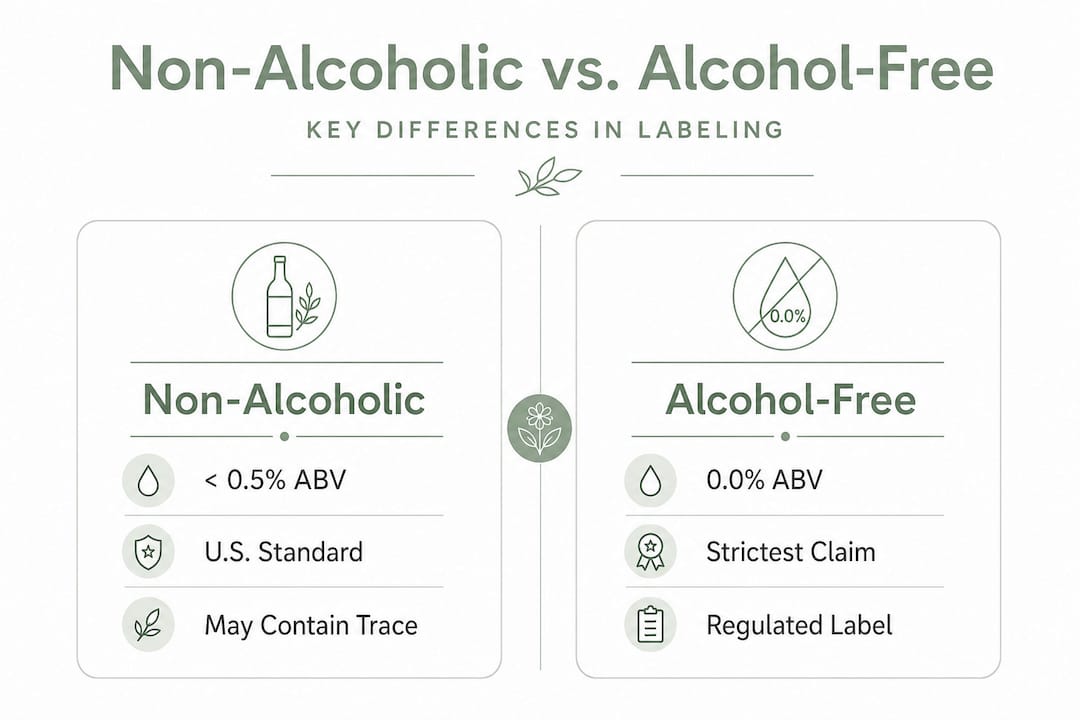
“Alcohol-free,” on the other hand, is a stricter claim. The same federal guidance makes it clear that “alcohol-free” and “non-alcoholic” are not the same threshold. Alcohol-free generally means 0.0% ABV, with no detectable alcohol content at all. That’s a meaningful distinction if you’re avoiding alcohol entirely.
Here’s a quick comparison to make it easy:
| Label term | ABV threshold | What it means in practice |
|---|---|---|
| Alcohol-free | 0.0% ABV | No detectable alcohol |
| Non-alcoholic | Less than 0.5% ABV | Trace alcohol may be present |
| Zero alcohol | Varies by brand | Marketing term, not always regulated |
| Low-alcohol | Varies | Usually 0.5% to 1.2% ABV |
This table matters because the gap between “alcohol-free” and “non-alcoholic” is real, even if it sounds small on paper. For most healthy adults, less than 0.5% ABV is unlikely to cause any noticeable effect. But if you’re pregnant, in recovery, taking certain medications, or simply committed to a fully alcohol-free lifestyle, that distinction is worth understanding before you buy.
“The label on the front of a can is a marketing decision. The ABV printed on the nutrition panel is a regulatory fact. Always read both.”
Pro Tip: When you’re shopping for truly alcohol-free drinks, look for “0.0% ABV” printed explicitly on the label, not just the word “alcohol-free” in the product name. At Floral, we make it easy by publishing our product COAs so you can verify ABV and ingredients with full transparency.
If you’re exploring options that skip alcohol entirely and still deliver a satisfying social experience, our CBD seltzer options are a great place to start.
Labeling laws and why they matter
Now that you know the definitions, it’s worth understanding who actually enforces them and why the regulatory details affect what ends up in your glass.
In the United States, beverage labeling is not governed by a single agency. The TTB’s Low/No Alcohol Guidance explains that label and regulatory boundaries can be jurisdiction and product type dependent. The Alcohol and Tobacco Tax and Trade Bureau (TTB) oversees beverages that contain alcohol or are marketed as alternatives to alcoholic drinks. The Food and Drug Administration (FDA) handles beverages that fall outside TTB’s scope. Which agency applies depends on the product’s alcohol content and how it’s marketed.
This split creates a real-world situation where two drinks sitting side by side on a shelf might be regulated by different federal agencies, with different labeling requirements. That’s not a flaw in the system so much as a reflection of how complex the beverage category has become, especially with the rise of cannabis, CBD, and functional wellness drinks.
Here’s a breakdown of how the regulatory landscape looks in practice:
| Jurisdiction | Regulator | Non-alcoholic threshold | Notes |
|---|---|---|---|
| United States | TTB / FDA | Less than 0.5% ABV | Depends on product type |
| European Union | EFSA / national bodies | 0.5% ABV or 0.0% ABV | Country-specific rules |
| Australia | FSANZ | Less than 0.5% ABV | “Low alcohol” has its own rules |
| United Kingdom | HMRC / FSA | 0.5% ABV | “Alcohol-free” = 0.05% or less |
Key things to watch for when reading beverage labels in the U.S.:
- ABV percentage: This is the most reliable number on the label. Look for it near the nutrition facts.
- Regulatory claim vs. marketing claim: “Non-alcoholic” is a regulated term. “Zero alcohol” often is not.
- Certifying body: Some brands voluntarily submit to third-party testing. That’s a sign of transparency.
- Ingredient list: Fermented ingredients like kombucha bases or dealcoholized wine can introduce trace alcohol even in “non-alcoholic” products.
If you’re traveling internationally or importing beverages, the rules shift significantly. A drink that qualifies as “alcohol-free” in the U.S. might be labeled differently in the UK or Australia, where thresholds are stricter. Understanding zero alcohol beverage risks across different markets helps you make smarter decisions wherever you are.
We take sourcing and compliance seriously at Floral. You can read more about our sourcing standards and why the farm-to-fridge process gives us tighter control over what goes into every can. For more on reading labels and staying informed, check out our blog for practical tips.
Marketing myths: ‘Zero alcohol’ and reality
Once you understand the regulatory framework, the marketing landscape starts to look very different. Brands use terms like “zero alcohol,” “alcohol-free,” and “clean sipping” to appeal to health-conscious consumers. But not all of those terms carry the same legal weight.
The Alcohol and Drug Foundation notes that some “zero alcohol” products can still contain small amounts of alcohol and may be better described as “mimicking alcohol” rather than truly alcohol-free. That’s a significant point. A drink can be designed to look, taste, and feel like a beer or cocktail without actually being alcohol-free in the strictest sense.
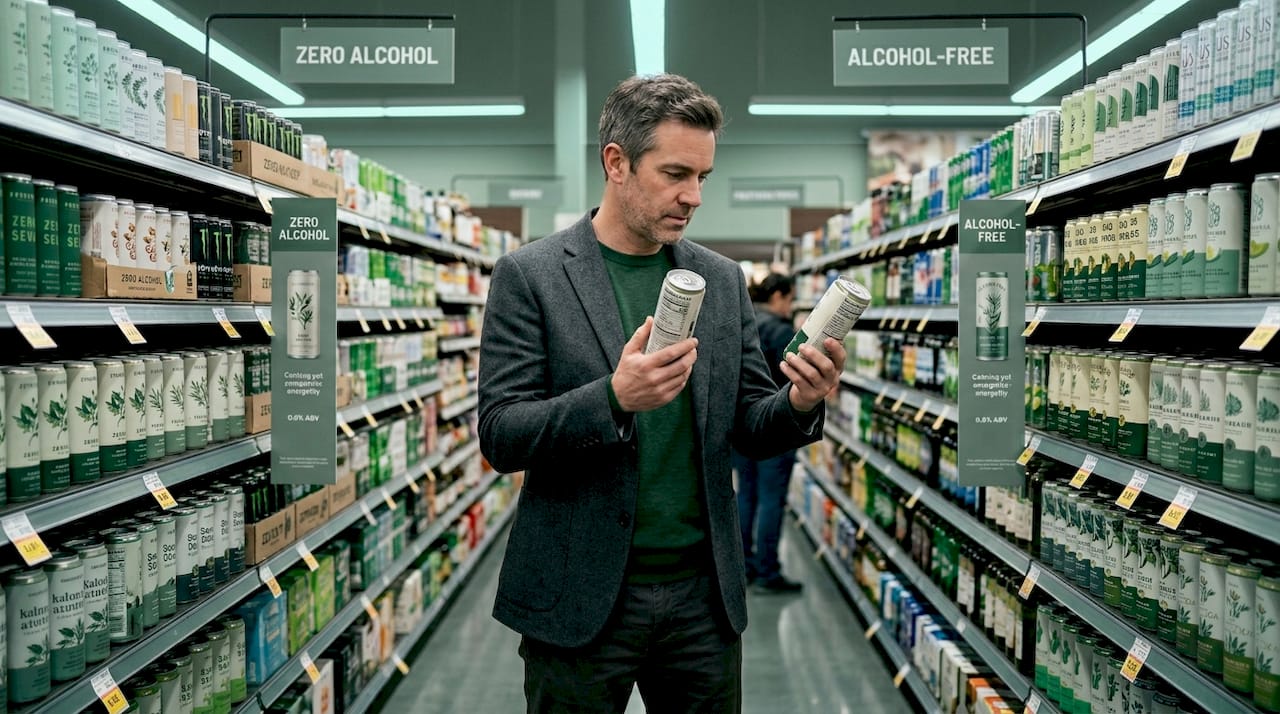
The same source points out that marketing language like “zero alcohol” can blur technical definitions, and that “zero” can still correspond to a non-zero ABV threshold of less than 0.5% ABV or describe alcohol-mimicking formulations. In other words, “zero” in marketing doesn’t always mean zero in chemistry.
Here are the most common myths worth knowing:
- Myth: “Zero alcohol” means 0.0% ABV. Reality: It’s a marketing phrase. The actual ABV depends on the product and the brand’s formulation.
- Myth: “Non-alcoholic” beer is safe for everyone. Reality: People in recovery, those who are pregnant, or those on certain medications should check the exact ABV and consult a healthcare provider.
- Myth: All non-alcoholic beverages are low in calories. Reality: Dealcoholized wines and non-alcoholic beers can still carry significant sugar and calorie loads. Always check the nutrition label.
- Myth: CBD and THC beverages automatically count as non-alcoholic. Reality: Their alcohol status depends entirely on their ABV, not their active ingredients.
- Myth: If it’s sold in the wellness aisle, it must be alcohol-free. Reality: Placement in a store has nothing to do with regulatory compliance.
“A product can be crafted to deliver the social ritual of drinking without any alcohol whatsoever. But that requires intentional formulation and transparent labeling, not just a clever name.”
Pro Tip: Before you buy, flip the can or bottle and look for the ABV number in small print near the nutrition facts. If you can’t find it, that’s a red flag worth noting.
If you want a genuinely transparent option, our Modern Mule Zero Sugar lists every ingredient and its ABV clearly. For a wider variety, explore our full range of THC craft cocktails designed for adults who want flavor, a mild buzz, and full label clarity.
How to choose the right non-alcoholic beverage
With the myths cleared up, here’s how to put all of this into practice the next time you’re stocking your fridge or picking something up for a gathering.
The most reliable check, as noted in the TTB’s guidance, is to look for the specific claim and threshold on the package itself, for example, “0.0% ABV” versus “less than 0.5% ABV.” That number tells you more than any front-of-label marketing phrase ever will.
Here’s a practical step-by-step approach:
- Check the ABV first. Look for the actual percentage, not just a marketing claim. “0.0% ABV” is the clearest signal of a truly alcohol-free product.
- Read the ingredient list. Watch for fermented bases, dealcoholized wine, or kombucha, all of which can introduce trace alcohol.
- Look for third-party testing. Brands that publish Certificates of Analysis (COAs) are giving you verified data, not just promises.
- Evaluate the calorie and sugar content. A non-alcoholic drink can still be high in sugar. If you’re health-focused, check the nutrition panel for total carbohydrates and added sugars.
- Consider the functional ingredients. CBD, THC, adaptogens, and nootropics each have different effects. Know what you’re choosing and why.
- Match the drink to the occasion. A 5mg THC mocktail is a different experience than a plain sparkling water with CBD. Think about what kind of social experience you’re looking for.
- Trust brands that show their work. Transparent labeling, published COAs, and clear ABV disclosures are signs that a brand takes compliance seriously.
Our CBD seltzer guide is a helpful resource if you’re new to functional beverages. And if you’re ready to try something with a mild, enjoyable buzz, our THC mocktail options are crafted for exactly that kind of mindful social sipping.
Why label literacy matters more than ever for mindful drinking
Here’s an honest take from our perspective at Floral: most people don’t realize how much power they hand over when they skip reading the label. The gap between “non-alcoholic” and “alcohol-free” sounds like a bureaucratic detail, but it’s actually a lifestyle decision in disguise.
We’ve watched the non-alcoholic beverage category grow rapidly over the past few years, and with that growth has come a flood of products making bold claims on the front of the can. “Zero.” “Clean.” “Pure.” These words feel reassuring, but they don’t carry legal definitions in the same way that ABV percentages do.
What’s genuinely exciting about 2026 is that consumers are more informed than ever. The demand for transparency has pushed brands, including us, to publish COAs, disclose exact ABV values, and explain what every ingredient does. That’s a real shift. And it means that if a brand isn’t offering that level of clarity, you should ask why.
The new wave of cannabis and CBD beverages isn’t about replacing alcohol with something that pretends to be alcohol. It’s about giving you a real choice. A low-calorie, THC-infused mocktail at a dinner party is a completely different social experience than a glass of wine, and it deserves to be understood on its own terms. Label literacy is what makes that possible.
We cover these labeling trends regularly on our blog because we believe informed consumers make better choices, and better choices lead to better experiences. That’s the whole point.
Explore delicious non-alcoholic and THC mocktails
Ready to put your new label knowledge to use? Floral makes it easy to sip with confidence.
Every product in our lineup is designed with transparency at the center. We publish exact ABV values, list every ingredient, and share third-party COAs so you always know what you’re drinking. Whether you’re hosting a backyard gathering, winding down after work, or just looking for a flavorful low-calorie option, we have something for you. Try our THC craft cocktails for a social buzz without the alcohol, explore our THC seltzers for a light and refreshing option, or go classic with our Mojito THC mocktail for a crowd-pleasing flavor. Please enjoy responsibly and only if you are 21 or older.
Frequently asked questions
What ABV makes a beverage non-alcoholic in the US?
In the U.S., a beverage is considered non-alcoholic under 0.5% ABV according to federal regulatory practice. Anything at or above that threshold is treated as an alcoholic beverage.
Are ‘alcohol-free’ and ‘non-alcoholic’ the same?
No. The TTB guidance makes clear that “alcohol-free” implies 0.0% ABV while “non-alcoholic” allows up to 0.5% ABV, so they represent different standards.
Can ‘zero alcohol’ drinks contain alcohol?
Yes. Some “zero alcohol” products can still contain up to 0.5% ABV depending on how the brand formulates and labels the product.
Do non-alcoholic cannabis beverages follow the same rules?
Yes. Cannabis and CBD beverages are considered non-alcoholic as long as their finished ABV stays under 0.5% under federal guidelines. The active ingredient doesn’t change the alcohol classification.
How can I tell if a drink is truly alcohol-free?
Look for “0.0% ABV” on the label rather than relying on front-of-can marketing language. That specific number is the clearest, most regulated signal available.
