

Recreational THC in Illinois is defined as the legal use, possession, and purchase of cannabis products by adults aged 21 and over under the Cannabis Regulation and Tax Act, known as the CRTA. Illinois made history when it became the first state to legalize recreational cannabis through its legislature, not a ballot measure, effective january 1, 2020. If you’re asking what is recreational THC Illinois, the short answer is this: you can legally buy, possess, and consume cannabis products in Illinois as long as you follow the state’s specific rules on amounts, locations, and age. The CRTA also built in social equity provisions and automatic expungement of past cannabis convictions from day one.
What are the legal possession limits for recreational THC in Illinois?
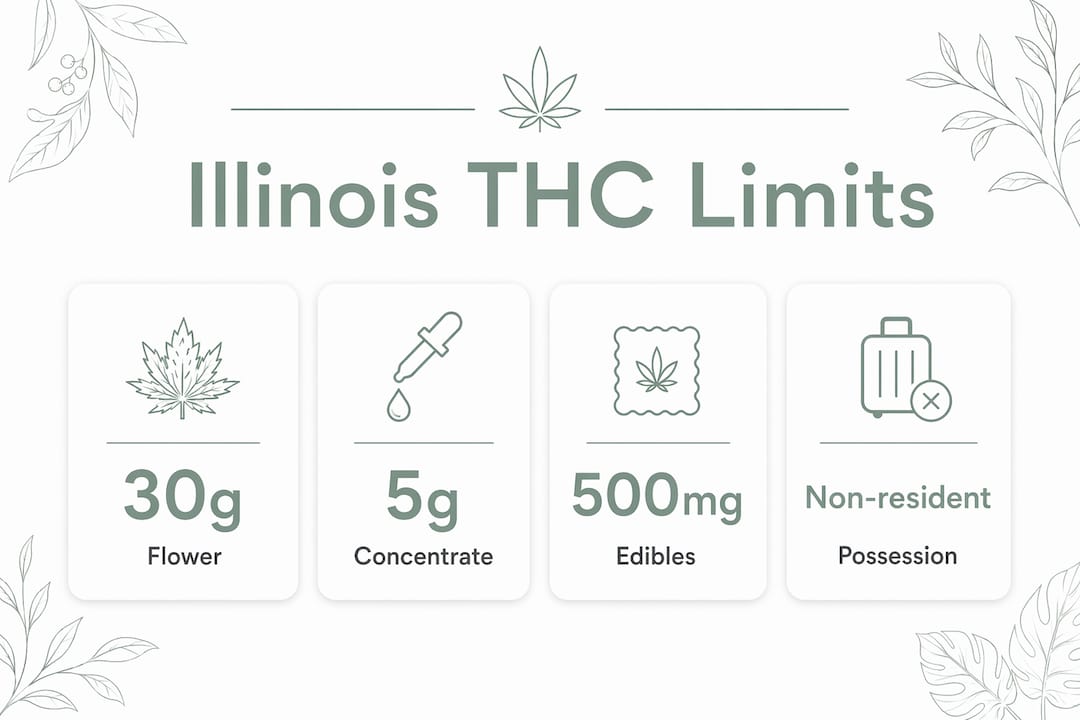
Illinois sets clear possession limits that differ based on whether you are a state resident or a visitor. Knowing these limits keeps you on the right side of the law.
Illinois residents may legally possess:
- Up to 30 grams of cannabis flower
- Up to 5 grams of cannabis concentrate
- Up to 500mg of THC in edible or infused products
Non-residents are allowed exactly half those amounts:
- Up to 15 grams of cannabis flower
- Up to 2.5 grams of concentrate
- Up to 250mg of THC in edibles
These limits apply to what you carry on your person at any given time. The possession limits for residents and non-residents reflect the state’s effort to balance access with control. A 2026 legislative proposal aims to double these limits to reflect how mature the Illinois market has become. That proposal has not yet passed into law, so the original limits remain in effect.
Understanding the difference between product types matters here. Flower is the raw, dried cannabis plant. Concentrate includes oils, wax, and vape cartridges. Edibles cover gummies, chocolates, beverages, and any other food or drink infused with THC. Each category has its own limit, and they do not combine or offset each other.
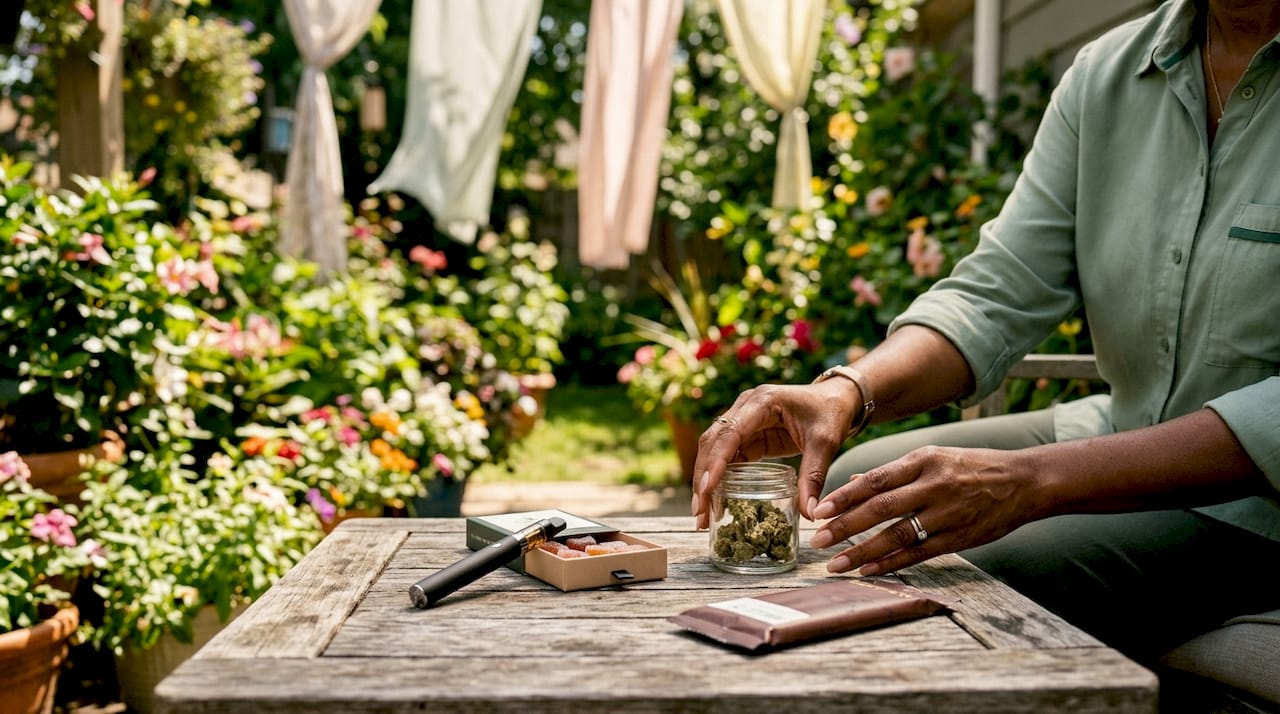
Pro Tip: Carry your purchase receipt from a licensed dispensary. It shows the product type and THC content, which helps clarify your possession if you are ever questioned.
How can adults legally consume recreational THC in Illinois?
Consumption of recreational cannabis in Illinois is restricted to private property. The law does not allow you to smoke, vape, or consume THC products in public spaces, vehicles, or near schools and parks.
Key consumption restrictions include:
- No use in public places, including sidewalks, parks, and parking lots
- No consumption in a vehicle, whether moving or parked
- No use within 1,000 feet of a school or daycare while children are present
- No smoking in locations covered by the Smoke Free Illinois Act, which includes most indoor public spaces
A limited number of cannabis consumption lounges operate in Illinois, but they are regulated by local municipalities and are not available statewide. Most adults consume THC at home or on private property with the owner’s permission.
Home cultivation of recreational cannabis is illegal in Illinois. Only registered medical patients aged 21 and over may grow up to 5 plants in an enclosed, locked space. Growing cannabis without a license is a felony. That is a hard line, and it applies regardless of how many plants you have.
THC beverages are worth noting here as a practical option. A canned THC seltzer consumed at home fits neatly within the law. It produces no smoke, leaves no odor, and is easy to dose. For adults who want a social experience without the complications of smoking restrictions, beverages offer a clean alternative. You can check out THC beverage options available to Illinois residents for a current overview.
Pro Tip: If you rent your home, check your lease before consuming cannabis. Landlords in Illinois can legally prohibit cannabis use on their property, even though state law permits it.
What are the laws around driving and recreational THC in Illinois?
Driving under the influence of THC is illegal in Illinois, and the law sets a specific blood concentration threshold. A THC blood level of 5 ng/mL or higher is considered a per se DUI offense. That means the law treats it as impairment regardless of how you actually feel or perform.
Penalties for a cannabis DUI mirror those for alcohol:
- Fines starting at $2,500 for a first offense
- Mandatory license suspension
- Potential jail time for repeat offenses or aggravated cases
- A permanent mark on your driving record
One important complication: THC can remain detectable in whole blood well beyond the period of actual impairment. A person who consumed cannabis the night before may still test above 5 ng/mL the next morning. This makes Illinois’ per se standard potentially punitive for people who are no longer impaired but have not yet cleared the threshold. Illinois State Police use roadside sobriety tests and blood draws to enforce these laws.
The safest rule is simple. Do not drive on the same day you consume THC. If you want to understand the full picture of how THC drinks interact with driving laws, the guide on THC drinks and driving covers the legal nuances in detail.
How and where can adults buy recreational THC products in Illinois?
Buying recreational THC in Illinois requires a visit to a licensed dispensary. Illinois does not allow cannabis delivery, so you must purchase in person at a brick-and-mortar location. Every dispensary requires a valid, government-issued photo ID confirming you are 21 or older. A driver’s license, state ID, or passport all qualify.
Here is what to expect when you walk into a licensed dispensary:
- A budtender will check your ID at the door
- You will browse products by category: flower, concentrates, edibles, beverages, and topicals
- Products are labeled with THC content, batch numbers, and lab test results
- Payment is often cash or debit only, since many banks still avoid cannabis businesses
Prices vary significantly depending on location and product potency. High-THC products in Chicago can carry a cumulative tax burden of up to 41.25%, which includes state excise, cultivation, sales, and local municipal taxes. That tax structure is tiered by THC potency, so stronger products cost more in taxes. Buying lower-potency products is not just a wellness choice. It is often a financial one.
Never buy cannabis from unlicensed sources. Products sold outside licensed dispensaries have no lab testing, no dosage accuracy, and no legal protection for the buyer. If something goes wrong with an unlicensed product, you have no recourse and may face criminal charges for possession of unregulated cannabis.
Pro Tip: Check the dispensary’s online menu before you go. Most Illinois dispensaries post live inventory, so you can confirm product availability and compare prices without making a wasted trip.
For adults in the Chicago area, a guide to buying THC beverages nearby can help you find licensed retail locations quickly.
What social equity provisions shape Illinois cannabis regulations?
Illinois built social equity into its cannabis law from the start. The CRTA made Illinois the first state to legalize recreational cannabis through legislative action while simultaneously addressing the harms caused by decades of prohibition.
The law’s social equity framework includes four major elements:
- Automatic expungement of hundreds of thousands of cannabis-related criminal records for low-level offenses
- Social equity licensing that prioritizes applicants from communities most harmed by cannabis prohibition
- Reinvestment funds directing a portion of cannabis tax revenue back into those communities
- Regulatory oversight spread across multiple state agencies including the Illinois Department of Financial and Professional Regulation, the Illinois Department of Agriculture, and the Illinois State Police
Illinois cannabis tax revenue from recreational sales has exceeded $9.2 billion through 2025. That figure reflects both the scale of the legal market and the state’s capacity to fund public programs through cannabis taxation.
Despite the equity framework, actual sales remain disproportionately concentrated among non-equity operators. Capital requirements and operational barriers have slowed equity licensees from competing at the same level. The law’s intent was strong. The execution has been uneven. That gap is an ongoing policy conversation in Springfield.
Illinois cannabis regulations also address employment. Employers can still enforce zero-tolerance drug policies, and workers can face termination for a positive drug test even when their use was legal and off-duty. The Right to Privacy Act offers limited protection, but it does not override employer drug policies in most cases.
Key Takeaways
Recreational THC in Illinois is legal for adults 21 and over under the CRTA, with strict possession limits, private-only consumption rules, and a per se DUI threshold of 5 ng/mL that applies regardless of observed impairment.
| Point | Details |
|---|---|
| Legal age and law | Adults 21+ may legally possess and consume THC under the Cannabis Regulation and Tax Act. |
| Possession limits | Residents may hold 30g flower, 5g concentrate, and 500mg THC in edibles; non-residents get half. |
| Consumption location | THC use is restricted to private property; public consumption and vehicle use are illegal. |
| DUI threshold | A blood THC level of 5 ng/mL or higher triggers a per se DUI charge in Illinois. |
| Purchase rules | Buy only from licensed dispensaries with a valid photo ID; cannabis delivery is not legal in Illinois. |
Why understanding Illinois THC law matters more than most people think
Illinois gets credit for a thoughtful cannabis law, and that credit is mostly deserved. But the details trip people up more than the big picture does.
The DUI threshold is the one I find most underappreciated. A 5 ng/mL per se limit sounds straightforward until you realize THC stays in your blood long after you feel sober. I have spoken with people who consumed responsibly the evening before, slept a full night, and still had detectable THC levels the next morning. The law does not care how you feel. It cares what your blood shows. That reality demands a more conservative approach than most casual consumers apply.
The cross-border issue is equally serious and equally ignored. Crossing state lines with cannabis is a federal offense. Illinois borders Indiana, which has some of the strictest cannabis laws in the Midwest. Illinois State Police actively monitor border corridors like Interstate 55 and Interstate 80. The risk is real, and the consequences are federal, not just a state fine.
My honest advice: treat Illinois cannabis law the way you treat alcohol law. Know your limits, stay off the road, buy from licensed sources, and keep your consumption at home. The law gives you real freedom. Use it in ways that protect that freedom.
— Adam
Tryfloral THC seltzers: a legal, low-calorie option for Illinois adults
Tryfloral makes farm-to-fridge THC seltzers built for adults who want a clean, legal way to enjoy cannabis in Illinois. Each can is zero calories, lab-tested, and compliant with Illinois cannabis regulations. Whether you prefer Harvest Apple THC Seltzer or something tropical, Tryfloral’s lineup gives you a precise, enjoyable dose without the smoke or the guesswork of unlabeled products. Store a few cans in your fridge, share them with friends at home, and enjoy the mild buzz that comes from knowing exactly what you are consuming. Tryfloral’s farm-to-fridge process means quality you can trust from source to sip. Please enjoy responsibly. You must be 21 or older to purchase.
FAQ
What is recreational THC in Illinois?
Recreational THC in Illinois refers to the legal use and possession of cannabis products by adults aged 21 and over under the Cannabis Regulation and Tax Act, effective since january 1, 2020.
How much THC can I legally carry in Illinois?
Illinois residents may carry up to 30 grams of flower, 5 grams of concentrate, and 500mg of THC in edibles. Non-residents are limited to half those amounts.
Can I consume THC in public in Illinois?
No. Illinois law restricts cannabis consumption to private property. Public use, vehicle use, and use near schools are all prohibited.
What is the THC DUI limit in Illinois?
A blood THC concentration of 5 ng/mL or higher constitutes a per se DUI in Illinois, regardless of whether the driver appears impaired.
Can I grow cannabis at home in Illinois?
Home cultivation is illegal for recreational users in Illinois. Only registered medical patients aged 21 and over may grow up to 5 plants in a locked, enclosed space.
