

THC hits harder than alcohol because oral THC converts in the liver into 11-hydroxy-THC, a metabolite that is 1.5 to 7 times more potent than inhaled delta-9-THC and crosses the blood-brain barrier more efficiently. Alcohol produces no equivalent metabolic amplification. That single biochemical difference explains why the THC vs alcohol high feels so much more intense, longer-lasting, and harder to predict. If you’re an adult weighing your options for social drinking, understanding this mechanism changes how you think about dosing, timing, and what you put in your body.
Why THC hits harder than alcohol: the metabolism difference
The core reason THC is more intense than alcohol comes down to first-pass liver metabolism. When you consume THC orally, your liver converts delta-9-THC into 11-hydroxy-THC before it ever reaches your brain. That metabolite is more hydrophilic than delta-9-THC, meaning it crosses the blood-brain barrier faster and binds to cannabinoid receptors more aggressively. The result is a heavier, more sedating, and longer-lasting effect than smoking or vaping the same amount.
Alcohol does not go through this kind of potency-amplifying conversion. Ethanol metabolizes into acetaldehyde and then acetic acid, compounds that are actually less active than the original molecule. That is the opposite of what happens with THC. Alcohol’s intoxicating effects come directly from ethanol itself, which is why the experience peaks quickly and fades within a few hours.
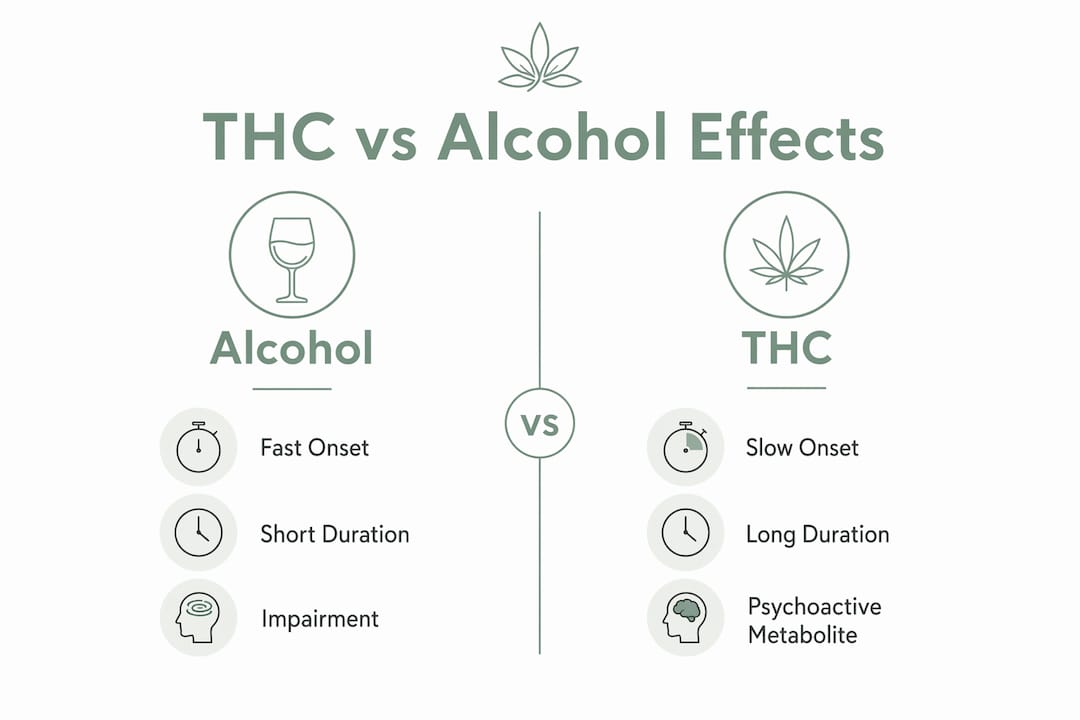
The timing gap between the two substances is also significant. Alcohol metabolizes within 4–8 hours, while edible THC effects can take 1–4 hours to peak and last up to 12 hours. That extended window is one of the most common sources of overconsumption with THC.
| Factor | Alcohol | Edible THC |
|---|---|---|
| Onset time | 15–30 minutes | 30 minutes to 2 hours |
| Peak effects | 45–90 minutes | 1–4 hours |
| Duration | 4–8 hours | Up to 12 hours |
| Key metabolite | Acetaldehyde (less active) | 11-hydroxy-THC (more active) |
Pro Tip: If you’re new to edible THC, wait at least 90 minutes before taking more. The delayed onset is the number one reason adults overconsume and end up with an uncomfortable experience.
Does alcohol make THC stronger?
Alcohol and THC together produce effects that are stronger than either substance alone. The mechanism is physical. Alcohol dilates blood vessels in the gastrointestinal tract and lungs, which increases THC absorption rates into the bloodstream. A 2015 study published in Clinical Chemistry found that a blood alcohol concentration of 0.065% nearly doubled peak THC blood levels compared to THC use without alcohol. That is not a small margin.

This combination is commonly called “crossfading.” Adults who drink before using THC often report the experience as far more intense than expected. The amplified THC blood levels mean the 11-hydroxy-THC effect is also amplified, pushing sedation, cognitive impairment, and physical heaviness to levels that can feel overwhelming.
The risks of crossfading include:
- Significantly increased cognitive impairment, affecting memory, reaction time, and judgment
- Heightened nausea and dizziness, especially when standing or moving
- Elevated anxiety or paranoia, particularly in adults who are sensitive to THC
- Greater risk of adverse effects like greening out, a state of intense discomfort caused by too much THC metabolite buildup
- Impaired ability to accurately assess how intoxicated you actually are
The practical takeaway is straightforward. If you choose to use THC, drinking alcohol beforehand changes the pharmacokinetics of the experience in a way that is difficult to control. Responsible adults treat these two substances as separate choices, not a combination.
How the THC high compares to alcohol intoxication
The subjective experience of being high on THC versus being drunk on alcohol is qualitatively different, not just stronger or weaker. Alcohol intoxication typically produces a loosening of social inhibition, increased talkativeness, and a relatively quick onset that most adults recognize and can gauge. THC, particularly from oral consumption, tends to produce more sedating, body-focused effects with a slower and less predictable arc.
Cognitively, both substances impair judgment and reaction time, but they do so differently. Alcohol tends to increase confidence and reduce anxiety in the short term. THC can go either way, producing calm and euphoria in some adults and heightened anxiety or paranoia in others, depending on dose, tolerance, and individual biology.
| Effect Category | Alcohol intoxication | THC high |
|---|---|---|
| Onset speed | Fast (15–30 min) | Slow (30 min to 2 hours) |
| Duration | Shorter (4–8 hours) | Longer (up to 12 hours) |
| Mood profile | Social, confidence-boosting | Sedating, introspective |
| Cognitive impact | Reduced inhibition, impaired judgment | Memory effects, altered perception |
| Physical effects | Coordination loss, dehydration | Body heaviness, relaxation |
| Hangover risk | High | Low to none |
One fact that stands out in any honest comparison: no confirmed human fatalities from THC overdose have been documented, while alcohol is linked to around 140,000 annual deaths in the United States. That does not mean THC is without risk. It means the risk profiles are genuinely different, and adults deserve accurate information to make their own choices.
Why THC beverages are growing as a social alternative to alcohol
The cannabis market has shifted. Adults are no longer chasing maximum potency. THC beverage consumers now prioritize predictability and occasion-based effects over raw intoxication, a pattern that mirrors how the craft beer and natural wine movements grew. That shift reflects a broader cultural move toward mindful consumption.
THC drinks offer a specific set of practical advantages for social adults:
- No smoke or vapor. THC beverages skip the respiratory risks associated with smoking or vaping cannabis entirely.
- No ethanol. Avoiding alcohol means avoiding the liver stress, caloric load, and cancer-linked risks that come with regular drinking.
- Hangover-free mornings. Adults who switch to THC drinks for social occasions consistently report waking up without the dehydration, headache, and fatigue that follow a night of drinking.
- Calorie control. Many THC seltzers contain zero calories, which matters to adults who enjoy social drinking but want to manage their diet.
- Familiar format. Drinking from a can or glass fits naturally into social settings without drawing attention or requiring explanation.
Experts do caution that THC drinks are not health foods. Long-term research on regular THC beverage consumption is still developing. Responsible use means starting with a low dose, understanding your own tolerance, and not mixing with alcohol.
Pro Tip: THC beverages typically have a faster onset than edibles because the THC absorbs partly through the mouth and stomach lining. Learn more about how THC beverages onset faster before your first can so you can pace yourself accurately.
Key Takeaways
THC hits harder than alcohol because liver metabolism converts it into 11-hydroxy-THC, a compound that is more potent and reaches the brain more effectively than ethanol ever does.
| Point | Details |
|---|---|
| 11-hydroxy-THC is the key driver | Oral THC converts to a metabolite 1.5–7 times more potent than delta-9-THC, explaining intensity. |
| Alcohol amplifies THC absorption | Drinking before using THC nearly doubles peak THC blood levels, making crossfading genuinely risky. |
| Duration is much longer with THC | Edible THC effects can last up to 12 hours, compared to 4–8 hours for alcohol. |
| Risk profiles differ significantly | No confirmed fatal THC overdoses exist; alcohol causes around 140,000 U.S. deaths annually. |
| THC beverages offer a social middle ground | Low-dose THC drinks provide a hangover-free, smoke-free alternative for mindful social adults. |
What I’ve actually learned from comparing THC and alcohol
The science is clear, but the lived experience adds nuance that pharmacology charts don’t capture. I’ve talked to a lot of adults who were surprised by how differently THC hit them compared to alcohol, not because they were careless, but because no one explained the metabolic pathway to them beforehand. They drank a THC beverage, felt nothing after 30 minutes, took more, and then spent the next several hours far more intoxicated than they intended.
That pattern is not a failure of willpower. It’s a predictable consequence of a substance with a slow, amplifying metabolism. Alcohol gives you real-time feedback. You feel it building, you pace yourself, you stop. THC, especially in drink or edible form, delays that feedback loop significantly. Adults who understand this go in with a plan: one low-dose drink, a full hour of patience, and a clear decision point before considering more.
The other thing worth saying plainly: the harm comparison between alcohol and cannabis is not close. That doesn’t mean THC is consequence-free, but it does mean adults who are making an honest assessment of their options deserve to see the full picture. Cultural stigma has historically distorted that picture in one direction. Accurate information corrects it.
My honest recommendation is to treat THC beverages the way you’d treat a strong craft beer at a new brewery. Respect the dose, read the label, and give it time. The calorie-free THC drink options available now make that kind of mindful approach genuinely easy.
— Adam
Tryfloral’s THC seltzers for mindful social drinking
Adults who want the social experience without the alcohol now have a genuinely good option.
Tryfloral makes farm-to-fridge THC-infused seltzers with zero calories, no ethanol, and no hangover. Each can is dosed for a predictable, occasion-friendly experience, not maximum intoxication. Flavors like Harvest Apple, Tropical, and Strawberry Mango are built for sharing with friends or winding down after a long week. Tryfloral’s farm-to-fridge quality standards mean you know exactly what’s in the can. You must be 21 or older to purchase. Please enjoy responsibly.
FAQ
Why does THC feel stronger than alcohol?
THC converts in the liver into 11-hydroxy-THC, a metabolite that is 1.5–7 times more potent than the original compound and crosses the blood-brain barrier more efficiently than alcohol’s metabolites do.
How long does a THC high last compared to being drunk?
Alcohol intoxication typically lasts 4–8 hours, while edible or beverage THC effects can peak 1–4 hours after consumption and last up to 12 hours total.
Is it safe to mix alcohol and THC?
Mixing alcohol and THC is risky because alcohol nearly doubles peak THC blood levels by increasing vascular absorption, producing stronger cognitive impairment, nausea, and anxiety than either substance alone.
Are THC beverages a healthier alternative to alcohol?
THC beverages avoid ethanol-related liver stress and respiratory harm from smoking, but experts caution they are not health foods and long-term research on regular use is still ongoing.
What is crossfading and why is it dangerous?
Crossfading means using alcohol and THC together. Alcohol dilates blood vessels and boosts THC absorption, amplifying intoxication to levels that are difficult to predict or control safely.
