

If you’ve ever eaten a cannabis edible and waited two hours for anything to happen, you know the frustration. THC beverages are different, and understanding why THC beverages onset faster comes down to how your body actually absorbs them. Unlike a brownie that has to travel through your digestive system and get processed by your liver before you feel anything, a well-made THC drink starts working in as little as 15 to 30 minutes. The science behind that difference is worth knowing before you crack open your next can.
Table of Contents
- Key takeaways
- Why edibles take longer to kick in
- How nanoemulsion makes THC drinks hit faster
- THC drinks vs edibles: a clear comparison
- Practical tips for dosing THC beverages responsibly
- Individual factors that change your THC beverage experience
- My take on fast-onset THC and what it means for consumers
- Tryfloral THC beverages worth trying
- FAQ
Key takeaways
| Point | Details |
|---|---|
| Faster onset is real | THC beverages work in 15–30 minutes because nanoemulsion allows mucosal absorption before liver processing. |
| Edibles take longer by design | Traditional edibles require full digestion and liver metabolism, pushing onset to 45 minutes or several hours. |
| Shorter duration with drinks | THC beverage effects typically last 2–4 hours versus 4–8 hours for food-based edibles. |
| Dosing control improves | Faster feedback from beverages helps you pace intake more accurately, similar to how alcohol works. |
| Not all THC drinks are equal | Nanoemulsion quality varies significantly between brands, affecting how fast and how reliably effects arrive. |
Why edibles take longer to kick in
Most people who have tried cannabis edibles have a story about waiting too long, feeling nothing, taking more, and then regretting it about an hour later. That experience is not bad luck. It is the predictable result of how your body processes fat-soluble THC when you swallow it.
When you eat a THC-infused gummy or brownie, the THC must first travel through your stomach and small intestine. Because THC is fat-soluble and not water-soluble, it needs to be broken down along with other fats and lipids before it can be absorbed into your bloodstream. That process takes time, and the presence or absence of food in your stomach changes how fast it moves.
Once absorbed through the intestinal wall, THC travels directly to your liver before it ever reaches your brain. This is called first-pass metabolism. The liver converts most of the delta-9 THC into a compound called 11-hydroxy-THC. That metabolite is actually more potent than delta-9 THC in some respects, which is part of why edible highs feel heavier and more sedating to many people. The trade-off is time. Oral THC Tmax sits at roughly 2 to 3 hours, meaning blood THC levels peak long after you first swallowed the dose.
Key reasons why traditional edibles have slower onset:
- THC must clear your stomach and intestinal tract before absorption begins
- Fat-soluble THC depends on dietary fat for proper absorption
- Liver first-pass metabolism adds significant processing time
- Stomach contents, individual gut motility, and metabolism all introduce variability
- Absolute oral bioavailability of THC is only around 6 to 10 percent
Pro Tip: Eating a traditional THC edible on a full stomach slows onset but typically smooths out the experience. On an empty stomach, onset is faster but effects can hit more sharply. Neither is wrong. Just know what you are working with before you dose.
How nanoemulsion makes THC drinks hit faster
Here is where THC beverages genuinely differ. The technology responsible for fast-acting cannabis beverages is called nanoemulsion, and it solves the core problem that makes traditional edibles so unpredictable.
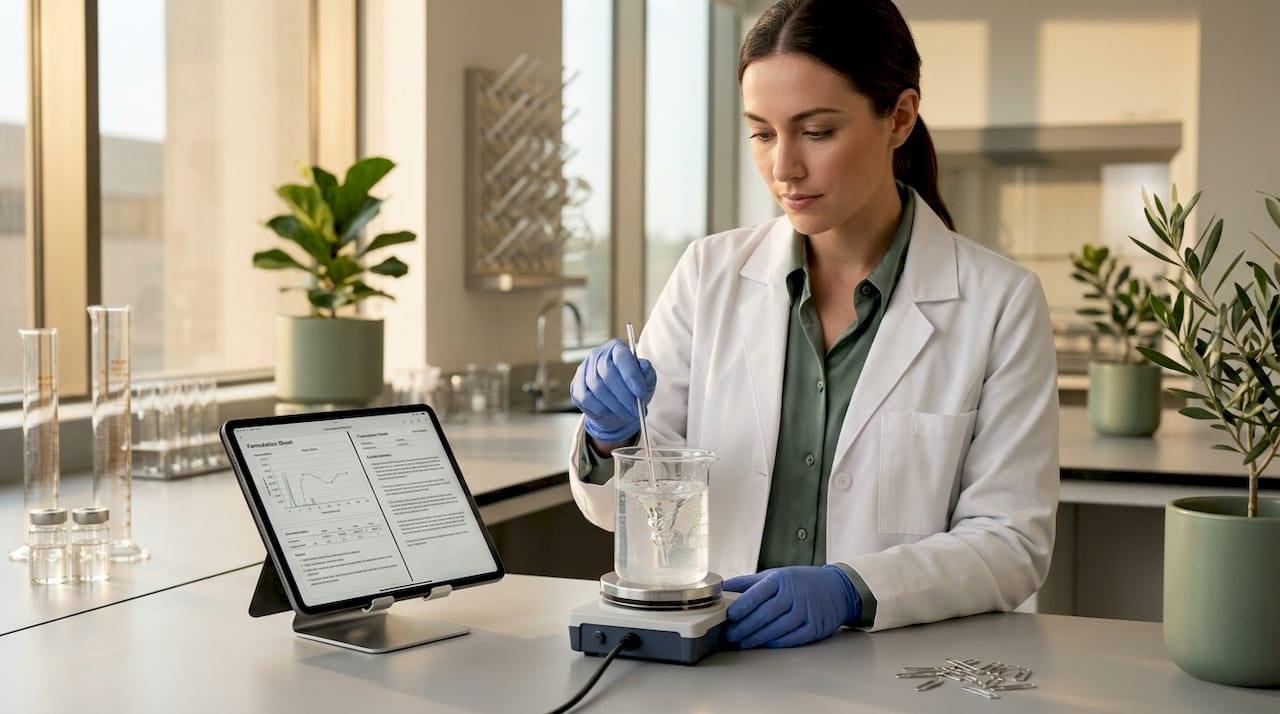
THC in its natural state does not mix with water. If you simply stirred cannabis oil into a drink, you would get an oily layer floating on top and very inconsistent absorption. Nanoemulsion breaks THC oil into microscopic droplets ranging from 20 to 100 nanometers in size. These droplets are small enough to stay suspended evenly throughout the liquid and, more importantly, small enough to be absorbed through the mucous membranes lining your mouth, esophagus, and stomach.
That mucosal absorption route is the key difference. When you sip a THC beverage, some of that nanoemulsified THC absorbs directly through the tissues in your mouth and throat before it even reaches your stomach. More absorption happens through the stomach lining. This process partially bypasses the first-pass liver metabolism that delays traditional edibles so significantly. The result is that delta-9 THC reaches your bloodstream earlier and more efficiently.
Here is what changes with nanoemulsion:
- Tiny droplets stay uniformly suspended in the beverage for consistent dosing in every sip
- Sublingual and buccal absorption begins immediately while you drink
- Gastric mucosa absorption continues as the beverage reaches your stomach
- Faster onset shifts the effect curve earlier compared to oil-based edibles
- Some products report onset as fast as 10 to 15 minutes with high-quality formulations
Pro Tip: Sipping a THC beverage slowly over 20 to 30 minutes gives your body time to absorb each wave of nanoemulsified THC. Drinking it quickly can still work, but you may not fully register the effects of early sips before finishing the can, which increases the chance of unintentionally overshooting your dose.
THC drinks vs edibles: a clear comparison
Understanding how THC drinks work at the pharmacological level helps you make smarter choices about which format fits your needs. The differences go beyond just onset speed.
| Factor | THC beverages | Traditional edibles |
|---|---|---|
| Onset time | 15–30 minutes | 45–180 minutes |
| Duration of effects | 2–4 hours | 4–8+ hours |
| Primary absorption route | Mucosal (mouth, esophagus, stomach) | Small intestine |
| First-pass liver metabolism | Partial bypass | Extensive |
| Primary THC metabolite | Mix of delta-9 THC and 11-hydroxy-THC | Predominantly 11-hydroxy-THC |
| Bioavailability | Higher and more consistent | 6–10%, highly variable |
| Experience character | Lighter, more manageable | Often more intense and sedating |

The metabolite difference matters more than most people realize. THC beverage absorption produces a mix of unconverted delta-9 THC along with some 11-hydroxy-THC, compared to the predominantly 11-hydroxy-THC profile of traditional edibles. This is one reason many people describe the beverage experience as feeling more similar to a mild buzz than the heavy, couch-locked effect that edibles can produce.
Cannabis beverages typically last 60 to 180 minutes in full effect, while traditional edibles can extend to 8 hours or more. If you want a contained, social experience that does not derail the rest of your evening, that duration difference is significant.
Practical tips for dosing THC beverages responsibly
The faster onset of THC beverages is genuinely useful for dosing. It works similarly to alcohol in that you get meaningful feedback within 15 to 30 minutes, which lets you gauge how you feel before deciding whether to have more. That feedback loop is almost entirely absent with traditional edibles, where the temptation to re-dose at the 45-minute mark leads to many regrettable evenings.
That said, faster onset does not automatically mean safer consumption. A few practical points worth keeping in mind:
- Read the whole label. Multi-serving containers are common in the THC beverage space. A can labeled “2 servings of 5mg” contains 10mg total. Drinking the whole thing in one go doubles your intended dose.
- Start with a single serving. Especially if you are new to THC beverages, 5mg is a reasonable starting point. Wait at least 30 to 45 minutes before considering more.
- Your stomach contents still matter. Drinking on an empty stomach accelerates absorption. A light meal beforehand softens the onset curve for a more gradual experience.
- Stay hydrated. These beverages work as your drink for the occasion, which is a natural advantage. Staying hydrated supports a smoother overall experience.
- Do not mix with alcohol. Combining THC beverages with alcohol increases the intensity and unpredictability of effects for most people.
For a fuller breakdown of how to enjoy THC drinks responsibly, the THC drinks safety guide from Tryfloral covers pacing and dose control in detail.
Individual factors that change your THC beverage experience
Even with the best nanoemulsified product in your hand, your personal experience will vary from the next person’s. That is not a flaw in the product. It is biology.
The enzyme CYP2C9 plays a central role in how your body metabolizes THC. Genetic differences in CYP2C9 mean some people process THC significantly faster or slower than average. Fast metabolizers may feel effects more briefly and at lower intensity. Slow metabolizers can experience prolonged and amplified effects from the same dose. If you have noticed that your reaction to cannabis consistently differs from people around you, enzyme genetics is a likely factor.
Body composition also plays a role. THC is lipophilic, meaning it stores in fat tissue. People with higher body fat percentages may have THC redistributed from the bloodstream into fat cells, which can blunt peak effects but also extend overall duration. Tolerance built from regular use further compresses the perceived intensity of any given dose.
On the product side, nanoemulsion quality varies widely between brands. Droplet size, emulsifier quality, and formulation stability all affect how fast and reliably the THC absorbs. A poorly made nanoemulsion with large, unstable droplets behaves much more like a traditional oil-based product, which means slower onset and less consistency. Not all quick onset THC drinks deliver on that promise equally.
Pro Tip: Keep a simple note after each session: the product, your dose, what you ate beforehand, and how you felt at 15, 30, and 60 minutes. Even three or four data points will give you a clearer picture of how your body responds than any general guideline can.
My take on fast-onset THC and what it means for consumers
I’ve watched the THC beverage category grow from a niche curiosity to a genuinely compelling alternative for adults who want a social experience without the unpredictability of traditional edibles. And in my experience, the single biggest shift nanoemulsion brings is not just speed. It is confidence.
When I talk to people who have had frustrating edible experiences, the common thread is almost never the dose itself. It is the wait. Not knowing whether something is working leads people to take more, and that is where things go sideways. Beverages fix that feedback gap in a meaningful way.
That said, I think the industry still has work to do on consumer education. Faster onset is only a safety advantage if people understand why it matters and how to use that information. A can with unclear serving sizes or buried THC content disclosures removes most of the benefit. Clear labeling and honest marketing matter as much as the formulation science.
What excites me most is the cultural shift. Cannabis beverages fit naturally into social settings where alcohol used to be the only option. That is genuinely useful for people who want to be present and social without either drinking or sitting out entirely. The science made it possible. Responsible enjoyment makes it sustainable.
— Adam
Tryfloral THC beverages worth trying
If you want to experience what well-made fast-acting cannabis beverages actually feel like, Tryfloral has you covered. Their farm-to-fridge approach means every product is formulated with quality nanoemulsion technology, clean natural ingredients, and clear dosing information so you always know what you are getting.
The Floral THC Seltzers are zero-calorie, refreshing, and built for the kind of social occasion where you want a relaxed, predictable experience. If you prefer something with a bit more character, the 5mg THC craft cocktails deliver precise dosing in a format that feels right at home at any gathering. Every product is designed with the science of fast onset and responsible consumption in mind. Please enjoy responsibly, and only if you are of legal age in your state.
FAQ
Why do THC beverages work faster than edibles?
THC beverages use nanoemulsion technology that breaks THC into microscopic droplets absorbed through the mouth, throat, and stomach lining. This partially bypasses first-pass liver metabolism, which is what causes traditional edibles to take 45 minutes to 3 hours to kick in.
How long does it take to feel a THC drink?
Most quality THC beverages produce noticeable effects within 15 to 30 minutes. Some high-quality formulations report onset as fast as 10 to 15 minutes, depending on your metabolism, body composition, and whether you drank on an empty stomach.
Do THC beverages last as long as edibles?
No. THC beverage effects typically last 2 to 4 hours compared to 4 to 8 or more hours for traditional edibles. The shorter duration makes beverages a better fit for social occasions when you want the experience to have a clear end.
Can you still take too much from a THC drink?
Yes. Faster onset helps with dose control but does not eliminate the risk. Multi-serving cans are a common source of accidental overconsumption. Always read the full label, start with one serving, and wait at least 30 to 45 minutes before drinking more.
Does food affect how a THC beverage hits?
It does. Drinking on an empty stomach speeds up THC absorption and can make effects feel stronger and arrive more quickly. Having a light meal beforehand softens the onset curve and generally produces a more gradual, manageable experience.
