

The morning after drinking alcohol feels fundamentally different from the morning after consuming THC, and the science behind that difference matters for anyone making informed choices about their wellness. Alcohol triggers a dehydration-driven hangover through a specific hormonal mechanism, while THC’s morning after effects trace back to delayed absorption and changes in sleep architecture rather than fluid loss. Understanding the thc vs alcohol morning after effects comparison gives you a real framework for recovery, not just guesswork. When you combine both substances, the risks compound in ways that standard sobriety tests often miss entirely.
What symptoms define the alcohol morning after?
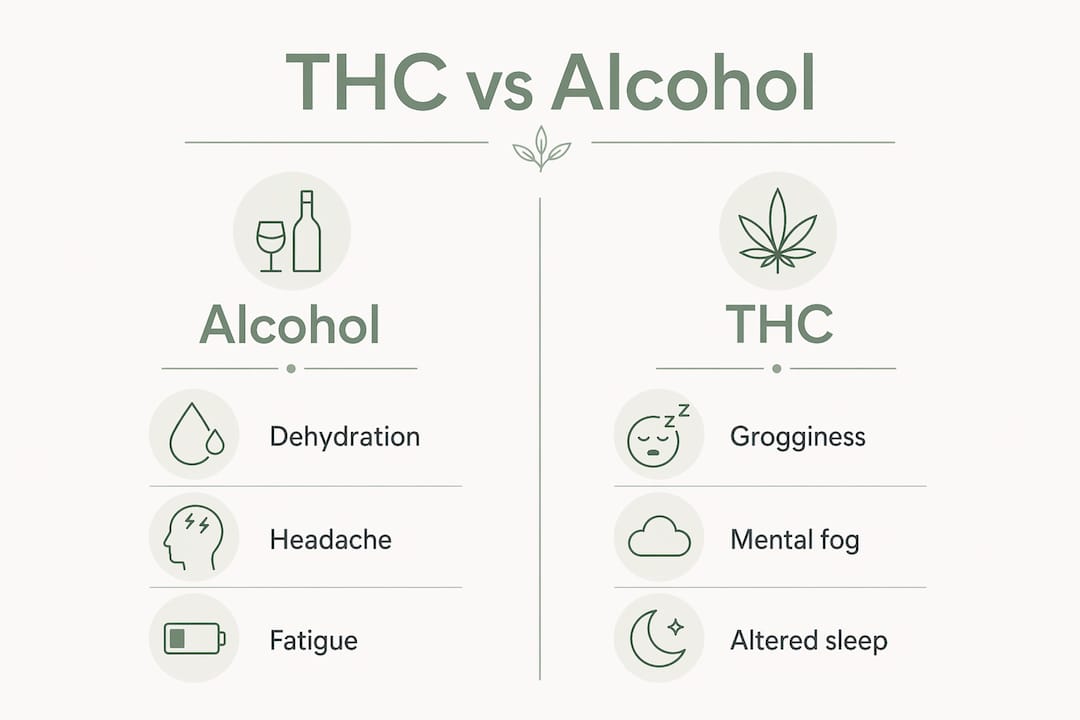
Alcohol hangover symptoms are defined as a cluster of physical and cognitive effects that typically begin 6 to 8 hours after drinking and resolve within 24 hours. The standard list includes tiredness, nausea, dry mouth, shakiness, muscle aches, rapid heartbeat, sweating, and mood changes. These are not random side effects. They follow a predictable physiological pattern rooted in how alcohol disrupts your body’s fluid regulation.
The core mechanism is vasopressin suppression. Alcohol reduces vasopressin, the hormone that signals your kidneys to retain water, so your body loses fluid faster than normal despite the liquid you consumed. That fluid loss drives the headache, dry mouth, and fatigue that define the classic hangover. Dehydration also depletes electrolytes like sodium and potassium, which explains the muscle weakness and shakiness many people feel.
Several factors make alcohol’s dehydration effect worse:
- Drinking on an empty stomach accelerates alcohol absorption and increases fluid loss
- Warm environments and physical activity compound dehydration during a night out
- Drinking quickly gives your kidneys less time to compensate
- Darker liquors contain more congeners, compounds that intensify hangover severity
The alcohol side effects next day are not something you can shortcut. Time and self-care are the only real remedies. Rest, food, and gradual rehydration with water or electrolyte drinks are the evidence-backed approach.
Pro Tip: Drinking 12 ounces of water alongside each alcoholic drink is one of the most practical strategies for reducing next-morning dehydration. It does not prevent impairment, but it meaningfully reduces hangover severity.
How does THC affect your body the morning after?
THC morning after effects are defined by delayed pharmacokinetics and altered sleep quality rather than dehydration or acute toxicity. When you consume oral THC, such as an edible or a THC beverage, peak blood concentrations occur roughly four hours after ingestion. That is a dramatically slower curve than alcohol, which peaks within 30 to 90 minutes. The residual presence of THC and its metabolites can extend well beyond that initial peak, sometimes up to 24 hours.

This delayed absorption profile has a direct consequence for how you feel the next morning. Because THC is fat-soluble, it accumulates in fatty tissue and releases back into the bloodstream gradually. Repeated dosing increases baseline THC levels over time due to this bioaccumulation in fat tissue. For occasional users, a single evening dose may still leave measurable residuals the following morning, even if subjective impairment feels minimal.
THC also reshapes your sleep in ways that matter the next day:
- THC suppresses REM sleep, the stage associated with memory consolidation and emotional processing
- It can delay the onset of REM cycles, reducing overall sleep quality even when total sleep time looks normal
- A pilot clinical trial found that a single oral THC dose suppresses REM sleep but does not cause measurable next-day driving impairment in most participants
- Self-reported sleepiness increased slightly at roughly nine or more hours post-dose, suggesting mild subjective effects without objective functional deficits
“Next-day impairment after THC use is more about altered sleep architecture than acute cognitive deficits. Morning grogginess may not equal significant functional impairment, but individual variation is real and should not be dismissed.” — CED Clinic research summary
The practical takeaway is that THC hangover symptoms are subtler and more variable than alcohol morning effects. Dose, timing, tolerance, and consumption method all influence how you feel. Someone who consumed a high-dose edible at 10 p.m. will likely feel more residual effects than someone who took a low-dose THC seltzer at 7 p.m. You can read more about what to expect the next morning from cannabis drinks specifically.
What are the risks of combining THC and alcohol the next day?
Combining cannabis edibles with alcohol causes greater and longer-lasting impairment than either substance alone. That finding from 2026 research is the most important data point in the THC and alcohol comparison for anyone who mixes both on a night out. The problem is not just the night itself. The compounded impairment can persist into the next morning in ways that feel deceptively mild.
Here is what the research shows about combined use:
- Self-reported intoxication is higher when both substances are used together, but subjective feelings of being “fine” the next morning do not reliably reflect actual impairment
- Standard field sobriety tests often fail to detect cannabis impairment even when measurable effects are present
- Feeling recovered after a combined session does not guarantee you are safe to drive or operate machinery
- The interaction between alcohol’s rapid metabolism and THC’s slow clearance creates an uneven recovery timeline that is hard to self-assess accurately
The safety implication is direct. If you combined THC and alcohol the night before, apply a conservative standard the next morning regardless of how you feel. Avoid driving, operating heavy equipment, or making high-stakes decisions until you have had adequate sleep, food, and time. “Feeling fine” is not a reliable measure when both substances are involved.
How do recovery strategies differ for THC vs alcohol?
Alcohol recovery and THC recovery require different approaches because the underlying mechanisms are different. Treating a THC morning the same way you treat an alcohol hangover is a mistake. Hydration alone addresses the core problem with alcohol but does not resolve the residual effects of THC, which are rooted in sleep disruption and slow metabolite clearance rather than fluid loss.
For alcohol morning effects, follow this sequence:
- Rehydrate with water and an electrolyte drink like Pedialyte or a sports drink with sodium and potassium
- Eat a balanced meal with carbohydrates and protein to stabilize blood sugar
- Rest. Sleep is the most effective recovery tool for alcohol-related fatigue
- Avoid caffeine in large amounts early on, as it compounds dehydration
- Give it time. Most alcohol hangovers resolve within 24 hours with basic self-care
For THC morning after effects, the recovery approach shifts:
- Prioritize sleep quality over sleep quantity. If you woke up feeling groggy, a short nap can help restore REM-stage rest
- Light physical activity like a walk can help clear mental fog without overexerting a body that may still have residual THC metabolites
- Eat a nutritious breakfast. Fat-soluble compounds like THC interact with dietary fat, so a balanced meal supports normal metabolism
- Avoid stacking another THC dose immediately in the morning if you feel residual effects from the night before
- Be honest about your functional state before driving or working. Next-morning driving performance showed no significant impairment in some studies at 12 to 15 hours post-consumption, but individual tolerance varies considerably
Pro Tip: If you consume THC beverages, timing matters more than you might expect. Consuming a THC drink two or more hours before bed rather than right before sleep reduces the likelihood of REM suppression and next-morning grogginess.
One practical note on THC alcohol recovery time: alcohol clears your system faster than THC. Alcohol is water-soluble and metabolized at a relatively predictable rate. THC is fat-soluble and lingers. That difference means your THC recovery timeline is less predictable and more dependent on your personal biology, body composition, and usage frequency. You can explore the THC beverage hangover-free experience in more detail to understand how format and dose affect next-day feelings.
Key takeaways
THC and alcohol produce distinct morning-after effects because they work through entirely different physiological pathways, and treating them the same way leads to poor recovery decisions.
| Point | Details |
|---|---|
| Alcohol causes dehydration | Vasopressin suppression drives headache, dry mouth, and fatigue; rehydration is the primary fix. |
| THC disrupts sleep architecture | REM suppression from oral THC causes grogginess without necessarily causing measurable functional impairment. |
| Combined use compounds risk | THC and alcohol together produce greater impairment than either alone, and standard sobriety tests often miss it. |
| Recovery strategies differ | Alcohol needs fluids and rest; THC needs sleep support, light activity, and honest self-assessment. |
| Timing changes your morning | Consuming THC closer to bedtime increases the chance of next-day sleep-related effects regardless of dose. |
My take on reading the morning after honestly
I have spent a lot of time looking at how people interpret their own recovery, and the pattern I see most often is overconfidence after THC use and underestimation after combined use. People expect a hangover to feel like a hangover. When it does not, they assume they are fine.
The research tells a more nuanced story. A pilot trial from CED Clinic showed that oral THC suppresses REM sleep without producing measurable next-day driving deficits in a small sample. That sounds reassuring, and in many cases it is. But “no measurable deficit in a controlled study” is not the same as “definitely safe for you tomorrow morning.” Individual variation in THC metabolism is significant. Body composition, tolerance, dose, and timing all shift the outcome.
What I find most worth emphasizing is the combined use scenario. The 2026 research on edibles and alcohol is a clear signal that subjective feelings of recovery are unreliable when both substances are involved. Standard field sobriety tests were not designed to catch cannabis impairment, and they often do not. That gap between how you feel and how you actually function is the real risk. A conservative approach the morning after combined use is not overcaution. It is the only rational response to incomplete self-assessment tools.
The practical wisdom here is simple. Know which substance you consumed, understand its specific recovery profile, and do not let a mild morning convince you that everything is resolved. Hydration handles alcohol. Sleep quality and time handle THC. Neither handles the other.
— Adam
Try Tryfloral THC seltzers for a cleaner social experience
If you are rethinking your relationship with alcohol and its harsh morning-after effects, Tryfloral offers a genuinely different option. Tryfloral’s farm-to-fridge THC beverages are zero-calorie, precisely dosed, and designed for adults who want a social buzz without the dehydration and next-day fatigue that alcohol brings.
Unlike alcohol, Tryfloral’s THC seltzers do not suppress vasopressin or trigger the dehydration cycle that drives classic hangover symptoms. They deliver a mild, enjoyable experience that fits naturally into a wellness-focused lifestyle. Whether you are sharing them with friends or keeping a few in the fridge for a quiet evening, they are worth trying as a mindful alternative. Check out the Floral Beverage Bundle to find the right starting point, or browse the full THC seltzer lineup for zero-calorie options built for social adults.
FAQ
What are the main THC hangover symptoms?
THC hangover symptoms typically include morning grogginess, mild mental fog, and slight fatigue linked to REM sleep suppression rather than dehydration. These effects are generally subtler than alcohol hangovers and vary based on dose, timing, and individual tolerance.
How long do alcohol morning effects last?
Alcohol hangover symptoms typically begin 6 to 8 hours after drinking and resolve within 24 hours with rest, hydration, and food. Severity depends on how much you drank, how fast, and whether you ate beforehand.
Is it safe to drive the morning after using THC?
Some studies show no significant driving impairment at 12 to 15 hours after cannabis consumption, but individual results vary and caution is always advised. If you combined THC with alcohol, apply a stricter standard since standard sobriety tests often fail to detect cannabis impairment.
Does combining THC and alcohol make the morning worse?
Yes. Research shows that combining cannabis edibles with alcohol produces greater and longer-lasting impairment than either substance alone. The morning after combined use can feel mild while measurable impairment persists, making self-assessment unreliable.
Does drinking water help with THC morning effects?
Hydration helps with overall wellness but does not address the core cause of THC morning effects, which is sleep architecture disruption rather than dehydration. Prioritizing sleep quality, light activity, and a nutritious meal is more effective for THC recovery than water alone.
