

Hemp drinks are legal under federal law because the 2018 Farm Bill defines hemp as cannabis containing less than 0.3% delta-9 THC by dry weight, creating a legal pathway for beverages with low THC concentrations. That single threshold is why hemp drinks are legal explained in one sentence. But the full picture is more complicated. A federal THC cap of 0.4 mg per container takes effect november 12, 2026, and 95% of current hemp drinks will not meet that standard. If you’re an adult trying to understand hemp beverage legality before that deadline, this guide covers everything you need to know.
Why hemp drinks are legal under the 2018 Farm Bill
The 2018 Farm Bill removed hemp from the Controlled Substances Act. Before that law passed, all cannabis was federally illegal regardless of THC content. The bill’s key move was creating a legal definition: hemp is cannabis with less than 0.3% delta-9 THC measured by dry weight.
That dry weight measurement is where things get interesting for beverages. A liquid product has very little dry mass. This means a hemp drink can contain a meaningful amount of THC in milligrams while still falling under the 0.3% dry weight threshold. The result is a product that can produce a mild buzz but remains federally legal on paper.
The law also only restricts delta-9 THC. Other cannabinoids like delta-8 THC and THCA are psychoactive and exist in a separate legal gray zone. Producers have used these compounds to create products with stronger effects while technically staying within the delta-9 limit. That gap in the law has driven significant market growth and significant regulatory pushback.
Here is a quick breakdown of how the Farm Bill framework applies to hemp drinks:
- Hemp definition: Cannabis with less than 0.3% delta-9 THC by dry weight
- Key loophole: Dry weight THC limits allow higher milligram doses in liquid form
- Covered cannabinoids: Only delta-9 THC is explicitly capped; delta-8 and THCA are not
- Federal removal: Hemp is no longer a Schedule I substance under the Controlled Substances Act
- No beverage license required: Hemp drinks operate under general food safety permits, not cannabis licenses
Pro Tip: Check whether a hemp drink lists total THC or just delta-9 THC on its label. A product can show 0.3% delta-9 and still contain additional psychoactive cannabinoids.
What does state law say about hemp drink regulations?
Federal legality does not mean you can buy a hemp drink anywhere in the country. State regulations vary widely, and some states have moved to ban or heavily restrict intoxicating hemp beverages entirely. That patchwork of rules is one of the most confusing parts of hemp beverage legality for consumers.
Different state agencies claim jurisdiction over hemp drinks depending on the state. Agriculture departments, health departments, and alcohol control boards have all stepped in at various points. Some states treat hemp drinks like alcohol and require age verification and licensed retail. Others apply cannabis regulations, which come with stricter potency caps and packaging rules.
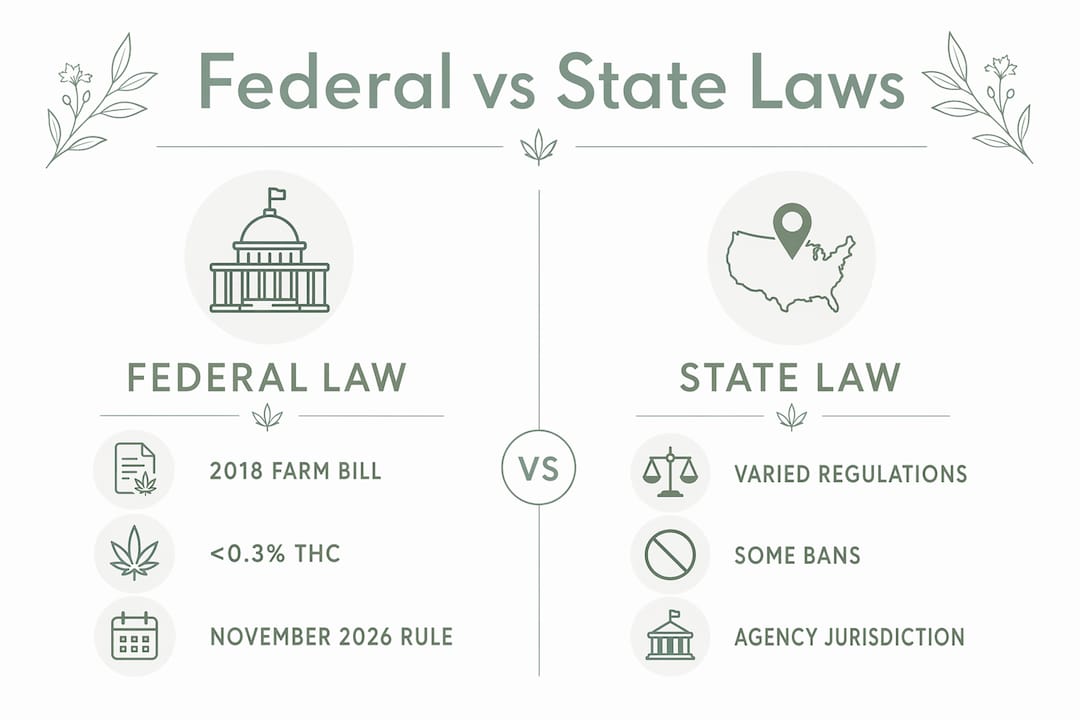
A few states have introduced explicit frameworks for intoxicating hemp beverages with age restrictions, potency caps, and retail limits. Enforcement, however, remains inconsistent even in those states. You can live in a state where hemp drinks are technically legal but find that local retailers are confused about what they can stock.
The practical risks for you as a consumer include:
- Purchasing a product that is legal federally but illegal in your state
- No consistent labeling standards across state lines
- Retailers operating without clear guidance on what they can sell
- Products being pulled from shelves without warning if enforcement shifts
For a state-specific example, the 0.3% THC limit in Indiana shows how one state interprets the federal threshold differently from others.
Pro Tip: Before buying hemp drinks online or in a new state, check your state’s department of agriculture or health website for current hemp beverage rules. Laws can change faster than product labels.
What changes are coming in November 2026?
The biggest shift in hemp drink regulations arrives november 12, 2026. A new federal rule caps total THC at 0.4 mg per container. That is a dramatic change from the current dry weight percentage standard. Most hemp drinks on shelves today contain 5 mg, 10 mg, or even 25 mg of THC per can.
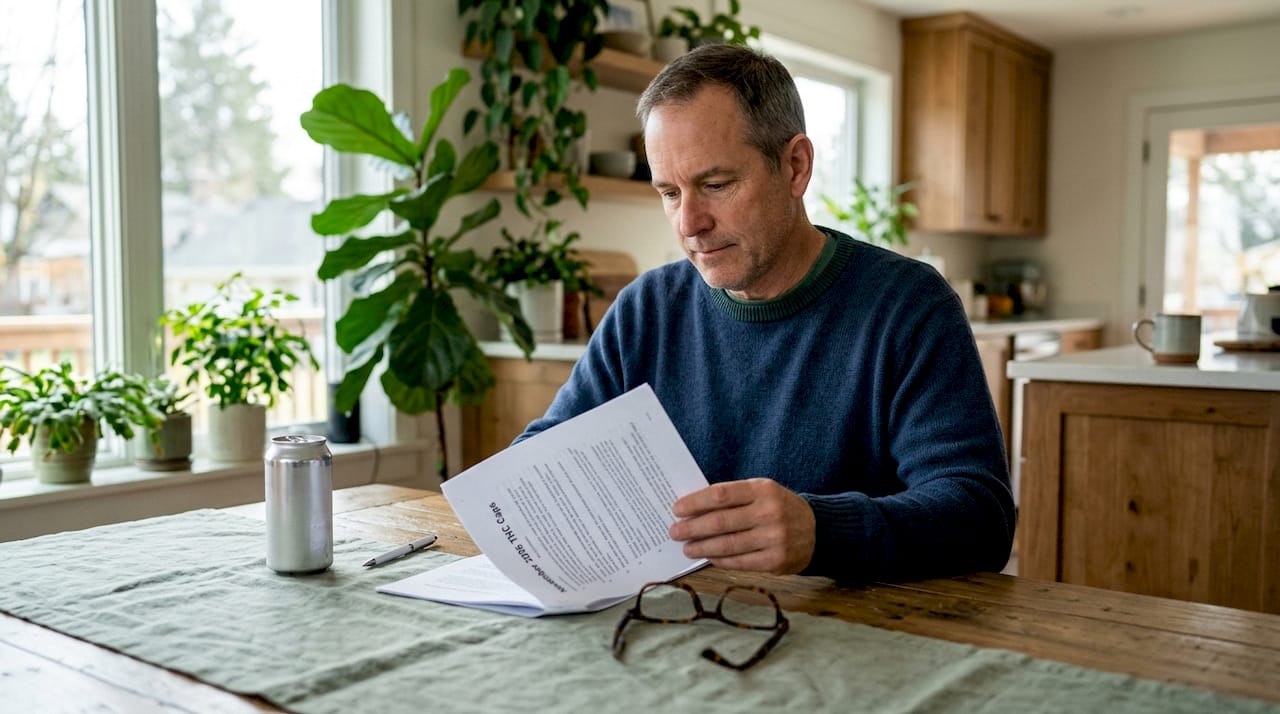
This rule was embedded in a federal funding bill, not passed as standalone cannabis legislation. That matters because it happened without the public debate or industry input that typically shapes major regulatory changes. The cannabis and hemp industries were largely caught off guard by the specifics.
The table below shows how the current standard compares to the incoming rule:
| Standard | Measurement | Typical product THC | Status after Nov. 2026 |
|---|---|---|---|
| Current federal rule | 0.3% delta-9 by dry weight | 5–25 mg per can | Mostly non-compliant |
| New federal rule | 0.4 mg total THC per container | 0.4 mg per can | Compliant |
| State cannabis rules | Varies by state | 5–100 mg per serving | Separate licensing required |
The impact is significant. An estimated 95% of current hemp drinks will become federally illegal under the new per-container metric. Brands that want to stay on the market will need to reformulate products to contain no more than 0.4 mg total THC per can. That is a dose most consumers would not notice at all.
Pro Tip: If you find a hemp drink you enjoy, stock up before november 2026 or look for brands already reformulating to stay compliant. Tryfloral tracks these changes closely and adjusts its products accordingly.
What is the FDA’s role in hemp drink oversight?
The FDA has not formally approved THC as a food additive. That single fact explains most of the legal gray zone that hemp drinks occupy. FDA’s studied inaction means the agency has issued warning letters to some hemp beverage producers but has not created a coherent enforcement policy.
The FDA’s approach has been to watch the market rather than regulate it proactively. The agency has flagged health claims on labels and flagged products marketed to minors. But it has not moved to ban hemp drinks outright or create a formal approval pathway for THC as a food ingredient.
The Federal Trade Commission plays a separate role. The FTC focuses on advertising claims, not product safety. If a hemp drink brand claims its product cures anxiety or improves sleep, the FTC can act. The FDA handles the product itself. That split jurisdiction creates gaps where neither agency takes full ownership.
Key points about federal agency oversight:
- FDA: No formal THC food additive approval; enforcement via warning letters only
- FTC: Regulates advertising claims and marketing to minors
- USDA: Oversees hemp farming and crop compliance, not finished beverages
- DEA: Monitors cannabinoid classification; delta-8 and THCA remain in legal dispute
The hemp beverage sector thrives in this gap, but it is a fragile position. A single high-profile adverse event could trigger rapid federal enforcement. Most hemp beverage operators rely on legal teams and self-regulation rather than clear federal guidance.
How do hemp drinks compare to cannabis products and alcohol?
Hemp drinks, licensed cannabis products, and alcohol operate under three completely different legal frameworks. Understanding those differences helps you know what you are actually buying and what protections you have as a consumer.
Licensed cannabis products go through state-level testing, potency verification, and licensed retail channels. Hemp drinks skip most of that. Hemp-derived THC beverages avoid the heavy taxation, licensing requirements, and distribution controls that govern cannabis. That gives hemp drinks a significant cost and accessibility advantage, which is exactly why the licensed cannabis industry views them as unfair competition.
Alcohol regulation is the most mature framework of the three. The Alcohol and Tobacco Tax and Trade Bureau (TTB) oversees production, labeling, and distribution. Age verification is federally mandated. Hemp drinks have no equivalent federal oversight body. The fragmented regulatory environment for hemp beverages contrasts sharply with the consistent controls that govern a six-pack of beer.
For a deeper look at how these product types differ in practice, the cannabis beverage vs edibles breakdown covers the key distinctions in format, onset time, and legal classification.
Key Takeaways
Hemp drinks are legal under federal law due to the 2018 Farm Bill’s dry weight THC definition, but a november 2026 federal cap of 0.4 mg per container will make 95% of current products non-compliant.
| Point | Details |
|---|---|
| 2018 Farm Bill foundation | Hemp is federally legal when it contains less than 0.3% delta-9 THC by dry weight. |
| Dry weight loophole | Liquid products can contain meaningful THC doses while staying under the percentage threshold. |
| November 2026 deadline | A new 0.4 mg per container federal cap will affect nearly all hemp drinks currently on the market. |
| State law varies widely | Some states ban intoxicating hemp drinks; others regulate them like alcohol or cannabis products. |
| FDA oversight gap | The FDA has not approved THC as a food additive, leaving hemp drinks in a regulatory gray zone. |
The uncomfortable truth about hemp drink legality
I have watched this market grow from a niche curiosity into a mainstream shelf staple, and the legal foundation it sits on has always been shakier than the industry admits. The 2018 Farm Bill created an opening, not a guarantee. Brands rushed in, consumers followed, and regulators mostly looked the other way.
The november 2026 THC cap is the first real test of whether this market can survive federal scrutiny. A 0.4 mg per container limit is not a regulation designed to shape a market. It is a regulation designed to clear one. Most products will not survive it without reformulation, and many smaller brands will not have the resources to adapt in time.
My honest advice: pay attention to where a brand sources its hemp and how transparent it is about upcoming changes. Brands that are already talking about the 2026 deadline and adjusting their formulas are the ones worth trusting. The ones staying quiet are hoping you won’t notice until it’s too late.
State law is the other variable most consumers underestimate. Federal legality gives you a floor, not a ceiling. Your state can and does impose stricter rules, and those rules change without much fanfare. The Illinois hemp seltzer market is a good example of how one state’s approach can shift the entire retail picture for consumers and businesses alike.
The brands that will be around in 2027 are the ones treating compliance as a feature, not a footnote.
— Adam
Tryfloral’s approach to compliant hemp THC drinks
Tryfloral is a farm-to-fridge THC beverage brand built around one principle: every product should be legal, transparent, and worth drinking. As the november 2026 federal THC cap approaches, Tryfloral stays ahead of regulatory changes so you don’t have to guess whether what’s in your fridge is still compliant.
Tryfloral’s THC drink lineup is formulated with current federal and state guidelines in mind. Each product is low in calories, clearly labeled, and made for adults who want a social experience without the uncertainty. Whether you prefer the Harvest Apple THC Seltzer or the Tropical THC Seltzer, you’re getting a product from a brand that takes hemp drink regulations seriously. Enjoy responsibly. You must be 21 or older to purchase.
FAQ
Why are hemp drinks legal but marijuana is not?
Hemp drinks are legal because the 2018 Farm Bill defines hemp as cannabis with less than 0.3% delta-9 THC by dry weight, removing it from the Controlled Substances Act. Marijuana remains federally illegal because it exceeds that THC threshold.
Are hemp drinks legal in every state?
No. Federal legality does not override state law. Some states ban intoxicating hemp beverages outright, while others regulate them through alcohol or cannabis frameworks with varying restrictions.
What happens to hemp drinks after November 2026?
A new federal rule caps total THC at 0.4 mg per container starting november 12, 2026. An estimated 95% of current hemp drinks will not meet that standard without reformulation or market withdrawal.
Does the FDA regulate hemp drinks?
The FDA has not formally approved THC as a food additive and has no coherent enforcement policy for hemp beverages. The agency issues warning letters for specific violations but has not created a formal regulatory pathway.
How much THC is in a legal hemp drink right now?
Under the current dry weight standard, a hemp drink can legally contain several milligrams of THC per can while staying under the 0.3% delta-9 threshold. After november 2026, the limit drops to 0.4 mg total THC per container.
