

What does alcohol-free work event socializing actually mean?
Alcohol-free work event socializing means organizing professional gatherings where connection, not drinking, is the main event. No bar as the centerpiece. No pressure to hold a glass to feel comfortable. Just people, good conversation, and an environment where everyone can show up fully.
This matters more than most HR teams realize. The goal is not restriction. It is inclusion. When alcohol anchors a work social, you quietly exclude employees who abstain for health, faith, pregnancy, medication, recovery, or personal preference. You also raise the stakes for anyone with social anxiety, since a drink becomes the default coping tool rather than something genuinely enjoyed.
Here is what alcohol-free work socializing actually involves:
- A clear event purpose beyond vague networking, such as celebrating a team win or welcoming new hires
- Premium non-alcoholic drink options that feel like a real choice, not an afterthought
- Activities and formats that create natural conversation without relying on alcohol to loosen people up
- Language and framing that centers what is present, not what is absent
- Cultural signals from leadership that normalize sober socializing as the default, not the exception
Done well, a dry work event does not feel like a dry work event. It just feels like a good one.
Why going alcohol-free at work events benefits everyone
The case for sober workplace gatherings goes well beyond wellness optics. Removing alcohol from the equation tends to improve the quality of interaction, not diminish it. Clearer heads make for more genuine conversations, and employees who might otherwise skip an event entirely actually show up.
Gen Z employees in particular report avoiding work socials because of pressure to drink. That is a real retention and engagement problem, especially as younger workers make up a growing share of most teams. An alcohol-free format removes that barrier entirely.
Here is what organizations consistently gain from non-alcoholic team bonding:
- Broader participation. Employees who abstain for any reason, whether medical, cultural, or personal, can attend without discomfort or explanation.
- Better mental health outcomes. Social events that do not center alcohol reduce anxiety for employees in recovery or those managing stress-related conditions.
- Stronger manager relationships. Managers who spend regular time with their teams in accessible, non-alcoholic settings report meaningfully higher engagement from direct reports.
- Reduced liability. No alcohol means no overserving, no impaired driving risk, and no next-day regret that colors how employees feel about the company.
- More memorable experiences. When the event is built around a shared activity rather than drinks, people remember what they did together, not just that they had a few rounds.
Alcohol-free events also signal something important to your workforce: that the company is genuinely invested in everyone’s health and wellbeing, not just those who drink comfortably in social settings.
How to plan an inclusive alcohol-free work event that people actually enjoy
The single biggest mistake in planning a dry work event is treating it like a regular happy hour with the alcohol removed. That approach leaves a gap. The better move is to design the event from scratch around connection, not consumption.
WHO Europe’s 2026 guidance on alcohol-free professional gatherings is direct on this point: events should have clear goals beyond networking, focused on shared purpose and genuine connection. Start there.
Pro Tip: Frame the event around what you are celebrating or building, not around what you are skipping. “Team appreciation lunch” lands better than “alcohol-free happy hour” every time.
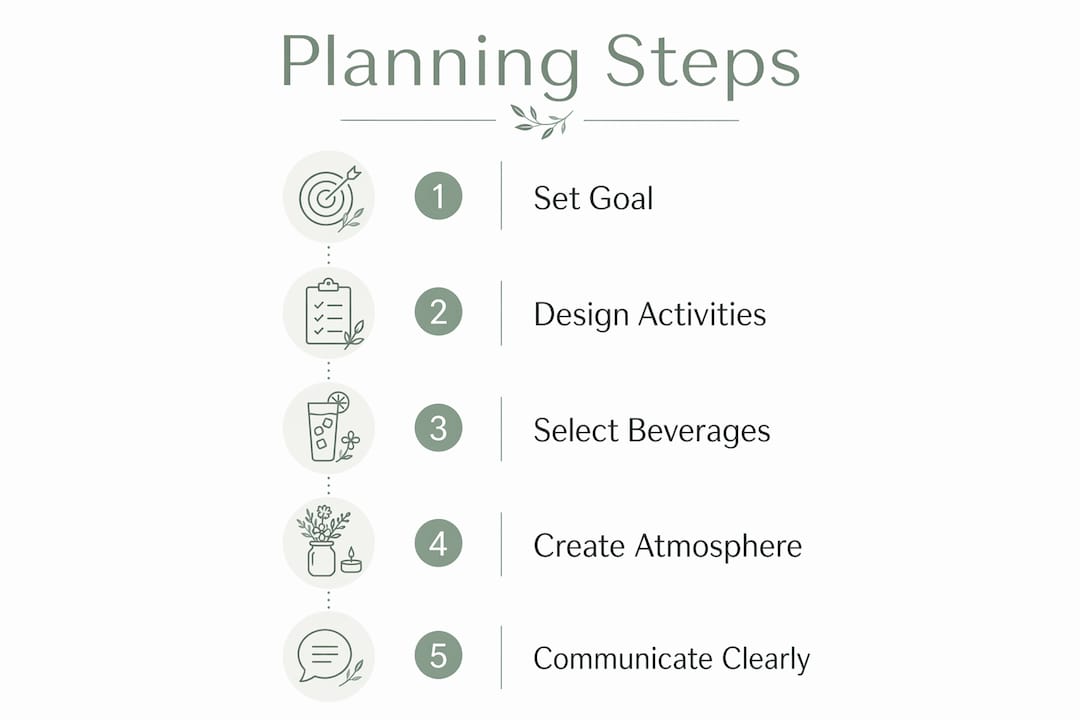
Practical planning steps that work:
- Set one clear goal. Celebrate a project launch, welcome new team members, or give the team a real break after a hard quarter. Vague “networking” events feel hollow without drinks to fill the silence.
- Choose a format that reduces pressure. Small tables beat one big crowd. Soft background music beats club volume. Food people can actually eat beats passed appetizers that disappear before you grab one.
- Build a premium drink menu. Offer at least three categories: something bright and citrusy, something warm and spiced, and something calm like a tea-based option. Treat the menu like a real beverage program, not a list of sodas.
- Make the first drink a welcome ritual. Scheduling events thoughtfully and greeting guests with a welcome pour sets the tone immediately. Offer two choices on arrival so people feel like they are making a decision, not just accepting whatever is handed to them.
- Communicate without stigma. Avoid labeling the event “no alcohol” or “sober.” Instead, lead with the activity, the food, or the experience. The absence of alcohol becomes a non-issue when the presence of everything else is compelling.
- Stagger the timeline. A 90-minute arc works well: arrivals and welcome drinks for the first 15 minutes, food and small-group conversation for the next 30, one shared moment like a toast or short team story, then a soft close with tea or a calm drink.
- Offer opt-in participation. Not everyone wants the same experience. A quiet corner with comfortable seating and low light gives introverted employees a place to recharge without disappearing entirely.
Fun activities and drink ideas that make sober events memorable
The best alcohol-free networking events are built around something to do. When people have a shared focus, conversation starts naturally and nobody is standing around wondering what to do with their hands.
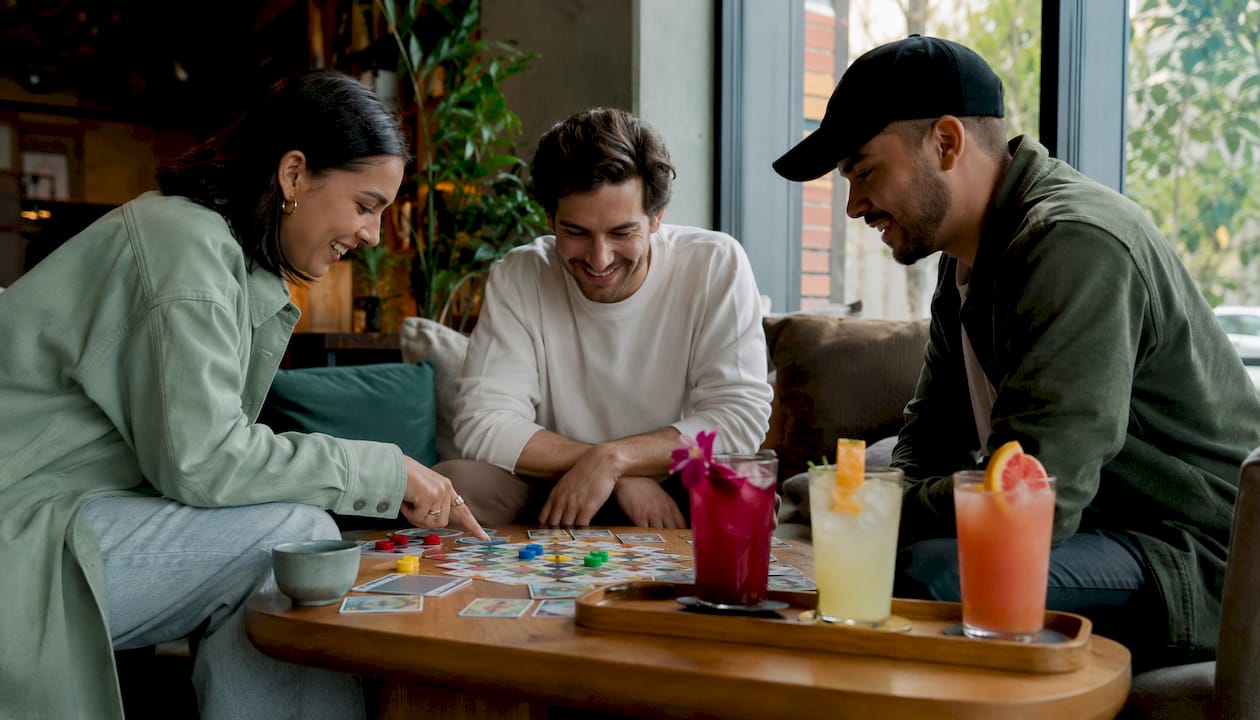
Empowering teams to submit activity ideas consistently leads to naturally alcohol-free events, because when people plan around what they enjoy, drinks become secondary. Here are formats and drink ideas that hold up in practice:
Activities that build connection:
- DIY mocktail bar where guests mix their own drinks using flavored syrups, fresh herbs, and sparkling water
- Team trivia focused on company history, pop culture, or fun facts about colleagues
- Craft stations like canvas painting, terrarium building, or decorating mugs
- Cooking or baking competitions with judged results and a small prize
- Giant Jenga, board games, or escape room challenges for groups that enjoy friendly competition
- Volunteer shifts or charity drives that give the event a sense of shared purpose
- Lunch-and-learns with a guest speaker relevant to the team’s work
Non-alcoholic drink ideas that feel premium:
- Sparkling botanical teas served over ice with citrus garnishes
- Warm spiced apple cider with cinnamon and star anise for cooler months
- Cucumber mint agua fresca for a refreshing, crowd-pleasing option
- Cold brew coffee flights for afternoon events
- Shrub-based sodas, which use fruit and vinegar for a complex, adult flavor profile
- Non-alcoholic networking drinks with botanical infusions that feel sophisticated and intentional
The key is presentation. Drinks served in proper glassware with garnishes signal that the beverage program was taken seriously. That detail alone shifts how employees perceive the event.
How to build a workplace culture where sober socializing feels normal
Culture change does not happen at one event. It happens when sober socializing becomes the default expectation rather than the exception that needs explaining. That shift starts with how leadership talks about and participates in alcohol-free work events.
Social anxiety during sober events is real, and clinical psychologists note that anxious people tend to turn their attention inward during social interactions, fixating on their own behavior. Activities that require external focus, like trivia, cooking challenges, or craft projects, naturally pull attention outward and ease that loop. You do not need alcohol to accomplish that. You need a well-designed room.
Strategies that build lasting cultural support:
- Normalize abstaining without explanation. Train managers to avoid asking why someone is not drinking. The question, even when friendly, puts people on the spot.
- Avoid “dry event” language in internal communications. Label events by their activity or purpose. “Team cooking night” needs no qualifier.
- Include zero-caffeine and low-sugar options alongside the premium drink menu so employees managing specific health conditions feel genuinely considered.
- Rotate event planning across departments. When individual teams plan their own celebrations, they naturally gravitate toward activity-based formats rather than drink-centered ones.
- Have senior leaders participate visibly and enthusiastically. When a VP is genuinely engaged in the trivia round or the mocktail station, it signals that the event format has organizational backing.
- Offer structured quiet zones. Not every employee thrives in high-energy group settings. A quiet corner with tea and comfortable seating is not a concession. It is good hosting.
The language shift matters as much as the logistics. Framing events around what is being offered, not what is being withheld, removes the stigma before it has a chance to form.
What experts and research say about socializing without alcohol at work
The research on alcohol-free socializing is consistent: the barrier is rarely the absence of alcohol. It is the absence of a well-designed social environment that makes people feel comfortable without it.
Ellen Hendriksen, PhD, a clinical psychologist at Boston University’s Center for Anxiety and Related Disorders and author of How to Be Yourself, explains that socially anxious people get caught in a loop of self-monitoring during social events, fixating on whether their behavior seems odd to others. Intentional activities that demand external attention break that loop more effectively than a drink ever could.
That framing is useful for event planners. The goal is not to remove alcohol and hope for the best. The goal is to give people the tools, the environment, and the social permission to connect without it.
Hendriksen also recommends self-compassion as a practical tool for individuals navigating sober socializing in settings that feel uncomfortable. Simple internal mantras like “you’re okay” or “calm” can reduce the spike of anxiety that hits when someone walks into a room without their usual social prop. Comfortable surroundings, including physical comfort like good seating and appropriate noise levels, support that same effect at the event design level.
The WHO Europe short guide on alcohol-free professional gatherings frames the shift clearly: these events are not about restriction. They are a way for organizations to demonstrate leadership in health promotion. That reframe is worth adopting wholesale, both in how you plan events and how you talk about them internally.
Key Takeaways
Alcohol-free work event socializing works best when the event is designed around connection and shared experience, not around the absence of alcohol.
| Point | Details |
|---|---|
| Lead with purpose | Set one clear event goal, like celebrating a win or welcoming new hires, before choosing any format or drink menu. |
| Design the environment | Small tables, soft music, and a quiet corner reduce social pressure more effectively than any single activity. |
| Treat drinks as premium | Offer bright, grounding, and calm non-alcoholic options in proper glassware to signal the beverage program was taken seriously. |
| Shift the language | Label events by activity or purpose, not by what is absent, to remove stigma before it forms. |
| Rotate planning responsibility | Teams that plan their own celebrations naturally gravitate toward activity-based formats rather than drink-centered ones. |
Tryfloral makes alcohol-free socializing easy and enjoyable
Tryfloral’s farm-to-fridge THC seltzers are built for exactly this kind of occasion. Zero calories, a mild buzz, and flavors like Harvest Apple and Tropical that feel premium in any setting. They are perfect for sharing at a work social, storing in the office fridge, or bringing to your next team gathering. Please enjoy responsibly. Must be 21+ to purchase.
Recommended
- Top benefits of alcohol-free social drinks for gatherings – Floral Beverages
- Social Drinking Alternatives Explained for Adults 21+ – Floral Beverages
- Non-Alcoholic Networking Drinks Explained for Modern Events – Floral Beverages
- Alcohol Free Evenings Wellness Routine: Your 2026 Guide – Floral Beverages
