

Hemp grown for beverages is defined by three distinct cultivation pathways: grain hemp for seeds and oils, fiber hemp for stalks, and cannabinoid hemp for floral biomass used in extracts. Each pathway targets a different plant part, which means the farming methods, regulatory requirements, and supply chain logistics differ significantly. Understanding how hemp is grown for beverages helps you appreciate what goes into every sip, whether you’re reaching for a hemp seed smoothie or a THC seltzer. Brands like Tryfloral build their entire product philosophy around this farm-to-fridge distinction, and it starts in the field.
What are the key cultivation methods for hemp used in beverages?
Hemp grown for beverage ingredients falls into three categories, each with its own agronomic logic. Grain hemp and fiber hemp behave like conventional row crops. Cannabinoid hemp, the type most relevant to THC and CBD beverages, requires horticultural management closer to specialty produce than commodity farming.
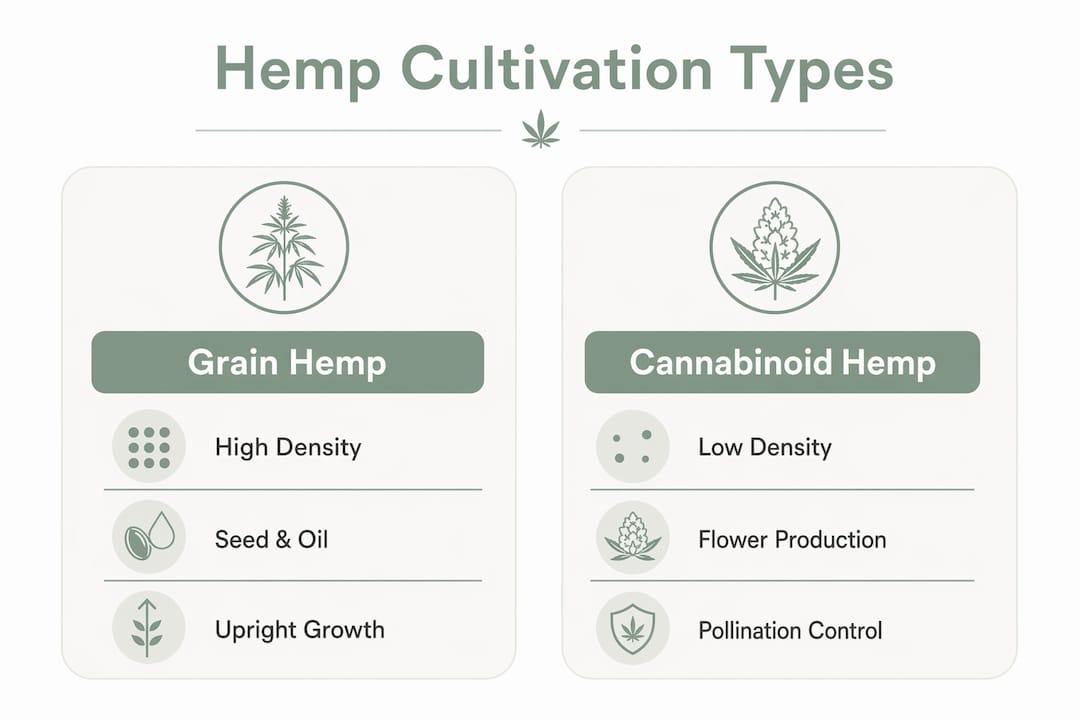
Grain hemp is planted at high density, typically 25 to 35 pounds of seed per acre, to encourage upright growth and maximize seed head production. Fiber hemp uses even higher densities to suppress branching and push the plant toward tall, straight stalks. Cannabinoid hemp flips this logic entirely. Lower planting densities of 1,000 to 1,600 plants per acre give each plant room to develop large, resinous flower clusters.
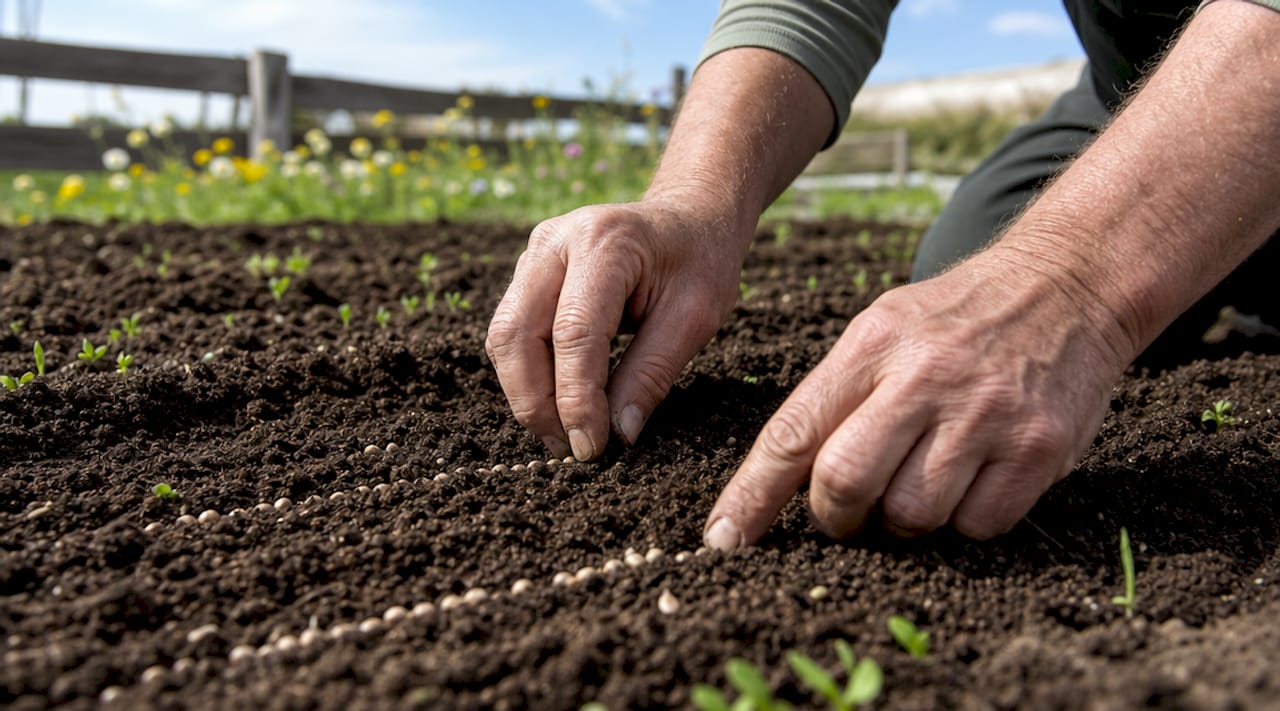
Cultivar selection is the first decision that shapes everything downstream. A 2026 multi-location trial of 32 hemp cultivars confirmed that cannabinoid hemp varieties can maintain THC below the federal 0.3% threshold with minimal variation across growing environments. That consistency matters enormously for beverage producers who need predictable extract profiles batch after batch.
| Hemp Type | Planting Density | Key Management Focus | Primary Beverage Use |
|---|---|---|---|
| Grain hemp | High (25–35 lbs/acre) | Seed head development, harvest timing | Hemp seed oil, seed-based drinks |
| Fiber hemp | Very high (row crop) | Stalk elongation, weed suppression | Rarely used in beverages directly |
| Cannabinoid hemp | Low (1,000–1,600 plants/acre) | Pollination control, flower quality | CBD/THC extracts, infused seltzers |
Pollination control is the single highest-stakes management decision for cannabinoid hemp. A pollinated field shifts plant energy from flower and resin production to seed production, which drastically reduces floral value and cannabinoid yield. Growers use feminized seeds or clones to guarantee female-only plantings, and they scout aggressively for rogue male plants throughout the season.
Pro Tip: If you’re sourcing cannabinoid hemp for beverage production, ask your grower whether they use feminized seeds or clones. Clones guarantee genetic uniformity and eliminate the male plant risk entirely, which translates directly to more consistent extract quality in the final drink.
How do protected cultivation systems impact hemp grown for cannabinoid beverages?
Protected cultivation, meaning greenhouses, net houses, and soilless systems, is the most reliable way to produce consistent cannabinoid biomass for beverages. A 2026 MDPI review on protected hemp cultivation identifies this approach as a climate-resilient strategy that reduces crop losses and stabilizes cannabinoid expression across growing cycles.
The environmental controls available inside a greenhouse give growers a level of precision that open-field farming cannot match. Key parameters include:
- Temperature: Vegetative growth performs best between 60°F and 80°F. Flowering phases benefit from slightly cooler nights, which trigger resin production and support cannabinoid accumulation.
- Humidity: Maintaining 50% to 70% relative humidity during vegetative growth and dropping to 40% to 50% during flowering reduces mold pressure on dense flower clusters.
- Ventilation and CO2 enrichment: Active airflow prevents hot spots and disease, while CO2 supplementation above ambient 400 ppm levels accelerates photosynthesis and biomass accumulation.
- Fogging systems: Fine mist systems maintain humidity without wetting foliage, which is critical for preventing botrytis in high-value cannabinoid crops.
Soilless cultivation takes this precision further. A 2026 Springer Nature study found that hydroponic media with specific N:P:K ratios of 150:30:150 mg/L nitrogen, phosphorus, and potassium maximized total biomass, stem thickness, and fiber yield in hemp. That level of nutrient control is simply not achievable in open soil. For beverage producers who need a stable cannabinoid profile in every batch, soilless systems reduce the variability that comes from soil chemistry differences across fields or seasons.
Pro Tip: Year-round supply is one of the strongest arguments for protected cultivation. A greenhouse operation in the Midwest can produce multiple harvests annually, which means beverage brands can maintain consistent inventory without seasonal gaps or quality swings tied to weather events.
What sustainable soil and nutrient management practices support hemp beverage production?
Sustainable hemp farming for beverages is not just about choosing organic inputs. It requires a coordinated system of tillage, rotation, and fertilization tuned to the specific hemp type and local soil conditions. The Rodale Institute’s 2026 field study on hemp-barley rotations makes this point clearly: soil health gains from cover cropping and organic practices do not automatically translate into yield improvements. Management tuning is necessary.
Here is a practical framework for sustainable hemp soil management in a beverage-focused operation:
-
Start with a soil test. Before planting, test for pH, organic matter, and macro and micronutrient levels. Hemp prefers a pH between 6.0 and 7.0. Correcting pH before planting is far more effective than trying to compensate with fertilizer mid-season.
-
Choose your tillage approach carefully. Conventional tillage improves seedbed quality and stand establishment, particularly in fields with heavy residue from a previous cover crop. The Rodale Institute study found that no-till with cover crop residue can cause severe stand loss in hemp if not managed properly. This is a counterintuitive finding for growers who assume no-till is always the more sustainable choice.
-
Use cover crops strategically. Legume cover crops like crimson clover or hairy vetch fix atmospheric nitrogen and reduce the need for synthetic fertilizer inputs. Terminating the cover crop at least two to three weeks before hemp planting gives residue time to break down and reduces slug and disease pressure.
-
Apply nitrogen at moderate rates. Grain hemp typically responds well to 80 to 120 pounds of nitrogen per acre. Cannabinoid hemp requires less nitrogen during flowering to avoid excessive vegetative growth at the expense of flower development. Splitting applications between pre-plant and side-dress timing improves nitrogen use efficiency.
-
Rotate crops to manage disease and weed pressure. Hemp fits well into rotations with small grains like barley or wheat. Rotation breaks pest cycles and reduces the buildup of soil-borne pathogens that can devastate a hemp stand.
The farm-to-fridge model that brands like Tryfloral represent depends on this kind of integrated system design. Sustainable inputs alone are not enough. The combination of tillage, rotation, and nutrient management is what produces the consistent, high-quality hemp that ends up in a beverage worth drinking.
How does regulatory compliance shape hemp cultivation for beverage ingredients?
Regulatory compliance is not a paperwork exercise for hemp growers. It is an active production management constraint that shapes planting dates, harvest timing, and field operations throughout the season. The USDA Domestic Hemp Production Program under 7 CFR part 990 sets the federal framework, and licensed producers must meet specific requirements to stay compliant.
The key compliance requirements every hemp grower for beverage production must know:
- Pre-harvest THC testing window: Sampling must occur within 30 days before harvest. Testing outside this window is non-compliant, and the crop cannot legally be harvested until a passing result is confirmed.
- THC threshold: Hemp must test at or below 0.3% total THC on a dry weight basis. Crops exceeding this limit face mandatory destruction, which represents a total loss for the grower.
- Annual production reports: Licensed producers must submit production reports by December 15 each year covering acreage, production volumes, and disposal of non-compliant material.
- Licensing and registration: Growers must hold a valid state or USDA license before planting. Operating without a license exposes the entire crop to seizure.
- Harvest scheduling: Growers coordinate field maturity, sampling logistics, and lab turnaround times to stay within the 30-day window. A crop that matures faster than expected can push a grower outside the compliant sampling period.
Understanding the 0.3% THC limit and how it applies to your state is the starting point for any beverage-focused hemp operation. States like Indiana and Illinois have their own program overlays on top of the federal framework, and sourcing hemp for beverages across state lines adds another layer of compliance to manage. Knowing how to identify clean cannabis beverage ingredients starts with understanding whether the grower has a documented compliance record.
Key takeaways
Hemp grown for beverages requires matching cultivation method, cultivar, and regulatory compliance to the specific plant part and ingredient type targeted.
| Point | Details |
|---|---|
| Hemp type determines method | Grain, fiber, and cannabinoid hemp each require distinct planting densities and management approaches. |
| Pollination control is critical | Female-only plantings using feminized seeds or clones protect cannabinoid yield and extract quality. |
| Protected cultivation stabilizes quality | Greenhouses and soilless systems give growers precise control over temperature, humidity, and nutrients. |
| Sustainable soil management requires tuning | No-till and cover crops improve soil health but must be paired with proper tillage and nitrogen management to maintain yield. |
| Compliance shapes harvest timing | Pre-harvest THC testing within a strict 30-day window is mandatory and must be built into production planning. |
What I’ve learned from watching hemp cultivation up close
Growing hemp for beverages is more demanding than most people outside the industry realize. The gap between grain hemp and cannabinoid hemp is not just agronomic. It’s a completely different production mindset.
What strikes me most is how often growers underestimate the pollination risk. One male plant in a five-acre cannabinoid field can reduce the value of the entire crop. I’ve seen operations invest heavily in soil health and nutrient management, only to lose most of their margin because they didn’t scout aggressively enough for rogue males. The cultivar and crop-part decisions you make before you put a seed in the ground determine your ceiling. Everything after that is damage control or optimization.
Protected cultivation is where the most interesting work is happening right now. Year-round production in controlled environments is closing the gap between what growers can promise beverage brands and what those brands actually need: consistent cannabinoid profiles, predictable harvest windows, and clean ingredient documentation. The brands that are building real farm-to-fridge supply chains are the ones investing in these systems, not just buying commodity hemp on the spot market.
The regulatory piece is genuinely underappreciated as a production management tool. Growers who treat the 30-day testing window as a planning constraint rather than a bureaucratic hurdle tend to have far fewer compliance problems. They build harvest scheduling backward from the testing window, which also tends to produce better-quality biomass because they’re harvesting at true peak maturity rather than rushing.
— Adam
Taste the difference that starts in the field
Tryfloral’s farm-to-fridge approach means every beverage traces back to hemp cultivated with the methods described in this guide: cultivar-specific management, pollination control, and documented compliance from seed to sip. The result is a THC seltzer you can trust, not just enjoy. The Harvest Apple THC Seltzer is a direct expression of what responsible hemp cultivation for beverages looks like in a can. Zero calories, clean ingredients, and a mild buzz worth sharing. Explore the full lineup and see what farm-to-fridge actually means for your next social occasion.
FAQ
What part of the hemp plant is used in beverages?
Beverages use hemp seeds and seed oil for food-grade drinks, and floral biomass extracts for cannabinoid-infused products like THC or CBD seltzers. The crop part targeted determines the entire cultivation approach.
How is cannabinoid hemp different from grain hemp in cultivation?
Cannabinoid hemp is planted at low density and managed horticulturally to maximize flower production, while grain hemp uses high-density row crop techniques focused on seed head yield. Pollination control is required for cannabinoid hemp but irrelevant for grain production.
What is the legal THC limit for hemp used in beverages?
Hemp must test at or below 0.3% total THC on a dry weight basis under the USDA Domestic Hemp Production Program. Pre-harvest testing must occur within 30 days of harvest, and crops exceeding the threshold face mandatory destruction.
Does growing hemp for drinks require special soil management?
Yes. Sustainable hemp production for beverages benefits from conventional tillage for stand establishment, moderate nitrogen rates, and strategic cover cropping. The Rodale Institute’s 2026 research confirms that soil health practices alone are not enough without integrated agronomic management.
What is the benefit of hydroponic hemp cultivation for beverages?
Hydroponic systems with optimized N:P:K nutrient ratios produce higher biomass and more consistent cannabinoid profiles than soil-based cultivation. This consistency is directly valuable for beverage producers who need predictable extract quality across production batches.
