

Alcohol tolerance affects THC differently because the two substances operate on separate receptor systems, alter each other’s absorption, and build tolerance at uneven rates across the body. Your history with alcohol does not predict how cannabis will hit you, and the gap between those two experiences is where most people get into trouble. Recent 2026 research confirms that combining these substances produces impairment greater than either alone, and that standard sobriety tests often miss it. Understanding why alcohol tolerance affects THC differently is the first step toward making smarter choices about how you consume cannabis.
Why alcohol consumption changes THC absorption rates
Alcohol does not just add to a cannabis high. It physically changes how much THC enters your bloodstream and how fast it gets there. The mechanism is pulmonary vasodilation: alcohol widens the blood vessels in your lungs, which increases the surface area available for THC absorption when you inhale. The result is a faster, higher spike in blood THC levels than you would get from cannabis alone.
Controlled studies show that peak blood THC levels rise by 50–100% when alcohol is consumed before cannabis. A blood alcohol concentration of around 0.065% was enough to nearly double peak THC in those studies. That means a dose you handle comfortably on its own can become overwhelming after just two or three drinks.
The folk wisdom “beer before bong” exists for a reason. Pulmonary vasodilation is the pharmacological explanation behind it. Alcohol opens the gates, and THC floods through faster than your tolerance can compensate.
The reverse order works differently. Cannabis consumed before alcohol may actually slow alcohol absorption by reducing gastric motility, which delays how quickly alcohol empties from your stomach into the bloodstream. So the order of consumption matters enormously, and it matters in both directions.
| Consumption order | Effect on absorption |
|---|---|
| Alcohol first, then cannabis | THC peaks 50–100% higher via pulmonary vasodilation |
| Cannabis first, then alcohol | Alcohol absorption slows due to reduced gastric motility |
| Simultaneous use | Unpredictable spikes in both substances |
| Edibles with alcohol | Synergistic impairment, longer-lasting effects |
Pro Tip: If you plan to use both substances, wait at least 90 minutes after drinking before adding cannabis. This gives blood alcohol levels time to drop and reduces the vasodilation effect on THC absorption.
How cross-tolerance between alcohol and THC works in the brain
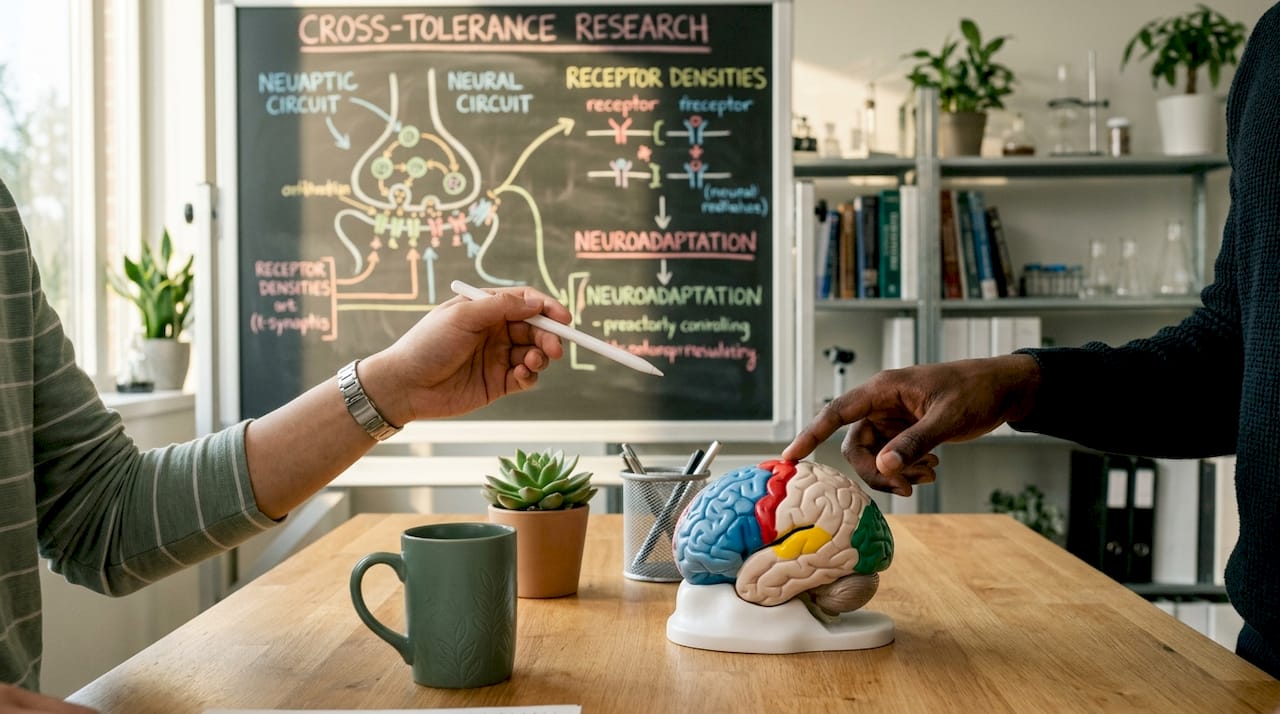
Cross-tolerance is the formal term for what happens when tolerance to one substance reduces the perceived effects of another. With alcohol and THC, cross-tolerance is real but partial and uneven. That distinction matters more than most people realize.
Alcohol primarily acts on GABA and glutamate receptors, the brain’s main inhibitory and excitatory systems. THC acts on CB1 cannabinoid receptors, which are concentrated in areas governing memory, appetite, pain, and mood. These are distinct systems. They do not share the same receptor sites, which means tolerance to one does not directly translate to tolerance to the other.
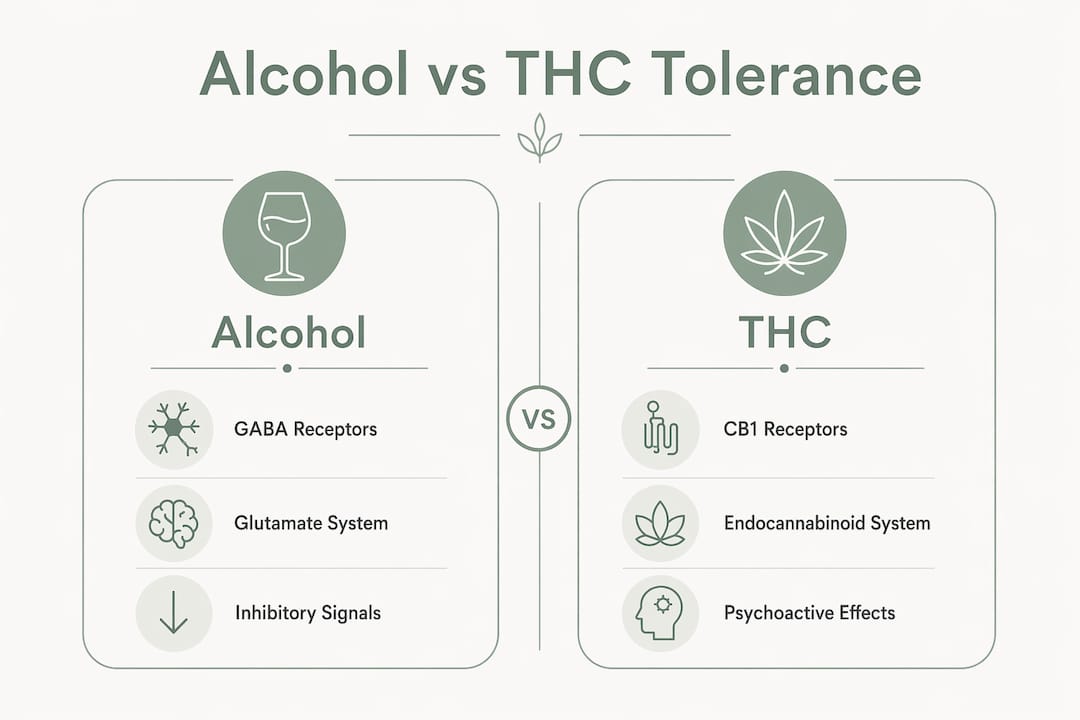
What they do share is the brain’s reward circuitry. Both substances trigger dopamine release in the nucleus accumbens, the brain’s pleasure center. Heavy use of both substances causes receptor downregulation across CB1 and GABA systems, reducing the perceived intensity of both highs. This is behavioral cross-tolerance: the reward system adapts to both substances together, even though the receptor pathways are separate.
Here is where it gets complicated for adults who drink regularly:
- Cardiovascular tolerance develops quickly. Your heart rate response to combined use diminishes faster than other effects.
- Cognitive tolerance develops more slowly. Memory impairment, reaction time, and decision-making stay compromised longer than you feel them.
- Nausea tolerance is the most unpredictable. For some people it never fully develops, regardless of how long they have used both substances.
- Subjective intoxication often drops before physiological impairment does. You feel less high, but your body is still impaired.
Pro Tip: Feeling less intoxicated than you used to does not mean you are less impaired. Cognitive and motor effects outlast the subjective buzz, especially when alcohol and THC are combined.
Researchers emphasize that perceived cross-tolerance leads people to underestimate their actual intoxication level, which raises the risk of overconsumption and dangerous decisions.
Why alcohol tolerance does not predict your THC tolerance
This is the part most adults get wrong. You might have a high alcohol tolerance built up over years of social drinking. That does not mean your body handles THC the same way. The two tolerance profiles develop through different mechanisms and affect different functions at different speeds.
Tolerance to the cardiovascular effects of combined use, like elevated heart rate and blood pressure, forms faster than cognitive tolerance. That means you stop noticing your heart racing before you stop being cognitively impaired. The gap between those two points is where people make bad decisions.
Here is how the tolerance mismatch plays out in practice:
- You drink regularly and have built solid alcohol tolerance. Your GABA system has adapted. You feel less sedated per drink than a casual drinker.
- You add cannabis expecting a proportional effect. Because your reward system is partially adapted, the subjective high feels manageable.
- THC absorption is still amplified by the alcohol in your system. Blood THC levels spike regardless of your tolerance history.
- Cognitive impairment accumulates faster than you perceive it. You feel in control while your reaction time and judgment are significantly compromised.
- Nausea hits without warning. The vestibular and gastrointestinal effects of combined use, including dizziness and stomach irritation, can appear even in experienced users.
The “greening out” phenomenon, which refers to sudden nausea, dizziness, and anxiety from combined use, is a predictable result of these interactions. Alcohol irritates the stomach lining while THC alters the brain’s anti-nausea signaling, and the two effects compound each other. Tolerance to alcohol does not protect you from this.
The deeper problem is dose escalation. Users chasing the original crossfade experience tend to increase both alcohol and THC intake over time. Tolerance makes the high feel smaller, so the instinct is to use more. That pattern raises physiological harm even as subjective intensity drops. Understanding how THC affects high-tolerance users is critical before you assume your tolerance protects you.
Practical tips for managing THC use with your alcohol tolerance
Knowing the science is useful. Applying it is what keeps your experience enjoyable and safe. These guidelines apply specifically to adults who drink regularly and want to add cannabis to their routine without unpleasant surprises.
- Start with a lower THC dose than you think you need. Alcohol in your system amplifies THC absorption, so your usual dose will hit harder. Cut it by at least half if you have been drinking.
- Drink water between substances. Hydration does not change pharmacokinetics, but it reduces the gastric irritation that contributes to nausea.
- Avoid edibles when drinking. Combining edibles with alcohol produces synergistic impairment that lasts longer and is harder to predict than inhaled cannabis.
- Do not drive. The legal BAC limit of 0.08% does not capture the added impairment from combined use. Standard field sobriety tests miss it too.
- Pay attention to nausea signals early. Greening out escalates quickly. If you feel dizzy or queasy, stop consuming both substances immediately and sit or lie down.
- Check the timing of your last drink. The vasodilation effect from alcohol peaks within 30–60 minutes of drinking. Cannabis use during that window carries the highest absorption risk.
- Know your baseline. Reading about THC hitting harder than alcohol helps you calibrate expectations before you mix the two.
The relationship between alcohol and marijuana is not a simple addition. It is a pharmacological interaction that changes based on your tolerance history, the order you consume, the dose, and the method of ingestion. Treating it as predictable is the most common mistake adults make.
Key Takeaways
Alcohol tolerance does not protect you from THC’s amplified effects when both substances are combined, because the two interact pharmacologically rather than simply adding together.
| Point | Details |
|---|---|
| Alcohol amplifies THC absorption | Drinking before cannabis raises peak blood THC by 50–100% via pulmonary vasodilation. |
| Cross-tolerance is partial, not complete | Shared reward circuits adapt, but CB1 and GABA receptor systems remain distinct. |
| Tolerance develops unevenly | Cardiovascular tolerance forms faster than cognitive tolerance, creating a dangerous gap. |
| Greening out is predictable | Combined gastric and vestibular effects cause nausea even in experienced users. |
| Dose escalation raises real risk | Chasing a diminished high by using more of both substances increases physiological harm. |
What I’ve learned from watching people navigate this combination
I have spent years paying attention to how adults talk about mixing alcohol and cannabis, and the pattern I see most often is confidence built on the wrong evidence. Someone drinks regularly, handles their alcohol well, tries cannabis, and assumes their tolerance carries over. It does not. Not in the way they expect.
The most dangerous moment is not the first time someone mixes the two. It is the fifth or tenth time, when they have stopped being cautious because nothing bad happened before. Tolerance to the subjective high grows faster than tolerance to the actual impairment. That gap is where people end up making decisions they regret, whether that is getting behind the wheel, taking another dose, or simply having a miserable night.
What actually works is slow titration and honest attention to your body. Not how high you feel, but how your coordination, memory, and reaction time are performing. Those are harder to self-assess, which is exactly why you should err on the side of less when combining substances. The best time to consume a THC beverage is when you can give it your full attention, not as an afterthought at the end of a night of drinking.
Tolerance is nuanced. It is not a shield. Treat it as a data point, not a permission slip.
— Adam
Tryfloral THC beverages: a cleaner way to dose
If you want the social experience of a drink without the absorption complications that come from mixing alcohol and cannabis, Tryfloral’s farm-to-fridge THC beverages are worth knowing about.
Tryfloral makes zero-calorie THC seltzers with consistent, clearly labeled doses so you always know exactly what you are getting. There is no guesswork about how much THC is in each can, which makes it far easier to stay within a comfortable range. Whether you prefer Harvest Apple or Tropical, each option is designed for adults who want a controlled, enjoyable experience. Enjoy responsibly, and always follow your local laws regarding THC consumption.
FAQ
Why does alcohol make THC hit so much harder?
Alcohol dilates the blood vessels in your lungs, which increases THC absorption when you inhale. This can raise peak blood THC levels by 50–100% compared to cannabis use alone.
Does having a high alcohol tolerance mean I can handle more THC?
No. Alcohol tolerance and THC tolerance develop through different receptor systems. High alcohol tolerance does not protect you from amplified THC absorption or cognitive impairment when both substances are combined.
What is cross-tolerance between alcohol and THC?
Cross-tolerance refers to reduced sensitivity to one substance caused by tolerance to another. With alcohol and THC, it occurs through shared reward circuits, but it is partial and uneven across cardiovascular, cognitive, and nausea effects.
What is “greening out” and how do I avoid it?
Greening out is sudden nausea, dizziness, and anxiety caused by combining alcohol and cannabis. Alcohol irritates the stomach lining while THC disrupts the brain’s anti-nausea signaling. Avoid it by using lower THC doses after drinking and stopping at the first sign of queasiness.
Is it safe to drive after combining alcohol and cannabis?
No. Research shows that combined use impairs driving beyond what standard sobriety tests detect, and the legal BAC limit does not account for the added impairment from THC.
