

Hemp-derived THC is chemically identical delta-9 THC sourced from hemp plants that qualify under the 2018 Farm Bill’s 0.3% delta-9 THC dry-weight threshold. The USDA, DEA, and FDA each play a role in how these products are regulated, and none of those agencies has approved a nonprescription hemp-derived THC product for medical use. Here at Tryfloral, we think the most important thing you can know upfront is this: federally compliant does not automatically mean non-intoxicating.
Key facts to keep in mind:
- Hemp-derived delta-9 THC is the same molecule as marijuana-derived delta-9 THC.
- The 0.3% limit is a legal threshold, not a safety ceiling.
- Products can contain many milligrams of THC per serving while still meeting Farm Bill rules.
- State laws vary widely, and federal compliance does not guarantee local legality.
Table of Contents
- What is hemp-derived THC? Understanding the legal definitions
- What THC actually is and how hemp-derived variants compare
- How producers make hemp-derived THC products
- Where hemp-derived THC stands legally across the U.S.
- Effects, dosing, and safety signals you should know
- How to evaluate a hemp-derived THC product before you buy
- Why the 0.3% rule is more misleading than it looks
- Key Takeaways
- The part most brands skip telling you
- Authoritative sources and further reading
What is hemp-derived THC? Understanding the legal definitions
The 2018 Agriculture Improvement Act defines hemp as:
That single phrase, “by dry weight,” is where most consumer confusion starts. The 0.3% figure was originally an agricultural classification tool, not a safety standard. It was designed to distinguish industrial hemp from drug-variety cannabis in a field, not to cap how much THC a finished product could deliver to a consumer. Hemp and marijuana are both Cannabis sativa; the only regulatory difference is that chemical threshold. The same delta-9 THC molecule exists in both plants.
What THC actually is and how hemp-derived variants compare
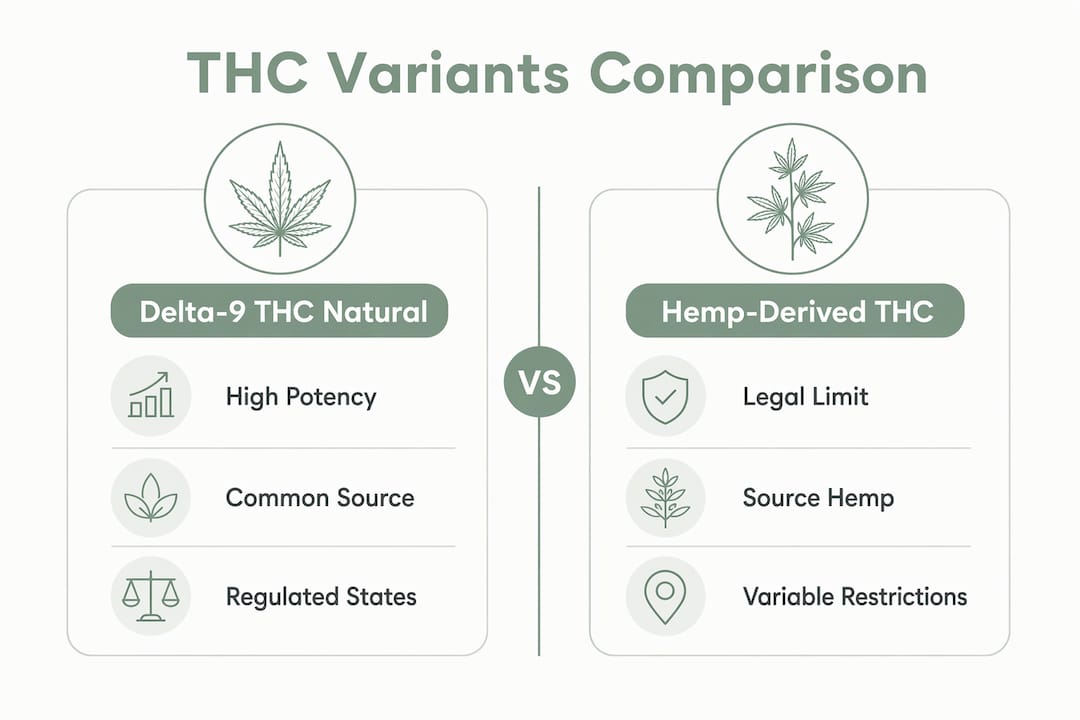
Delta-9 THC is the primary psychoactive cannabinoid in cannabis. It binds to CB1 receptors in the brain and central nervous system, producing the effects most people associate with cannabis. Crucially, the molecule is identical whether it comes from a hemp plant or a marijuana plant.
Beyond delta-9, the hemp market now includes several related isomers:
- Delta-8 THC: Milder psychoactive effects than delta-9; often produced by converting CBD. Many states have moved to restrict or ban it.
- Delta-10 THC: Even milder, less studied, and increasingly subject to state-level restrictions.
- HHC (hexahydrocannabinol): A hydrogenated form of THC; potency and legal status vary by state.
| Cannabinoid | Relative potency | Common source | State-level restrictions |
|---|---|---|---|
| Delta-9 THC | High | Natural hemp or converted CBD | Widely regulated; some states ban hemp-derived forms |
| Delta-8 THC | Moderate | Mostly CBD conversion | Banned or restricted in many states |
| Delta-10 THC | Low to moderate | CBD conversion | Increasingly restricted |
How producers make hemp-derived THC products
Most hemp-derived THC products reach you through one of three production paths. The first is direct extraction: isolating naturally occurring delta-9 THC from hemp biomass. The second, and far more common, is chemical isomerization, where CBD is converted into delta-9 THC in a lab. Lab analysis found that in one sample of commercial hemp delta-9 products, 49% used THC converted from CBD, 26.5% used cannabis-sourced delta-9, and only 18.4% probably contained naturally biosynthesized hemp THC. The third path involves using distillates or concentrates to formulate edibles, beverages, and tinctures.
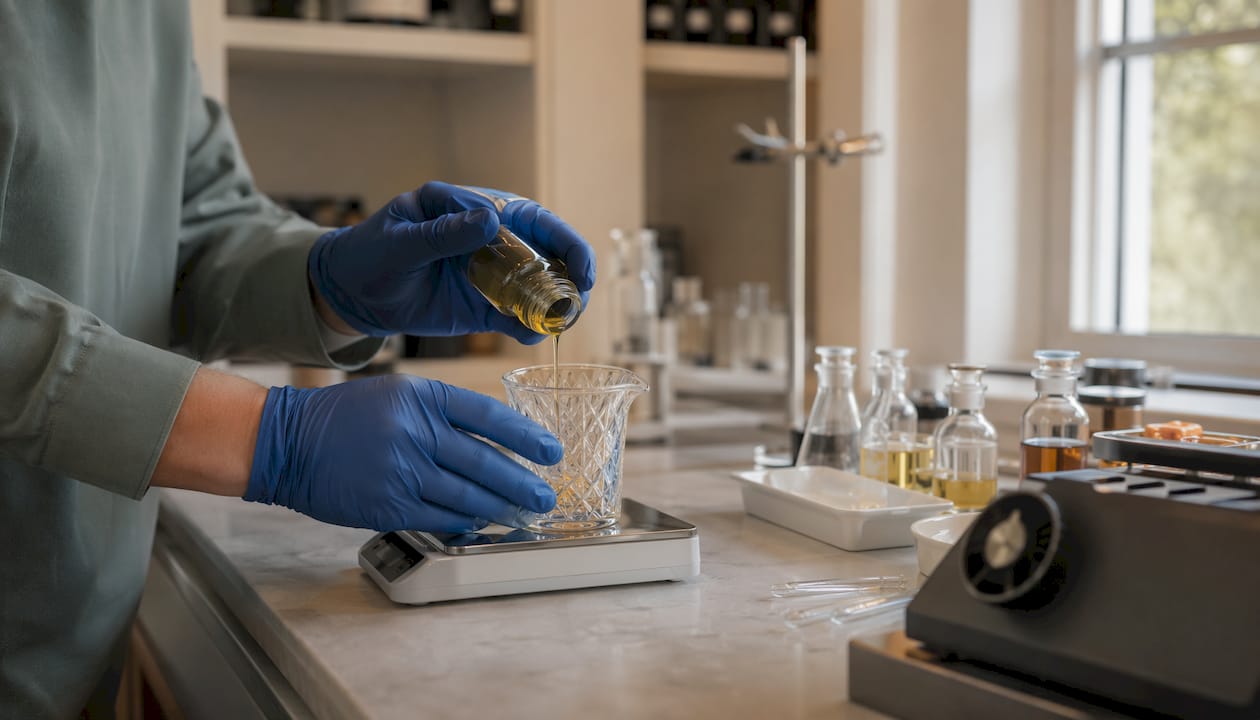
Conversion matters for two reasons. First, converted THC may show different cannabinoid marker ratios that lab tests can flag. Second, the process introduces potential residual solvents or reaction byproducts that a quality COA should screen for. Understanding how THC-infused beverages are formulated can help you ask better questions before you buy.
Pro Tip: When you see “hemp-derived” on a label, ask whether the THC was naturally extracted or converted from CBD. A reputable brand will tell you, and a third-party COA will show the cannabinoid profile that helps confirm it.
Where hemp-derived THC stands legally across the U.S.
Federally, hemp derivatives that meet the 0.3% delta-9 threshold are excluded from the marijuana definition under the Controlled Substances Act. That is the Farm Bill’s practical effect. However, the FDA has not approved any nonprescription hemp-derived THC product, and it has signaled ongoing safety concerns about THC in food and beverages. Only two synthetic THC formulations, dronabinol and nabilone, carry specific FDA approvals for medical use.
State law is where things get complicated fast.
States like New York cap total THC per package for hemp products sold outside licensed dispensaries. Others, including several in the South and Midwest, have banned delta-8 and other converted cannabinoids outright. A handful of states treat all intoxicating hemp derivatives the same as marijuana. Legislation is also moving at the federal level: a recent update to the hemp definition now requires that final hemp-derived cannabinoid products contain no more than 0.4 milligrams of combined total THC and similar-effect cannabinoids per container, effective November 12, 2026. Always check your state’s Farm Bill interaction rules before purchasing.
Effects, dosing, and safety signals you should know
Hemp-derived delta-9 THC produces the same range of effects as marijuana-derived THC: relaxation, mood elevation, altered perception, and at higher doses, impairment. Consumers report using these products for sleep support and mild pain management, but clinical evidence for those wellness claims remains limited.
Dose is everything. NIDA references 5 mg as a standard THC dose, and many state-regulated edibles are capped at relatively low milligram doses per serving. Hemp products face no such federal cap. A 10 g gummy at 0.3% delta-9 by weight contains roughly 30 mg of delta-9 THC, six times a standard dose. Beverage formats with precise milligram dosing tend to give a more consistent, manageable experience.
Side effects and risks to keep in mind:
- Short-term impairment of memory and coordination
- Anxiety or paranoia at higher doses
- Potential interactions with medications, particularly blood thinners and sedatives
- Positive result on a standard drug test, regardless of hemp source
- Higher risk for pregnant people, adolescents, and those with certain mental health conditions
There are no universal federal testing standards for hemp-derived THC products. State-regulated marijuana products typically go through stricter potency validation. That gap is why third-party lab testing matters so much.
How to evaluate a hemp-derived THC product before you buy
Shopping for hemp-derived THC online or in stores requires a short checklist. These steps take about two minutes and can save you from a product that is mislabeled, underdosed, or worse.
- Check milligrams per serving, not just percentage. A product at 0.3% can still be very potent depending on the serving size and total weight.
- Require a recent third-party COA. It should list delta-9, delta-8, and other cannabinoids by mg per serving, plus screens for pesticides, residual solvents, and heavy metals.
- Verify the COA date. Testing from more than 12 months ago may not reflect the current batch.
- Look for age verification at checkout. Responsible brands require ID confirmation for adults 21+.
- Check your state’s rules. Federal compliance is the floor, not the ceiling.
- Start with a low dose. If you are new to THC beverages or edibles, 2.5–5 mg is a reasonable starting point.
Pro Tip: A COA from a third-party lab (not the brand’s own facility) is the single most reliable signal of product quality. Look for the lab’s name, accreditation number, and a batch-specific test date. Tips on safe online buying practices apply here too: verify the lab is real and accredited before you trust the results.
Why the 0.3% rule is more misleading than it looks
The math is straightforward, and it surprises most people. A 10 g gummy at 0.3% delta-9 THC by weight contains approximately 30 mg of delta-9 THC. Compare that to the 5 mg NIDA standard dose, and you can see why “Farm Bill compliant” does not mean “mild.” Heavy edibles and large-format beverages can legally carry substantial THC loads while meeting the dry-weight rule, because dry weight in a liquid product refers to the solid content, not the total volume.
The sourcing picture adds another layer. In one sample analysis, only about 18% of commercial hemp delta-9 products contained naturally biosynthesized hemp THC. The majority were produced through CBD conversion or sourced from cannabis rather than hemp. That means “hemp-derived” on a label tells you about regulatory classification, not necessarily about how the THC was made.
Brands that publish COAs and disclose whether their THC is naturally extracted or converted are giving you the transparency you deserve. That disclosure is the difference between a label and actual accountability.
Key Takeaways
Hemp-derived delta-9 THC is molecularly identical to marijuana THC; the 0.3% dry-weight rule is a legal classification, not a safety guarantee, and packaged products can be intoxicating.
| Point | Details |
|---|---|
| Same molecule, different source | Hemp-derived and marijuana-derived delta-9 THC are chemically identical; only the plant source and regulatory treatment differ. |
| 0.3% is not a safety limit | A 10 g edible at 0.3% contains roughly 30 mg delta-9 THC, six times the 5 mg NIDA standard dose. |
| Conversion is common | Lab analysis found only 18.4% of commercial hemp delta-9 products used naturally biosynthesized hemp THC. |
| State laws override federal compliance | Some states ban converted cannabinoids or cap total THC per package; always verify local rules before buying. |
| COAs are your best protection | Require a recent third-party Certificate of Analysis listing cannabinoids by mg per serving and contaminant screens. |
The part most brands skip telling you
The hemp-derived THC category has moved faster than the regulatory frameworks meant to govern it. That speed has produced genuinely good products and genuinely problematic ones, often sitting side by side on the same shelf or the same website.
What I keep coming back to is the COA. Not as a compliance checkbox, but as a communication tool. When a brand publishes a batch-specific, third-party COA that shows you exactly how many milligrams of delta-9 are in your drink, they are telling you something about how they think about you as a consumer. They are saying: you can handle the truth, and you deserve it.
The beverage format is particularly worth paying attention to. Precise milligram dosing in a can is easier to control than a gummy you might eat half of and then forget about. That consistency matters, especially for adults who are new to THC or returning after a long break. Start low, know your state’s rules, and buy from brands that show you the lab work.
Authoritative sources and further reading
- 2018 Farm Bill hemp definition and recent statutory changes — Congress.gov / Library of Congress
- Potency and safety analysis of hemp delta-9 products — PMC / NCBI (the 0.3% dose math and conversion prevalence data)
- Therapeutic uses of cannabinoids — NCBI Bookshelf (FDA approval status and clinical evidence)
- What is hemp-derived delta-9? — Leafly (consumer explainer on molecular sameness)
- Cannabinoid Hemp: An Overview — Montana Department of Revenue (state cannabinoid hemp program guidance)
- New York State cannabinoid hemp consumer guidance — NY Office of Cannabis Management
- The Complete Guide to Hemp-Derived THC — Tryfloral (regulatory detail and product testing context)
- Farm-to-fridge process and product transparency — Tryfloral
This article is general information, not legal or medical advice. Regulations change frequently; confirm current rules with your state’s cannabis or hemp program and consult a qualified professional for your specific situation.
