

THC beverage labels are defined as the regulated panels on cannabis drinks that display potency, serving size, ingredients, and safety information required by law. Reading these labels correctly is the single most important skill for safe, enjoyable cannabis drink consumption. This reading THC beverage labels guide covers every element you need to know, from milligrams per serving to Certificates of Analysis (COAs), so you can make confident choices every time. Tryfloral builds its labels around full transparency, making it easier for you to understand exactly what you’re drinking before you take your first sip.
What key information does a THC beverage label show?
THC content is listed per serving and as a total for the entire package. These are two different numbers, and confusing them is the most common mistake new consumers make.
Here are the core elements every THC beverage label should include:
- THC mg per serving. This tells you how much THC you consume in one standard portion, typically one can or a defined fraction of a bottle.
- Total THC per package. A single bottle may contain multiple servings. The total THC figure reflects the full amount inside.
- Serving size. Labels define what counts as one serving, often in fluid ounces or milliliters. Knowing this prevents accidental overconsumption.
- Ingredient list. Cannabis beverage labels must include ingredient lists, allergen information, and legal compliance warnings to protect consumers. Check this section if you have food sensitivities.
- Lab testing information. Look for a QR code, batch number, or COA reference. This links you to third-party test results that verify what the label claims.
- Safety warnings and legal icons. These include age restrictions, pregnancy warnings, and state or provincial compliance marks.
Pro Tip: Scan the QR code on any THC beverage before you buy it. If the code leads to a full lab report, that brand is being transparent. If it leads nowhere or to a generic homepage, treat that as a warning sign.
The ingredient list sits below the THC figures on most labels, and many consumers skip it entirely. That section tells you whether the product contains natural flavors, sweeteners, preservatives, or common allergens like tree nuts or soy. Reading it takes 30 seconds and can prevent a bad experience.
How do you interpret THC dosage and potency on a label?
Potency information is the most common but frequently misunderstood element on cannabis labels. Different formats, such as milligrams per serving versus a percentage, convey different meanings and require different mental math.
Follow these steps to read dosage information accurately:
- Find the serving size first. Before you look at any THC number, confirm what one serving equals in volume. A 12 oz can may be one serving, while a 16 oz bottle may be two.
- Read the THC mg per serving. This is your actual dose per use. A label reading “5 mg THC per serving” means you consume 5 mg if you drink one serving.
- Check the total package THC. A bottle labeled “20 mg total THC” with four servings contains 5 mg per serving. Do not drink the whole bottle expecting a 5 mg experience.
- Compare to standard dose ranges. A standard beginner dose for THC is generally 5–10 mg per session. Staying within that range is the safest starting point.
- Avoid percentage-only labels for beverages. Percentages are standard for flower but less useful for drinks. Milligrams give you a direct, measurable dose.
Consuming a whole 100 mg package in one dose delivers 10 times the intended amount. This is one of the most common errors among new cannabis beverage consumers, and it is entirely preventable by reading the serving size before drinking.
The gap between “per serving” and “total package” is where most dosing mistakes happen. A product with 25 mg total THC split across five servings delivers 5 mg per serving, which is a gentle, social dose. Drinking all five servings at once is a very different experience. Check the THC dosage guide from Tryfloral if you want a full breakdown of dose ranges by experience level.
Why do terpenes and ingredients matter on a THC beverage label?
Terpenes, minor cannabinoids, and ingredient lists influence your experience and safety but are often overlooked by consumers focused only on THC potency. That focus misses a significant part of the picture.
Terpenes are the aromatic compounds found in cannabis that shape the character of the effect. Myrcene tends to produce a relaxing, calm feeling. Limonene leans more energizing and uplifting. When a label lists terpenes, it gives you a preview of how the drink may feel, not just how strong it will be. For a deeper look at how these compounds work in drinks, the role of terpenes in cannabis beverages is worth reading before you shop.
Minor cannabinoids like CBD, CBG, and CBN may also appear on the label. These compounds interact with THC and can soften or shift the overall effect. A product with 5 mg THC and 5 mg CBD often feels noticeably different from one with 5 mg THC alone. The cannabinoids list from The Green House covers how each one behaves, which helps you match a product to your preferences.
Key things to look for in the ingredient and terpene section:
- Named terpenes. Specific names like myrcene or linalool tell you more than a generic “natural terpenes” claim.
- Minor cannabinoid ratios. A CBD:THC ratio on the label helps you predict the balance of effects.
- Sweeteners and additives. Some consumers react to certain sugar alcohols or artificial sweeteners. The ingredient list is the only place to catch this.
- Natural vs. artificial flavors. This distinction matters for consumers who prioritize clean ingredients.
Pro Tip: If a label lists only “cannabis extract” with no terpene or cannabinoid breakdown, the brand may not be offering full transparency. Look for products that name their compounds specifically.
How do you check label authenticity and lab testing transparency?
A trustworthy THC beverage label does more than state a THC number. It gives you a way to verify that number independently. Full-panel COAs contain safety screening for heavy metals, pesticides, residual solvents, and microbials. This information rarely appears on the label itself, but it should always be accessible through a code or link on the label.
| Label Element | What It Tells You | Why It Matters |
|---|---|---|
| QR code | Links to third-party lab results for that batch | Confirms potency and safety claims |
| Batch number | Identifies the production run for traceability | Lets you pull COA from manufacturer site |
| COA reference | Points to the full Certificate of Analysis | Shows contaminant screening results |
| Lab name | Identifies the testing facility | Verifies independence from the brand |
| Test date | Shows when the batch was tested | Confirms results are current, not outdated |
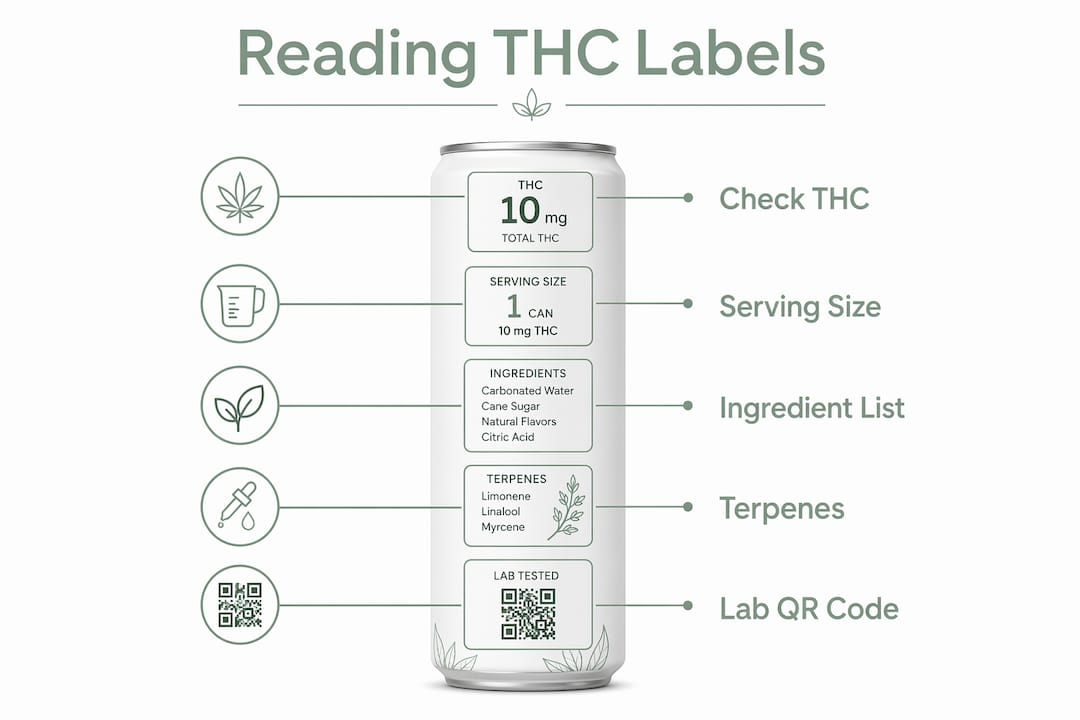
Many labels include a QR code linking to full lab results. Without a QR code, a batch number on the manufacturer’s website can serve the same purpose. If neither is present, that is a red flag worth taking seriously.
The cannabis Certificate of Analysis explains exactly what these documents contain and how to read them. A full-panel COA covers potency, terpene content, and safety screens. A partial COA that only shows THC percentage is not sufficient for confident purchasing.
Common mistakes to avoid when reading cannabis drink labels
Most dosing problems with THC beverages come from skipping the label, not from the product itself. A few consistent habits eliminate the majority of errors.
- Treating the whole bottle as one serving. Always check the serving size before drinking. A 16 oz bottle with two servings at 5 mg each contains 10 mg total, not 5 mg.
- Ignoring the expiration date. THC potency degrades over time. An expired product may deliver less effect than the label states, or it may have developed off-flavors from ingredient breakdown.
- Skipping the storage instructions. Many THC beverages require refrigeration after opening. Improper storage affects both safety and potency.
- Assuming higher THC means better quality. Overreliance on THC potency as a quality indicator is a common mistake. Ingredients, terpenes, and lab transparency are equally important.
- Not accounting for personal tolerance. A 10 mg dose is comfortable for some adults and too strong for others. Your label reading should always factor in your own experience level.
Pro Tip: For your first time with any new THC beverage, drink half a serving, wait 90 minutes, and assess how you feel before drinking more. THC beverages can take longer to absorb than other formats, and patience prevents overconsumption.
Keeping a simple log of which products you tried, at what dose, and how you felt helps you build a personal reference. Over time, you will know exactly which label numbers match your preferred experience.
Key Takeaways
Reading THC beverage labels correctly requires checking THC mg per serving, total package THC, ingredient transparency, and third-party lab verification before every purchase.
| Point | Details |
|---|---|
| THC per serving vs. total | Always distinguish between the dose per serving and the full package amount to avoid overconsumption. |
| Standard beginner dose | Start with 5–10 mg THC per session and wait at least 90 minutes before considering more. |
| Terpenes and minor cannabinoids | These label elements shape your experience as much as THC potency does. |
| COA and lab verification | Use QR codes or batch numbers to access full-panel lab results before trusting any potency claim. |
| Ingredient and allergen review | Check the ingredient list every time, especially if you have food sensitivities or dietary preferences. |
What I’ve learned from years of reading THC beverage labels
Most consumers walk into a dispensary or browse online and head straight for the THC number. I understand the instinct. It feels like the most objective data point on the label. But after spending years paying close attention to cannabis beverage products, I can tell you that the THC milligram figure is the beginning of the story, not the whole thing.
The brands I trust most are the ones that make their COAs easy to find. Not buried on a website after three clicks, but right there on the label with a scannable code. That transparency signals that the brand stands behind its product at every step of production. When a label is vague about its lab testing, I move on.
Terpenes changed how I shop. Once I started paying attention to which terpenes a product listed, my experiences became far more predictable. A drink with myrcene and linalool on a Friday evening is a different choice than one with limonene and pinene on a Saturday afternoon. The label gives you that information if you know where to look.
My honest recommendation: read the full label every time, even on products you have bought before. Formulations change, batch numbers change, and lab results vary. Two minutes of label reading before you open a can is the simplest THC beverage safety tip there is.
— Adam
Tryfloral makes label reading straightforward
Tryfloral is a farm-to-fridge THC beverage brand built around the idea that you should never have to guess what’s in your drink.
Every Tryfloral product displays THC mg per serving and total package THC clearly on the front panel. Ingredient lists are complete, terpene information is included where relevant, and COA access is built into the label. The full THC seltzer range covers multiple flavors with standardized serving sizes, so the label math stays consistent across every product you try. If you want to understand the quality standards behind the label, the farm-to-fridge difference page walks through Tryfloral’s sourcing and testing process from start to finish. Please enjoy responsibly, and always confirm you are of legal drinking age in your state.
FAQ
What does THC mg per serving mean on a label?
THC mg per serving is the amount of THC in one standard portion of the beverage. If a label reads “5 mg THC per serving” and the bottle contains two servings, the total package contains 10 mg THC.
What is a Certificate of Analysis for a THC beverage?
A Certificate of Analysis (COA) is a third-party lab document that verifies a product’s THC potency and screens for contaminants like heavy metals, pesticides, and residual solvents. Access it through the QR code or batch number on the label.
What is a safe starting dose for a THC beverage?
A standard beginner dose is 5–10 mg THC per session. Start at the lower end, wait at least 90 minutes, and do not consume more until you know how your body responds.
Why should I check terpenes on a THC drink label?
Terpenes shape the character of the effect, not just the strength. Knowing which terpenes are present helps you predict whether a drink will feel relaxing, energizing, or balanced before you open it.
What are red flags on a THC beverage label?
Missing COA access, no batch number, vague ingredient descriptions, and the absence of a named testing lab are all signs that a brand may not be offering full transparency about its product.
