

The “hangover-free” label on cannabis beverages has become one of the most appealing selling points for adults who want to socialize without paying for it the next day. But the science behind that promise is more complicated than the marketing suggests. Next-day feelings after cannabis drinks depend on dose, your personal metabolism, what else you consumed, and the specific cannabinoid profile in the bottle. Before you swap your beer for a THC seltzer and assume you’re in the clear, here’s what the current research actually tells us, and how to make smarter choices.
Table of Contents
- What does the science say about next-day effects?
- Key factors that shape your ‘next day’ feeling
- Cannabis drinks versus alcohol: Is the ‘hangover-free’ promise real?
- How to minimize next-day effects and choose better cannabis drinks
- What most people miss about ‘hangover-free’ claims
- Discover craft cannabis drinks made for better mornings
- Frequently asked questions
Key Takeaways
| Point | Details |
|---|---|
| Clinical proof is limited | Most ‘hangover-free’ claims are not product-specific or well-studied in clinical trials. |
| Dose and mix matter | Higher THC and CBD doses, and mixing with alcohol, make lingering effects more likely. |
| Choose quality brands | Farm-to-fridge, transparent cannabis drinks best minimize unwanted residual effects. |
| Timing affects next day | Enjoy your drink earlier and avoid pairing with alcohol for an easier morning. |
| Personal factors count | Your own metabolism, tolerance, and routine shape how you feel after cannabis beverages. |
What does the science say about next-day effects?
The idea that cannabis drinks are a clean, consequence-free alternative to alcohol is understandable. No ethanol means no acetaldehyde buildup, no liver stress from alcohol processing, and no dehydration from diuretic effects. That logic holds up. But “no alcohol” does not automatically mean “no residual effects.”
The honest answer is that we don’t have robust, product-specific clinical data to back the blanket “hangover-free” claim. As food and wellness writers at Food & Wine have noted, experts are concerned about dose opacity in the THC beverage space, and the marketing health claims are not supported by reliable randomized clinical trial data. The research gap exists partly because cannabis remains federally scheduled in the U.S., which constrains the type of clinical trials that can be run on specific commercial products.
What we do know from pharmacokinetic research is more nuanced. A detailed study on heavy cannabis users found that the mean terminal half-life of Δ1-THC was approximately 4.3 days, with some subjects showing half-lives of 9.6 and even 12.6 days. That means THC is not simply “out of your system” by morning, especially for frequent users.
Keep in mind: “No hangover” is not a guaranteed outcome. Residual effects like mental fogginess, sluggishness, or mild cognitive slowing can persist based on your dose, tolerance, and how your body processes cannabinoids. Check our guide to THC drinks for more practical context.
Here’s a quick summary of what the science currently supports and where the gaps remain:
- Supported: Cannabis beverages avoid alcohol-specific hangover triggers (dehydration, acetaldehyde toxicity, electrolyte imbalance)
- Supported: THC and CBD both have long elimination phases that can carry into the next day
- Unsupported by current data: That any specific THC beverage product is clinically proven to leave you residual-effect-free
- Under-studied: Dose-specific next-day impairment from commercially available, fast-absorbing THC drink formulations
You can explore more evidence-based discussions on the topic across our cannabis beverage blogs, where we break down the ingredients, effects, and choices that matter.
Key factors that shape your ‘next day’ feeling
Once you understand that the science is still catching up, the next step is recognizing what actually determines how you feel after a cannabis drink. It is not random. There are clear, identifiable variables.
Dose
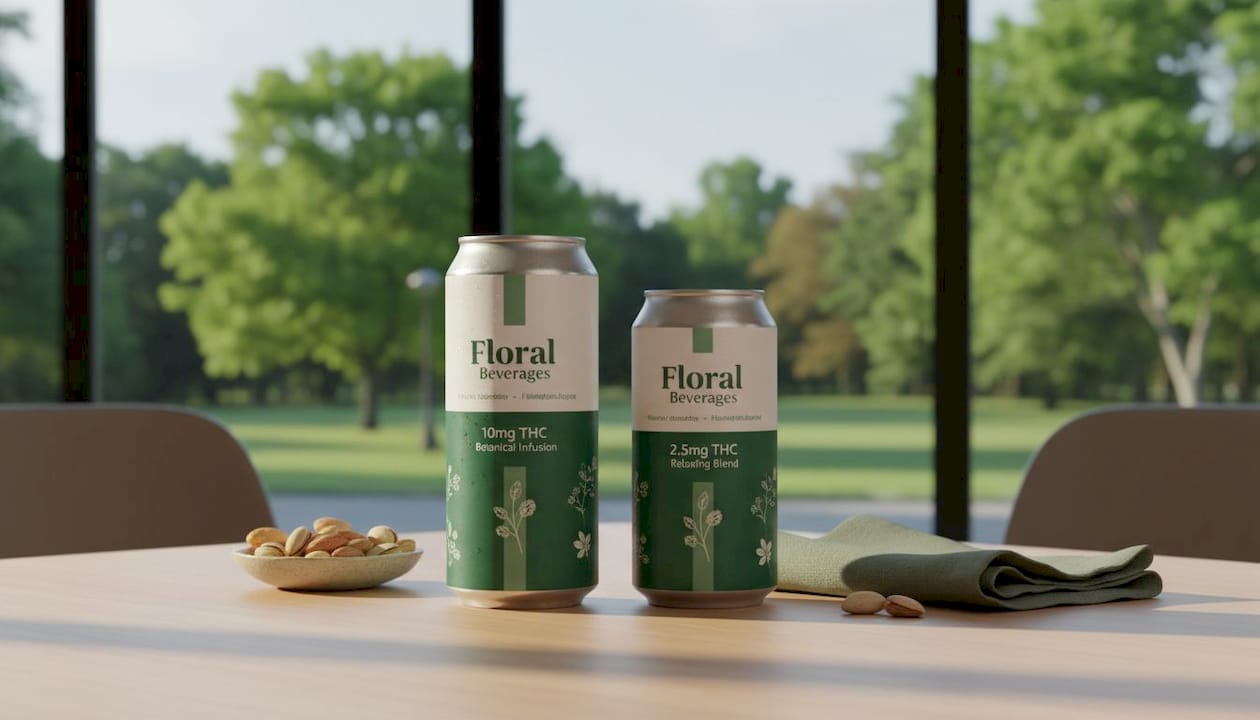
This is the biggest one. A 2.5mg THC microdose seltzer and a 10mg THC craft cocktail are not the same experience, and they are definitely not the same next-morning experience. Higher THC doses take longer to metabolize and increase the likelihood that you will wake up feeling a little off. CBD dosing matters too. Research on CBD’s plasma half-life after oral dosing found a terminal elimination half-life exceeding 134 hours, with model estimates suggesting over 70 days to reach steady-state trough concentrations with once-daily dosing. That is far longer than most people expect from a “wellness” ingredient.
Cannabinoid profile
Not all cannabis drinks are THC-only. Many include CBD, CBG, or other minor cannabinoids. A double-blind, crossover study found that CBD co-administered with THC changed plasma concentrations of THC and its active metabolite (11-OH-THC), as well as performance impairment outcomes compared to THC alone. In plain terms: the cannabinoid mix in your drink changes how impaired you feel and how long those effects last.
Metabolism and tolerance
Infrequent users metabolize cannabinoids more slowly and feel effects more strongly. If you drink cannabis beverages occasionally, you are more likely to notice next-day residual feelings than someone who uses cannabis regularly. Tolerance is real, and it matters.
Co-use with other substances
Mixing cannabis drinks with alcohol or even caffeine shifts the picture. See the comparison table below.
| Factor | Lower next-day risk | Higher next-day risk |
|---|---|---|
| THC dose | 2.5mg or under | 10mg or more |
| CBD content | Low or none | High CBD included |
| Alcohol co-use | None | Any amount |
| Consumption timing | Early evening | Close to bedtime |
| Personal tolerance | Frequent user | Occasional or first-time |
| Metabolism speed | Fast metabolizer | Slow metabolizer |
Pro Tip: If you are new to cannabis beverages or sensitive to THC, always start with the lowest dose available and give yourself at least 90 minutes before considering a second drink. The non-alcoholic beverage guide has solid practical advice on pacing and drink selection.
Cannabis drinks versus alcohol: Is the ‘hangover-free’ promise real?
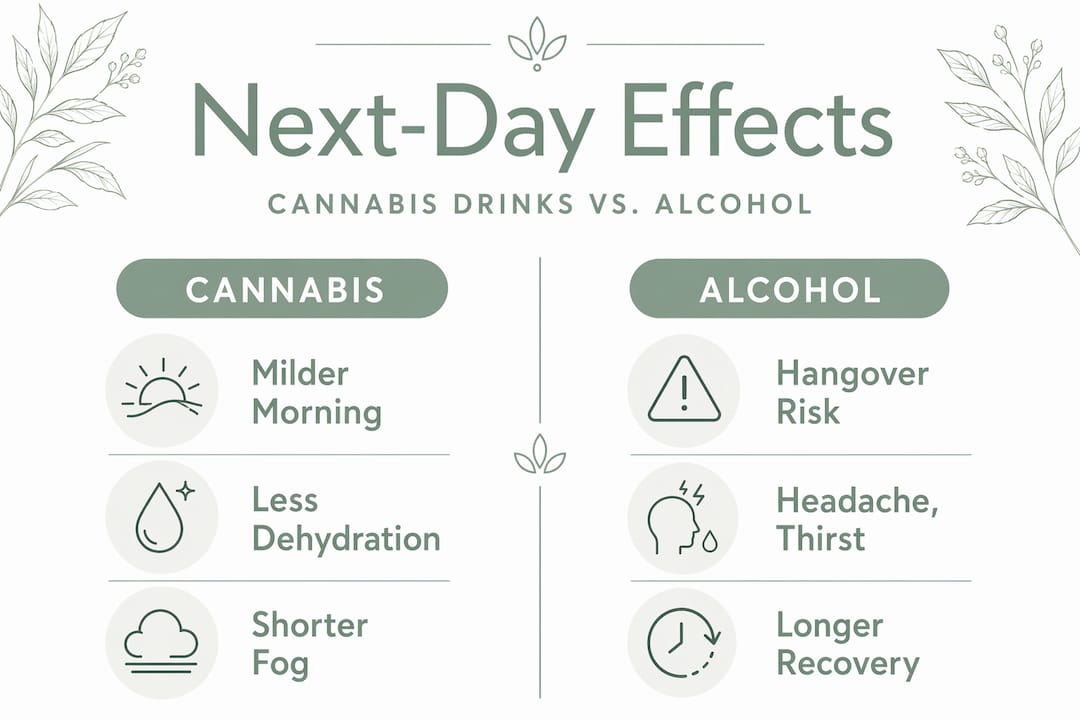
For most people, a mindfully consumed cannabis drink will leave them feeling significantly better the next morning than a comparable night of alcohol drinking. That part of the marketing narrative is often true. Alcohol causes inflammation, dehydrates you, disrupts sleep quality, and produces toxic byproducts. Cannabis beverages do none of those things in the same way.
But “better than alcohol” and “completely free of residual effects” are not the same statement. The gap between those two claims is where expectations can get misaligned.
There is also a critical co-use issue. When people switch to cannabis drinks at social events, they do not always drop alcohol entirely. Sometimes they have a beer or two and then reach for a THC seltzer later in the evening. That combination is where things get more complicated. A study published in JAMA Network Open found that cannabis combined with alcohol produced greater driving impairment and subjective intoxication than either substance alone. The research also noted that standard legal alcohol thresholds are insufficient measures of impairment when cannabis is co-used. Any next-day effects in that scenario are a product of both substances working together, not just the cannabis.
The real comparison: For a solo cannabis drink night (no alcohol), most people report waking up without classic hangover symptoms. For a mixed night (cannabis plus alcohol), expect compounded effects that may resemble a moderate hangover.
Here is a practical side-by-side breakdown:
| Experience | Alcohol only | Cannabis drink only | Both combined |
|---|---|---|---|
| Dehydration | Significant | Minimal | Moderate |
| Nausea | Common | Rare | Possible |
| Morning fogginess | Common | Dose-dependent | More likely |
| Sleep quality | Disrupted | Usually better | Variable |
| Recovery time | Hours to full day | Usually shorter | Unpredictable |
Steps to minimize next-day effects when choosing cannabis over alcohol:
- Stick to one or two cannabis drinks total for the evening
- Choose a low-dose product (2.5mg to 5mg THC) and wait before having another
- Drink water consistently throughout the evening
- Avoid any alcohol on the same night
- Stop drinking cannabis beverages at least two to three hours before bed
- Eat a meal earlier in the evening to slow absorption slightly
Checking out premium THC beverage options can also help you identify well-formulated products that are designed for moderate, consistent effects.
How to minimize next-day effects and choose better cannabis drinks
The smartest move you can make is being selective about the product itself. Not all cannabis beverages are made with the same transparency or quality standards. Farm-to-fridge brands that clearly label their cannabinoid content, use clean ingredients, and test their products are a meaningfully better choice than loosely regulated options with vague dosing information.
According to best practices in dosing research, the clearest ways to reduce next-day risk are: keeping your THC and CBD dose low, using cannabis earlier in the evening rather than right before sleep, and avoiding alcohol co-use entirely. Those three rules alone cover most of the risk for most people.
Here is a practical checklist for choosing and consuming cannabis beverages responsibly:
- Read the label carefully. Know exactly how many milligrams of THC and CBD are in each serving and in the full container
- Choose transparent brands. Farm-to-fridge producers who publish their sourcing, testing, and formulation process give you predictable, consistent results
- Start low, stay low. 2.5mg to 5mg THC is an ideal starting point for most adults, especially in a social setting
- Avoid mixing. Not just alcohol, but also be cautious about pairing with high-caffeine drinks, which can mask how intoxicated you feel
- Time it right. Consuming your last cannabis drink at least two to three hours before sleep reduces the chance of feeling foggy the next morning
- Know your body. If you are a lighter user or have a naturally slower metabolism, your dose threshold for next-day effects is lower than average
Pro Tip: Try Floral THC Seltzers as a starting point. They are precisely dosed, low-calorie, and designed for social enjoyment without excess. Their straightforward labeling makes it easy to stay within a comfortable range.
Choosing quality matters as much as choosing wisely. A well-made cannabis drink from a brand that prioritizes clean sourcing and accurate dosing takes a lot of the guesswork out of your morning-after experience.
What most people miss about ‘hangover-free’ claims
Here is a perspective you will not find on many product pages: the “hangover-free” label is not a clinical finding. It is a marketing frame built on a reasonable hypothesis (no alcohol means no alcohol hangover) that has been extended well beyond what the data actually supports.
Experts cited in investigative reporting have pointed out that dose opacity is one of the biggest problems in the cannabis beverage industry. Many products do not give consumers the specific information they would need to genuinely manage their experience. When you do not know exactly how much THC is in your drink, or how bioavailable it is, or how it interacts with other things in your system, you are essentially experimenting without a proper baseline.
That does not mean cannabis drinks are dangerous or that the “fewer next-day symptoms” experience is a lie. For many people, it is genuinely true. But it is a personal data point, not a clinical guarantee. The problem is when marketing replaces that nuance with a blanket promise that sets unrealistic expectations.
The better path is learning your own body. Notice how you feel after one versus two drinks. Pay attention to timing, dose, and what else you had that day. Cross-reference your experience with clear, factual product information from brands you trust. That approach, grounded in your real response rather than borrowed claims, is far more reliable than any tagline.
And when you are looking for brands to trust, choose ones that are open about their formulation and sourcing rather than ones leaning heavily on language that sounds impressive but lacks specificity. Our rundown of better alternatives to conventional seltzers is a useful reference for finding options with real transparency.
Discover craft cannabis drinks made for better mornings
You now have the knowledge to drink cannabis beverages in a way that gives you the best possible next-day experience. The next step is finding products that actually support that.
Floral offers farm-to-fridge cannabis drinks crafted with clean ingredients, clear labeling, and precise THC dosing, so you always know what you are getting. Whether you prefer a canned Floral THC Seltzer for a casual night in or want to explore something more elevated with Floral THC Craft Cocktails, every product is built around a simple idea: enjoy your evening and feel good in the morning. Transparent sourcing, responsible dosing, and genuine quality are what make the difference. Try them for yourself and see what a better-made cannabis drink actually feels like.
Frequently asked questions
Can you really avoid a hangover with cannabis drinks?
Most people experience fewer classic hangover symptoms with cannabis drinks, but some may still feel groggy or sluggish depending on dose, timing, and personal sensitivity. Residual effects can persist based on individual metabolism and THC elimination rates, so it is not universally guaranteed.
What increases the chance of next-day fogginess from cannabis seltzers?
Higher doses, CBD-rich blends, mixing with alcohol, or slower personal metabolism all increase the odds of lingering effects the next day. Research shows cannabinoid co-administration changes both impairment outcomes and plasma THC concentrations compared to THC alone.
Does mixing alcohol with cannabis drinks change the next-day feeling?
Yes, combining alcohol and cannabis significantly increases impairment both immediately and the next day compared to using either one alone. Studies show greater driving impairment and prolonged effects when both substances are used together in the same session.
How long does THC or CBD stay in your system after a cannabis drink?
THC can have a long elimination half-life of several days in heavy users, while CBD’s plasma half-life after oral dosing exceeds 134 hours, meaning both cannabinoids stay present longer than most people expect.
What is the safest way to try cannabis beverages and avoid rough mornings?
Start with a low THC/CBD dose, drink earlier in the evening, and never mix with alcohol for a more predictable and easier morning. Following these three core practices covers the majority of next-day risk for most adult consumers.
