

Wellness drinks replacing wine are functional, non-alcoholic beverages crafted to deliver relaxation and social enjoyment without alcohol. The category includes botanical tonics, fermented kombuchas, magnesium-infused mocktails, and THC seltzers, each designed to match wine’s ritual and sensory complexity. Adaptogen interest has surged dramatically, with Google search volume for functional alcohol-free beverages up 48.3% between late 2024 and late 2025. Adults 21 and older are leading this shift, choosing drinks that support calm, clear-headed social experiences without the next-morning consequences of wine.
What are the top examples of wellness drinks replacing wine?
The best non-alcoholic wellness beverages share three qualities: flavor complexity, functional ingredients, and a satisfying ritual. Here are the main categories worth knowing.
Botanical and adaptogenic tonics
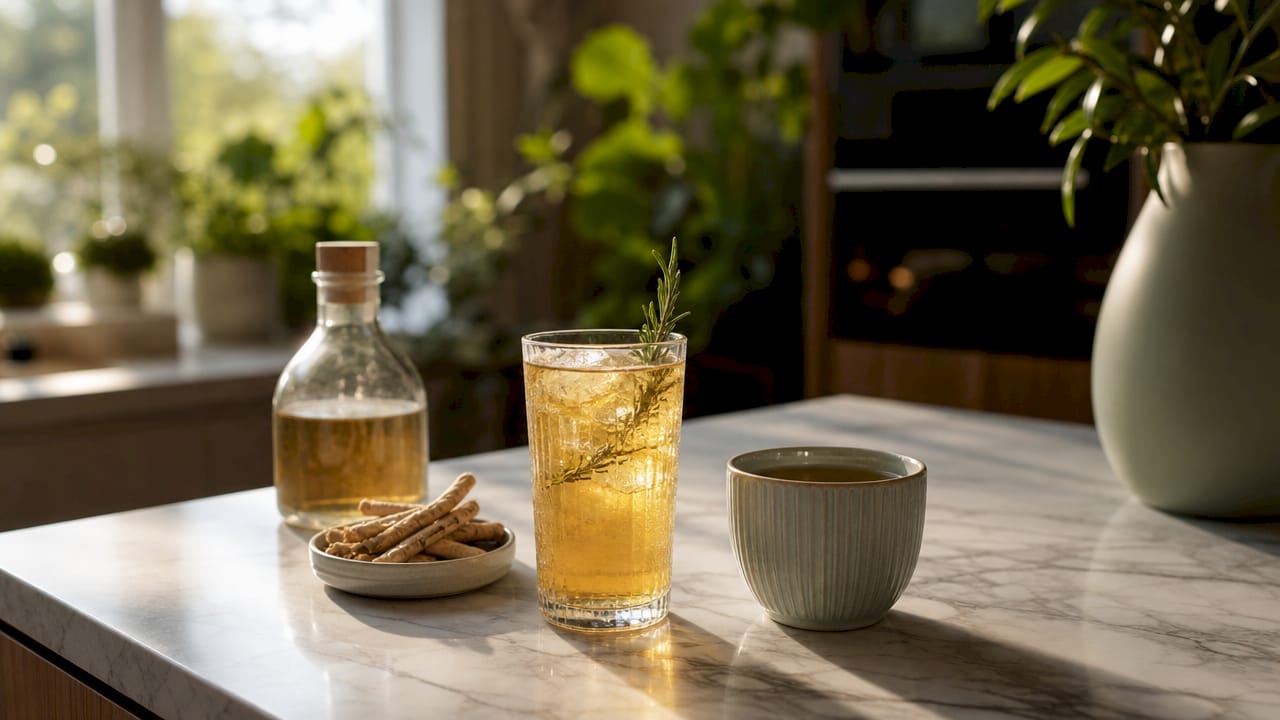
Botanical tonics use herbs, roots, and adaptogens to create layered, wine-like flavor profiles. Ingredients like ashwagandha, elderflower, and hibiscus deliver bitterness, floral notes, and a dry finish that wine drinkers recognize. These drinks work well in a stemmed glass over ice, which reinforces the social ritual without any alcohol.
Kombucha
Kombucha closely mimics wine’s sensory profile through acidity, bitterness, and tannins from the fermentation process. A dry, unflavored kombucha served in a wine glass can satisfy the craving for something complex and slightly tart. The fermented edge also supports gut health, which wine does not.
Magnesium-infused mocktails
Magnesium glycinate dissolved in sparkling water with citrus and mint creates a relaxing, low-calorie drink that supports muscle calm and sleep quality. DIY magnesium mocktails using fresh ingredients like raw kiwi can improve digestion and relaxation within two weeks of consistent use. Fresh ingredients matter here because heat destroys the enzymes and vitamins that make these drinks functional.
THC seltzers
THC seltzers deliver a mild, social buzz without alcohol’s sedative effects or morning hangover. They work especially well for adults who want the social ease of wine without the calories, liver stress, or impaired sleep. Tryfloral’s farm-to-fridge THC seltzers are zero-calorie, naturally flavored, and designed specifically for this occasion.
CBD-infused sparkling drinks
CBD sparkling drinks promote calm without intoxication, making them a strong choice for social settings where you want to stay sharp. They pair well with food and can be served in champagne flutes for a festive feel. The effect is subtle but consistent, especially with regular use.
Non-alcoholic wines
Dealcoholized wines preserve grape flavor but vary widely in sugar content. Some non-alcoholic wines contain 2–4 grams of sugar per glass, while others exceed 15 grams, which is comparable to a soft drink. Always check the label before assuming a non-alcoholic wine is the healthier choice.
Functional sparkling water blends
Sparkling water infused with L-theanine, ginseng, or Lion’s Mane mushroom offers calm focus without sedation. Lion’s Mane and magnesium grew by 963.8% and 1,000% year over year as of january 2026, showing how fast adults are adopting these ingredients. These drinks are ideal for work dinners or any occasion where you need to stay present.
Pro Tip: Serve functional sparkling water blends in a tall crystal glass with a citrus garnish. The visual presentation alone shifts the experience from “I’m skipping wine” to “I’m choosing something better.”
How do wellness drinks provide health and social benefits compared to wine?
Wellness drinks eliminate alcohol’s most damaging effects while preserving the social ritual that makes wine appealing. The benefits are real and specific.
- No liver stress. Non-alcoholic alternatives reduce risks like liver damage and hangovers that come with regular wine consumption.
- Better sleep. Alcohol disrupts REM sleep even in moderate amounts. Magnesium and L-theanine, found in functional mocktails, actively support sleep quality instead of degrading it.
- Mood support without sedation. Functional ingredients like L-theanine and Lion’s Mane promote calm focus and emotional regulation without the sedation or mood crash that follows alcohol.
- Social ease without impairment. THC seltzers and adaptogenic tonics create a relaxed, sociable feeling that fits dinner parties, dates, and celebrations without affecting your ability to drive or think clearly.
- Gut health. Kombucha and enzyme-rich mocktails actively support digestion, which wine, especially red wine with tannins, can irritate for some people.
Experts caution that non-alcoholic alternatives are best understood as risk-reduction tools, not nutrient-dense health foods. They work best alongside a balanced diet, not as a replacement for whole foods.
Sugar content is the one area where wellness drinks can mislead you. Many commercial mocktails use concentrated fruit juices for flavor, pushing sugar levels to 15–20 grams per serving. That is comparable to a can of soda. Reading labels carefully is the single most important habit you can build when switching to alcohol-free options.
What to consider when choosing wellness drinks over wine
Choosing the right substitute for wine takes more than picking something with zero alcohol on the label. These four factors separate satisfying choices from disappointing ones.
-
Check sugar content first. A drink with 18 grams of sugar per serving is not a health upgrade from a glass of dry red wine. Look for options with under 5 grams per serving, or make your own with whole ingredients.
-
Look for sensory complexity. Fermented and botanical-forward drinks with acidity, bitterness, and tannins satisfy wine drinkers better than sweet drinks. A dry kombucha or a hibiscus tonic will feel more like wine than a fruit punch mocktail.
-
Prioritize ingredient transparency. Brands that list every ingredient, including adaptogen doses, are more trustworthy than those hiding behind “proprietary blends.” You deserve to know what you are drinking.
-
Understand the role of cannabis. THC and CBD beverages are legal for adults 21 and older in many states. They provide genuine mood effects, not just flavor. If you want a functional buzz that replaces wine’s social ease, THC beverages are the most direct substitute.
-
Match the drink to the occasion. A magnesium mocktail works well for a quiet evening at home. A THC seltzer or botanical tonic fits a dinner party. A sparkling CBD drink suits a work event where you want to stay sharp.
Pro Tip: Buy a few different categories before committing to one. Taste a dry kombucha, a botanical tonic, and a THC seltzer in the same week. Your preference will become obvious fast.
How to use wellness drinks at social occasions as a wine substitute
Replacing wine at social events is as much about behavior as it is about the drink itself. Serving rituals like chilling, glassware choice, and food pairing play a major role in making wellness drinks feel rewarding rather than like a compromise.
- Use proper glassware. Serve kombucha or botanical tonics in wine glasses. Serve THC seltzers in tall crystal glasses. The glass signals to your brain that this is a special drink, not a consolation prize.
- Chill everything. Temperature matters as much with wellness drinks as it does with wine. A warm kombucha tastes flat. A properly chilled THC seltzer tastes crisp and intentional.
- Pair with food. Dry kombucha pairs well with cheese boards and charcuterie. Botanical tonics complement grilled fish and light salads. Pairing creates the same mindful ritual that wine culture has always offered.
- Offer variety to guests. Not everyone wants the same thing. Stock a dry kombucha, a sparkling CBD drink, and a THC seltzer so guests can choose based on their mood and comfort level. A good non-alcoholic party spread feels as thoughtful as a curated wine list.
- Make a DIY mocktail station. Set out sparkling water, fresh herbs, citrus, and a few functional syrups. Guests enjoy building their own drinks, and the activity itself becomes part of the social experience.
| Occasion | Best wellness drink choice | Why it works |
|---|---|---|
| Dinner party | Dry kombucha or botanical tonic | Pairs with food, mimics wine’s complexity |
| Casual hangout | THC seltzer | Social ease, zero calories, easy to share |
| Work event | CBD sparkling drink | Calm focus, no impairment, professional |
| Quiet evening at home | Magnesium mocktail | Supports relaxation and sleep quality |
| Celebration | Non-alcoholic sparkling wine | Festive feel, familiar ritual |
Key takeaways
The most satisfying wellness drinks replacing wine combine sensory complexity, functional ingredients, and a deliberate serving ritual, not just the absence of alcohol.
| Point | Details |
|---|---|
| Sensory complexity matters | Choose fermented or botanical drinks with acidity and bitterness to match wine’s mouthfeel. |
| Sugar is the hidden risk | Some non-alcoholic options exceed 15 grams of sugar per serving. Always read the label. |
| Ritual drives satisfaction | Glassware, chilling, and food pairing make wellness drinks feel rewarding, not like a sacrifice. |
| THC seltzers are the closest functional match | They deliver genuine mood effects and social ease without alcohol’s downsides. |
| Ingredient transparency is non-negotiable | Brands that list adaptogen doses and sourcing are more reliable than those using vague blends. |
Why the ritual matters more than the replacement
Switching from wine to wellness drinks taught me one thing that most articles skip: the drink itself is almost secondary. What people actually miss about wine is the pause. The pour. The glass in hand while the conversation flows. That ritual is what makes wine feel special, and it is completely transferable.
The adults I have seen make this switch most successfully are not the ones who found the perfect wine-flavored mocktail. They are the ones who built a new ritual around a drink they genuinely enjoy. A dry kombucha in a wine glass at 7 p.m. does more psychological work than a sweet mocktail served in a plastic cup.
The functional ingredient trend is real and accelerating. Adaptogen-infused beverages saw Instagram interest jump 254.3% in a single year. That is not a fad. Adults are actively building new social drinking norms, and the drinks are finally good enough to support that shift. THC seltzers, in particular, are the most honest replacement for wine’s actual effect. They deliver a mild, pleasant buzz in a zero-calorie format. That is a real upgrade, not a compromise.
My honest advice: start with one category, build a ritual around it, and give it two weeks. You will stop thinking about what you are missing and start noticing what you have gained.
— Adam
Tryfloral’s THC seltzers are worth trying as your wine replacement
If you are ready to move beyond sweet mocktails and dealcoholized wines, Tryfloral offers a genuinely different option. As a farm-to-fridge THC beverage brand, Tryfloral crafts zero-calorie seltzers with natural flavors designed for adults who want real relaxation without alcohol.
The Floral THC seltzer lineup includes flavors like Harvest Apple, Tropical, and Strawberry Mango, each delivering a mild, social buzz that fits dinner parties, casual evenings, and celebrations equally well. These are drinks built for adults 21 and older who take their wellness seriously. Please enjoy responsibly and only where THC beverages are legal in your state.
FAQ
What are the best wellness drinks to replace wine?
The best options are dry kombucha, botanical tonics, magnesium mocktails, and THC seltzers. Each delivers sensory complexity or functional mood effects that wine drinkers find satisfying.
Are non-alcoholic wines actually healthy?
Not always. Some dealcoholized wines contain over 15 grams of sugar per serving, which is comparable to a soft drink. Check the label before assuming a non-alcoholic wine is the healthier choice.
How do THC seltzers compare to wine for social occasions?
THC seltzers deliver a mild, social buzz without alcohol’s sedative effects, calories, or hangover. They are a direct functional substitute for adults 21 and older in states where THC beverages are legal.
What functional ingredients should I look for in wellness drinks?
Look for L-theanine, Lion’s Mane mushroom, magnesium glycinate, and adaptogens like ashwagandha or ginseng. These ingredients support calm focus, mood regulation, and relaxation without sedation.
Can I make my own wellness mocktails at home?
Yes. Sparkling water with magnesium glycinate, fresh citrus, and herbs like mint or basil creates a functional, low-calorie drink. Use fresh ingredients rather than heated or processed ones to preserve the beneficial enzymes and vitamins.
Recommended
- Why THC Beverages Replace Wine for Mindful Drinkers – Floral Beverages
- Social Drinking Alternatives Explained for Adults 21+ – Floral Beverages
- Non-Alcoholic Beverage Options Explained for Adults 21+ – Floral Beverages
- What makes a beverage non-alcoholic? A guide for health-conscious sipp – Floral Beverages
