

Many women choose THC for relaxation primarily as a low-dose, functional tool — to quiet stress, fall asleep more easily, or replace the nightly glass of wine with something that feels gentler on the body. This isn’t recreational excess; it’s intentional wellness. A peer-reviewed PMC study found that sleep problems were found to strongly predict THC substitution in younger women, and YouGov survey data shows relaxation and sleep improvement are the top two reasons many women use cannabis products. Tryfloral’s farm-to-fridge low-dose beverages are built around exactly this kind of measured, purposeful use.
The main reasons women reach for THC to unwind:
- Stress and anxiety relief after a long day
- Support for falling asleep faster and staying asleep
- Replacing alcohol as a lower-harm wind-down ritual
- Managing menstrual or menopausal discomfort
- A calming social experience without a hangover
This article is general information, not medical advice. Check your state’s laws and talk to a healthcare provider before using THC, especially if you take prescription medications.
Table of Contents
- Why do women prefer THC for relaxation over other options?
- How do cannabinoid ratios and dosing shape your relaxation experience?
- Which consumption format works best for relaxation?
- What are the real risks and legal basics you should know?
- A practical checklist for your first few THC relaxation sessions
- What if THC isn’t the right fit for you?
- How does THC actually produce relaxation in women’s bodies?
- Do women and men respond to THC differently?
- What are the potential long-term effects of regular THC use for women?
- How do hormonal fluctuations affect THC’s effectiveness?
- Key Takeaways
- The wellness-first approach actually makes sense here
- Tryfloral’s Harvest Apple THC Seltzer is worth a look
Why do women prefer THC for relaxation over other options?
The motivations aren’t one-size-fits-all, but a clear pattern shows up across research: women are drawn to THC for functional relief, not intoxication. According to YouGov, 60% of women who use cannabis cite anxiety relief as a reason, 58% cite sleep, and 53% cite pain relief. Men, by contrast, more often report social and enhancement motives.
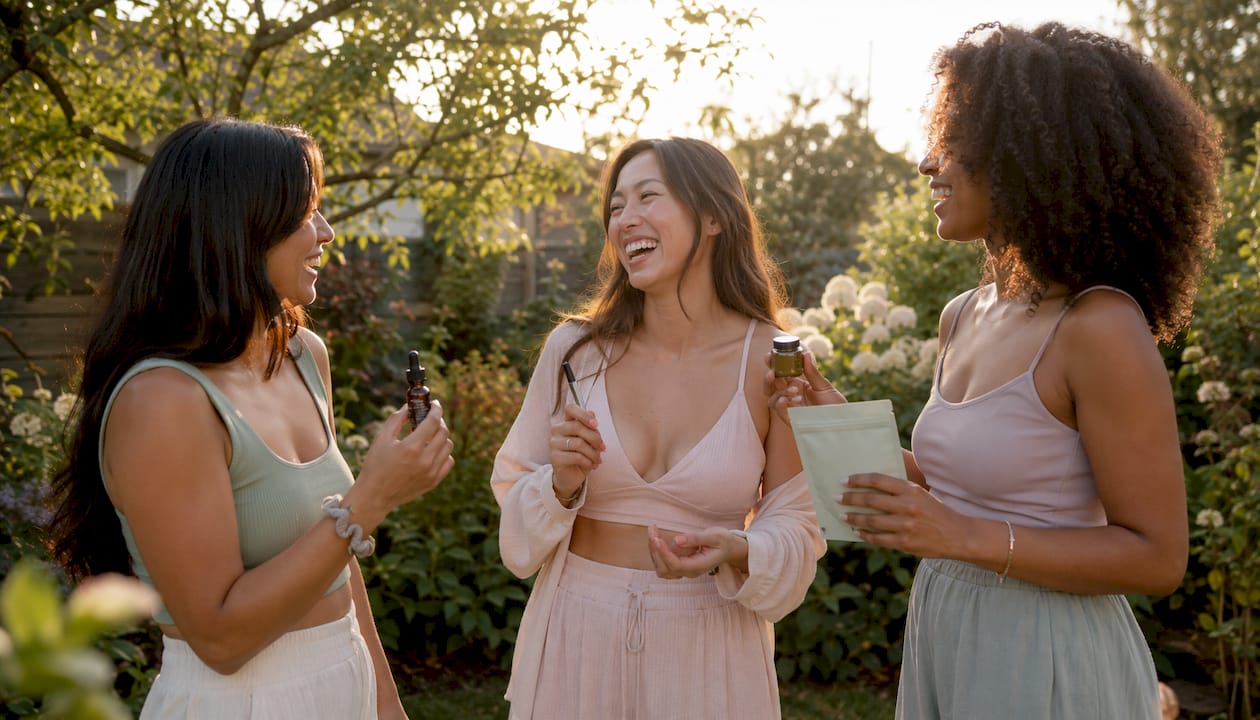
The PMC alcohol-substitution study adds an important layer: some younger women are intentionally replacing alcohol with cannabis, and sleep problems are a strong predictor of that switch. That’s a harm-reduction framing, not a recreational one. Alcohol disrupts sleep architecture; many women report THC helps them fall asleep without the next-morning fog that follows a few glasses of wine.
Hormonal factors also play a role. Estrogen interacts with the brain’s endocannabinoid system (ECS), which means THC sensitivity can shift across the menstrual cycle. New Jersey public health resources note that some women use cannabinoids to manage dysmenorrhea and menopausal symptoms, though the evidence base is still developing.
| Motivation | What the research shows |
|---|---|
| Stress and anxiety relief | 60% of women cannabis users cite anxiety relief (YouGov) |
| Sleep support | Sleep problems strongly predict THC substitution in younger women (PMC) |
| Alcohol replacement | Younger women intentionally substitute cannabis for alcohol (PMC) |
| Menstrual/menopausal symptoms | Some women use cannabinoids for dysmenorrhea and cycle-related discomfort (NJ.gov) |
“Relaxation and sleep improvement remain dominant factors in why many women use cannabis products.” — YouGov Cannabis Trends Survey
How do cannabinoid ratios and dosing shape your relaxation experience?
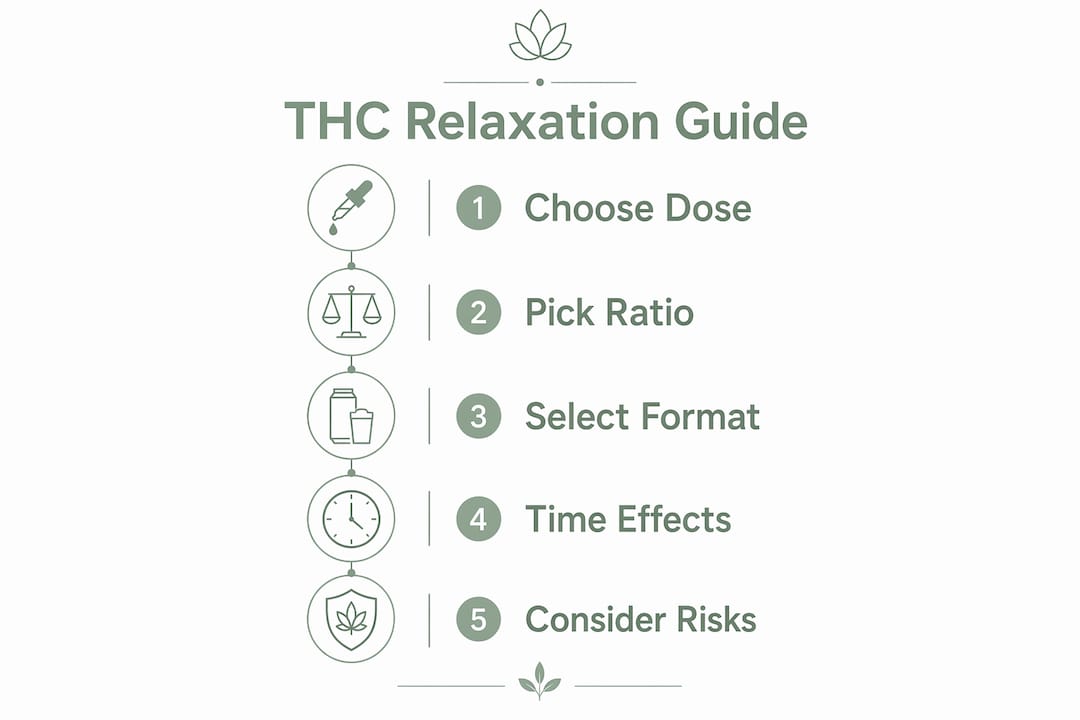
The ratio of THC to CBD matters more than most people realize. THC produces the psychoactive effect; CBD tends to moderate it. A Cannigma review explains that CBD can dampen THC’s psychoactive edge, which is why a 1:1 THC:CBD ratio is a common starting point for women seeking functional relaxation without heavy intoxication. CBD-dominant products (more CBD than THC) are the gentlest entry point; THC-dominant products carry more variability and higher risk of anxiety at elevated doses.
For new users, practitioner guidance consistently recommends starting at 2–5 mg THC and holding that dose for 3–5 sessions before adjusting. This builds a personal baseline and prevents the common mistake of assuming more equals better.
Signals to track when testing a ratio or dose:
- Sleep latency: are you falling asleep faster?
- Anxiety level: calmer or more on edge?
- Daytime carryover: any grogginess the next morning?
- Overall mood: does the effect feel proportionate and pleasant?
Pro Tip: Adding even a small amount of CBD to a THC product can reduce the likelihood of THC-driven anxiety for some women. If a pure THC product feels too intense, try a 1:1 or CBD-dominant option before lowering the THC dose.
Which consumption format works best for relaxation?
Format determines how quickly you feel effects, how long they last, and how easy it is to stay in control of your dose. For relaxation goals, predictability matters most.
| Format | Onset | Peak | Duration | Dose control | Best for |
|---|---|---|---|---|---|
| Inhalation (flower) | 2 min | — | 1–3 hrs | Moderate | Fast relief, experienced users |
| Vape | 5 min | — | 1–2 hrs | Moderate | Discreet, fast onset |
| Tincture/sublingual | — | 1 hr | 2–4 hrs | High | Precise dosing, ritual use |
| Edibles/beverages | 90 min | 2 hrs | 4 hrs | High (if measured) | Sleep, longer relaxation |
| Topicals | Localized | N/A | Varies | N/A | Muscle tension, no intoxication |
Women consistently report preferring low-dose beverages and tinctures for relaxation, largely because the dose is measured and the ritual feels intentional. Edibles and drinks have a slower onset, so patience is critical — redosing too early is the most common cause of overconsumption.
Pro Tip: Beverages and tinctures give you the clearest picture of how much THC you’re actually consuming. For your first several sessions, stick to a format with a printed mg-per-serving label so you’re not guessing.
What are the real risks and legal basics you should know?
THC is not risk-free, and being clear-eyed about that is part of using it responsibly.
Common side effects:
- Anxiety or paranoia, especially at higher doses or with THC-dominant products
- Cognitive slowing and impaired short-term memory
- Impaired coordination (do not drive or operate machinery)
- Next-day grogginess, particularly with edibles taken close to bedtime
Women with a personal or family history of anxiety disorders, psychosis, or substance misuse carry higher risk. Roughly 31% of U.S. adults will experience an anxiety disorder in their lifetime, with women diagnosed at higher rates — highlighting both the demand for anxiety relief and the importance of starting cautiously.
Safety non-negotiables:
- Do not use THC during pregnancy or while breastfeeding
- Avoid combining THC with alcohol (effects compound unpredictably)
- Check for interactions with sedatives, anti-anxiety medications, or blood thinners
- Verify your state’s adult-use laws before purchasing or possessing cannabis — legality varies significantly across the U.S.
A practical checklist for your first few THC relaxation sessions
- Set your intention and timing. Decide what you want: sleep support, stress relief, or social ease. Use THC when you have no obligations for the next several hours.
- Choose your format and ratio. Start with a 1:1 or CBD-dominant product in a measured format (beverage, tincture, or low-dose edible).
- Start with 2–5 mg THC. This is the practitioner-recommended starting range. Less is genuinely more when you’re new.
- Wait the full onset window. Beverages and edibles can take up to 90 minutes. Do not redose early.
- Note your experience. A simple journal entry (dose, format, time, effects, sleep quality) helps you refine your approach over sessions.
Before you buy, ask these questions:
- Exact mg of THC and CBD per serving
- Estimated onset and duration for that format
- Whether the product has been third-party lab tested
- Recommended serving size for beginners
Pro Tip: Pair a low-dose THC beverage with a calming transition ritual — dim the lights, put on quiet music, step away from screens. The ritual itself signals your nervous system to shift gears, and the THC works with that, not against it.
What if THC isn’t the right fit for you?
THC’s psychoactive effects aren’t for everyone, and that’s completely fine. Several alternatives offer real relaxation benefits without intoxication.
- CBD-dominant products: Case series cited by Cannigma show CBD-only regimens improved anxiety and sleep scores in a majority of participants, with less variability than THC. A CBD gummies overview covers the basics if you want to start there.
- Behavioral techniques: Cognitive behavioral therapy (CBT) for anxiety, structured sleep hygiene, and mindfulness practices have strong evidence bases and no drug interactions.
- Non-intoxicating topicals: Useful for localized muscle tension or menstrual cramps without any psychoactive effect.
When to talk to a clinician: If your anxiety or sleep problems are persistent, worsening, or interfering with daily life, a healthcare provider is the right first call, not a cannabis product. The same applies if you’re pregnant, breastfeeding, or managing a complex medication regimen.
How does THC actually produce relaxation in women’s bodies?
THC binds primarily to CB1 receptors in the brain, triggering the release of dopamine and reducing activity in the amygdala, the region most associated with fear and stress responses. That’s the basic mechanism. What makes it particularly relevant for women is how estrogen interacts with this system.
Psychology Today reports that when estrogen levels rise, the responsiveness of CB1 receptors increases, and the brain’s own endocannabinoid transmitters (2-AG and AEA) are elevated in the pituitary. The result: women may experience a greater sense of euphoria and relaxation at lower THC doses than men. Psychologically, THC also reduces rumination for many users, which is a meaningful benefit for women who carry disproportionate cognitive load from work and caregiving responsibilities.
Do women and men respond to THC differently?
Yes, and the differences are meaningful enough to change how you approach dosing. Women report a greater subjective “high” than men at equivalent low doses of THC (0.015 mg/kg), according to Psychology Today. Women also tend to develop tolerance and dependence faster than men after regular use begins.
Men more often use cannabis for social or enhancement reasons; women skew heavily toward therapeutic goals. That difference in motivation shapes product preferences too: women are more likely to seek clear dosing labels, balanced cannabinoid profiles, and smoke-free formats like edibles, tinctures, and beverages.
What are the potential long-term effects of regular THC use for women?
Regular THC use carries real long-term considerations. Tolerance builds with consistent use, meaning you may need more over time to achieve the same effect. Dependence is possible, and women appear to reach it faster than men. Heavy or long-term use has been associated with changes in memory and cognitive function, though research on low-dose, intermittent use is less conclusive.
For women using THC specifically for sleep, there’s a nuance worth knowing: THC may help you fall asleep initially, but regular use can suppress REM sleep over time, which affects memory consolidation and emotional processing. Cycling use (taking breaks) is one strategy practitioners suggest to preserve effectiveness and reduce tolerance buildup. A THC drinks sleep guide covers timing and dosing strategies specifically for sleep goals.
How do hormonal fluctuations affect THC’s effectiveness?
Your menstrual cycle directly influences how THC feels. During the follicular phase, when estrogen is rising, CB1 receptor sensitivity increases, so the same dose may feel stronger and more euphoric. Around ovulation and into the luteal phase, progesterone rises and estrogen drops, which can shift the experience toward more sedation or, for some women, more anxiety.
New Jersey public health resources note that some women use cannabinoids to manage dysmenorrhea, and Power Pulse Magazine reports that menopausal women are among those exploring cannabis for sleep disruption and mood changes tied to hormonal shifts. During perimenopause and menopause, declining estrogen may reduce baseline ECS activity, which some researchers suggest could explain why cannabis feels more impactful for some women in this life stage. The evidence is still emerging, but it’s a real enough pattern that tracking your cycle alongside your THC sessions is genuinely useful data.
Key Takeaways
Women who use THC for relaxation get the best results with low doses (2–5 mg THC), a 1:1 or CBD-dominant ratio, and a measured format like a beverage or tincture that makes dose control straightforward.
| Point | Details |
|---|---|
| Top motivations | Relaxation and sleep improvement remain dominant factors in why many women use cannabis products. |
| Start low, go slow | Begin at 2–5 mg THC and hold that dose for 3–5 sessions before adjusting. |
| Ratio matters | A 1:1 THC:CBD ratio balances relaxation with reduced risk of THC-driven anxiety. |
| Safety first | Avoid THC during pregnancy, while breastfeeding, or when combining with alcohol or sedatives. |
| Tryfloral option | Tryfloral’s Harvest Apple THC Seltzer is a measured, low-dose beverage built for women who want a calibrated, responsible relaxation option. |
The wellness-first approach actually makes sense here
Most conversations about cannabis still default to the recreational frame, and that misses what a large share of women are actually doing with it. The research is consistent: women use THC therapeutically, at lower doses, with a preference for formats that give them control. The alcohol-substitution trend isn’t a fringe behavior; it’s a documented pattern in peer-reviewed literature.
What I’d push back on is the idea that any amount of THC is automatically a wellness tool. The dose, the ratio, the format, and the timing all determine whether you get functional relaxation or an anxious, disorienting evening. The women who report the best experiences are the ones who treat it like any other wellness practice: intentional, measured, and adjusted over time based on real feedback from their own bodies.
Tryfloral’s Harvest Apple THC Seltzer is worth a look
If you’re ready to try a low-dose THC beverage, Tryfloral’s Harvest Apple THC Seltzer is a clean, zero-calorie option built specifically with women’s wellness goals in mind. Each can delivers a precise, measured dose so you know exactly what you’re getting, and the farm-to-fridge production process means quality control from source to shelf. It’s the kind of drink you can keep in your fridge for a post-work wind-down or share with friends who are curious about low-dose options.
Start with one serving, wait the full onset window (up to 90 minutes for beverages), and don’t mix it with alcohol. Check your state’s cannabis laws before ordering, and skip it entirely if you’re pregnant or breastfeeding. When you’re ready to explore what farm-to-fridge quality actually means for a THC drink, Tryfloral is a straightforward place to start.
