

THC beverages are a low-dose, drinkable format for cannabis consumption that can reduce anxiety when used with the right cannabinoid balance and careful dosing. Unlike smoking or traditional edibles, drinks offer a measured, social-friendly way to explore natural anxiety relief with THC. The challenge is that THC’s effect on anxiety is not linear. A small dose calms, a slightly larger one can trigger panic, and the margin between those two outcomes is surprisingly narrow. These THC beverages anxiety management tips are built around that reality, drawing on current research to help you stay on the right side of that line.
How does THC affect anxiety? Understanding the biphasic dose response
THC produces a biphasic dose response, meaning its effect on anxiety depends entirely on how much you consume. This is the single most important concept for anyone using cannabis beverages for stress relief.
A controlled study found that 7.5 mg reduces anxiety while 12.5 mg increases it during a stress task. That is a difference of only 5 mg. For context, most standard THC beverages contain 5 to 10 mg per serving, which means a single drink can already push you toward the anxiogenic side of the curve if your tolerance is low.
Here is what happens at each end of the dose spectrum:
- Low dose (2.5 to 7.5 mg THC): THC activates CB1 receptors in the amygdala, the brain’s fear center, producing a calming effect and mild euphoria.
- Higher dose (10 mg and above): The same receptors become overstimulated, triggering racing thoughts, heightened heart rate, and in some cases, paranoia.
- Tolerance shifts the window: CB1 receptor downregulation from regular use raises the dose needed for calm, which narrows the gap between relief and anxiety over time.
CBD changes this equation significantly. When CBD is present alongside THC, it modulates CB1 receptor activity and reduces the likelihood of an anxiogenic response. Think of CBD as a buffer that widens your calming window.
“Micro-dosing isn’t just about avoiding intoxication. It’s about staying on the anxiety-reducing side of THC’s biphasic dose window.” — RethinkTHC
Pro Tip: If you are new to THC drinks for anxiety, start with a product containing 2.5 mg THC or less per serving. Give your body time to respond before reaching for a second can.
The Federal Register lists anxiety as one of the common negative subjective effects of marijuana under experimental conditions. This confirms that THC’s anxiogenic potential is real and dose-dependent, not a rare reaction.
Which cannabinoid profiles work best for anxiety relief?
Cannabinoid blend matters more for anxiety outcomes than the format you consume. A recent 30-day naturalistic study found that CBD and THC+CBD users reported anxiety reductions of 34.8% and 39.5% respectively, compared to just 7.8% for THC-only users. That gap is significant. It means choosing a THC-only seltzer over a balanced THC+CBD option could reduce your anxiety relief by more than 80%.
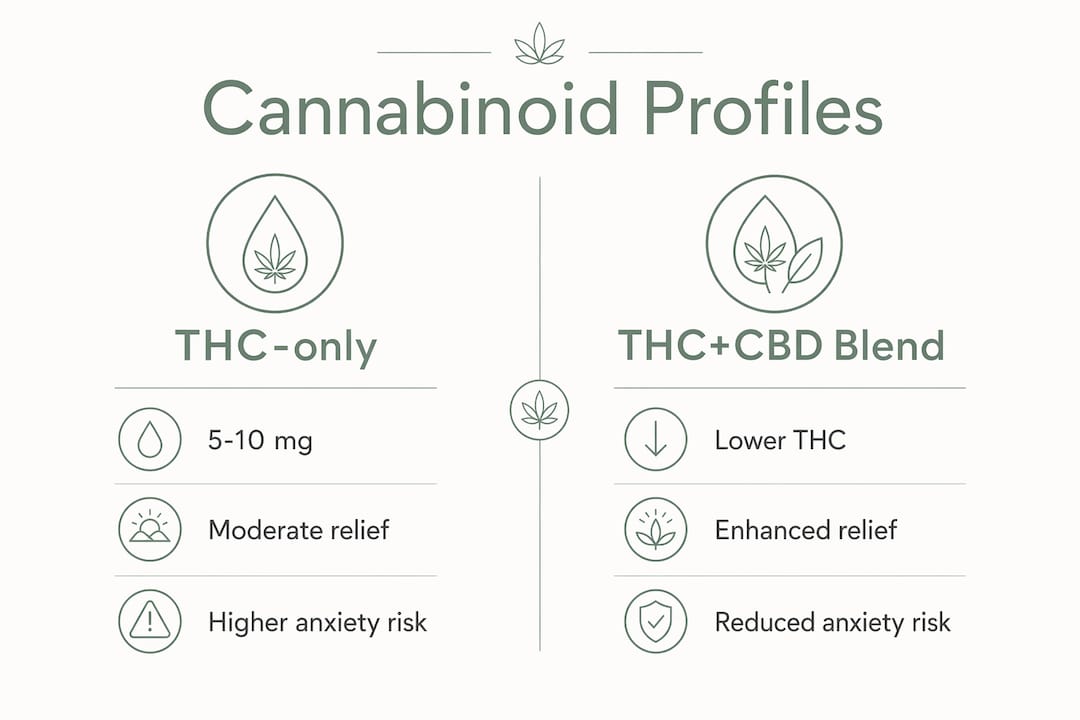
Here is how common beverage formulations compare:
| Formulation | Anxiety reduction potential | Risk of anxiogenic effect |
|---|---|---|
| THC-only (5 to 10 mg) | Low (approx. 7.8% in studies) | Higher, especially above 7.5 mg |
| THC + CBD balanced | High (approx. 39.5% in studies) | Lower due to CBD modulation |
| CBD-dominant (low THC) | High (approx. 34.8% in studies) | Lowest overall |
Most THC beverages on the market contain 5 to 10 mg THC per serving, with some proposed state regulations, such as Florida’s proposed 0.4 mg per serving cap, pushing the market toward much lower doses. This regulatory pressure actually aligns with the research. Lower per-serving doses reduce the risk of crossing into the anxiety-producing range.
When comparing products, look beyond the THC milligram count:
- Check the CBD to THC ratio. A 1:1 or higher CBD ratio offers better anxiety protection.
- Look for third-party lab testing to confirm actual cannabinoid content matches the label.
- Avoid products with undisclosed terpene profiles. Terpenes like linalool and myrcene have calming properties; limonene can be stimulating.
Pro Tip: Products labeled as calorie-free THC drinks with balanced cannabinoid profiles are often the most practical starting point for anxiety management. They give you dose control without added sugar or calories that can affect how you feel.
Evidence for cannabis treating anxiety disorders remains sparse in clinical research. This does not mean THC beverages cannot help. It means self-awareness and careful product selection matter more, not less.
How to start and manage your THC beverage experience safely
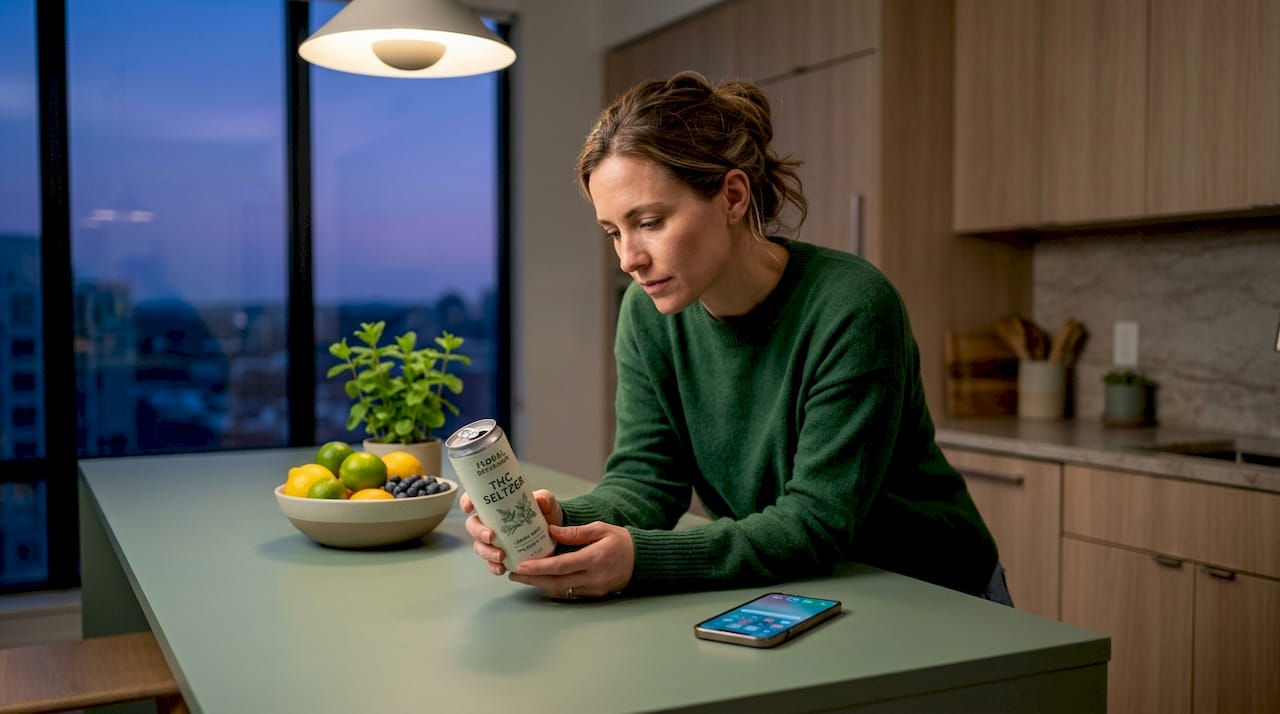
Managing anxiety with THC beverages requires a structured approach, especially because beverages behave differently from inhaled cannabis. The onset is slower and the duration is longer, which creates a real risk of overconsumption if you do not track what you are doing.
Follow these steps to build a safe, effective routine:
- Start at 2.5 mg THC. Choose a product with a low per-serving dose or split a standard 5 mg drink in half. This keeps you well within the calming range of the biphasic curve.
- Wait at least 45 to 90 minutes before consuming more. Edibles and beverages have slower onset and longer duration than inhaled cannabis. Drinking a second serving at the 30-minute mark because you “don’t feel anything” is the most common cause of anxiety spikes.
- Keep a session log. Record the THC mg, CBD mg, time of consumption, and your anxiety level before and after on a simple 1 to 10 scale. Tracking dose and timing is the most reliable way to identify your personal calming window.
- Choose your setting deliberately. A calm, familiar environment reduces baseline anxiety before you even open the can. Crowded or unfamiliar settings raise your starting anxiety level, which means you need less THC to tip into discomfort.
- Skip alcohol entirely. Mixing THC with alcohol amplifies both substances unpredictably. For anxiety management, this combination removes the dose control you are working to maintain.
- Reassess your dose every two to four weeks. Tolerance builds gradually. If you notice the same dose producing less calm or more edge, that is a signal to take a tolerance break rather than increase your intake.
The best time to drink a THC beverage for anxiety relief is typically in the early evening, after your main responsibilities are done and when you have time to let the effects unfold without time pressure.
What to do if THC beverages increase your anxiety
Recognizing that a dose is too high is the first skill to develop. The signs are specific and usually appear within 30 to 90 minutes of consumption.
- Rapid or pounding heartbeat that feels disproportionate to your activity level
- Racing or looping thoughts you cannot redirect
- A sudden sense of dread or feeling that something is wrong
- Heightened sensitivity to sound, light, or social interaction
- Nausea or dizziness alongside mental discomfort
If any of these appear, the response is straightforward. Stop consuming immediately. Drink water, eat a light snack with healthy fats (like peanut butter or avocado), and move to a quiet, comfortable space. Grounding techniques, such as focusing on five things you can see or feel, reduce the intensity of THC-induced anxiety within 20 to 30 minutes for most people.
“If THC is increasing your anxiety rather than reducing it, the dose is almost certainly the issue, not the product category itself.” — RethinkTHC
Switching to a CBD-dominant product is the most practical long-term fix. CBD-predominant options consistently outperform THC-only formats for anxiety reduction without the risk of triggering a panic response.
When to seek professional help: if anxiety symptoms from THC persist beyond a few hours, if you experience chest pain, or if you find yourself using THC beverages daily to manage anxiety that is worsening over time, speak with a healthcare provider. THC beverages work best as one tool in a broader anxiety management approach, not as a standalone treatment.
Key takeaways
Using THC beverages for anxiety requires staying within the low-dose calming range, choosing CBD-inclusive formulations, and tracking your response to avoid the dose overshoot that turns relief into anxiety.
| Point | Details |
|---|---|
| Biphasic dose response | Just 5 mg separates a calming dose from an anxiety-producing one; stay below 7.5 mg THC to start. |
| Cannabinoid blend is decisive | THC+CBD blends reduce anxiety by nearly 40% in studies; THC-only products average just 7.8%. |
| Beverage onset is slow | Wait 45 to 90 minutes before redosing to avoid overconsumption and anxiety spikes. |
| Track every session | Logging dose, timing, and anxiety scores helps you identify your personal calming window. |
| Tolerance narrows your window | Regular use raises the effective dose, increasing the risk of crossing into anxiogenic territory. |
What I’ve learned from watching people get this wrong
I have spent years reading the research on THC and anxiety, and the pattern I see most often is not recklessness. It is impatience combined with a misunderstanding of how beverages work. Someone tries a 10 mg seltzer, feels nothing after 40 minutes, drinks another, and then wonders why they spent the next two hours in a spiral. The beverage format is genuinely different from smoking. The delayed onset is not a flaw. It is a feature that requires a different kind of patience.
The second mistake I see is treating THC milligrams as the only number that matters. Two products with identical THC content can produce completely different anxiety outcomes depending on their CBD content and terpene profile. Comparing products solely on THC mg per serving is misleading. The ratio tells you far more than the raw number.
What actually works, based on everything I have read and observed, is treating your first few sessions as data collection rather than recreation. You are learning how your body responds, not chasing a specific feeling. That mindset shift changes everything. People who approach it that way tend to find their calming dose quickly and stick with it. People who chase the effect tend to overshoot it.
One more thing worth saying plainly: THC beverages are not a replacement for therapy, medication, or other evidence-based anxiety treatments. The research gap in cannabis anxiety treatment is real. These drinks can be a genuinely useful part of your toolkit, especially for situational or social anxiety, but they work best alongside other strategies, not instead of them.
— Adam
Explore Tryfloral’s THC beverages for mindful anxiety relief
Tryfloral is a farm-to-fridge THC beverage brand built around the principle that quality and transparency matter most when you are using cannabis for wellness. Every product starts with clean, farm-sourced ingredients and arrives at your fridge with verified cannabinoid content you can trust.
If you are looking for a starting point, the Harvest Apple THC Seltzer is zero calories, clearly dosed, and designed for a calm, enjoyable experience. For a deeper look at what sets Tryfloral apart from mass-market options, the farm-to-fridge difference page explains the production standards behind every can. When dose control and cannabinoid transparency matter for your anxiety management, knowing exactly what is in your drink is not optional. It is the whole point.
FAQ
What is the best THC dose for anxiety relief?
The research points to doses at or below 7.5 mg THC as the calming range for most adults. A controlled study found that 7.5 mg reduced anxiety while 12.5 mg increased it, so starting at 2.5 to 5 mg and adjusting slowly is the safest approach.
Do THC drinks work faster than edibles for anxiety?
THC beverages absorb slightly faster than solid edibles because liquids move through the digestive system more quickly, but onset still ranges from 30 to 90 minutes. Delayed onset is the primary reason people overconsume and end up with increased anxiety rather than relief.
Are CBD-inclusive THC beverages better for anxiety?
Yes. Studies show that THC+CBD blends reduce anxiety by nearly 39.5% over 30 days, compared to 7.8% for THC-only products. CBD modulates THC’s effect on CB1 receptors, reducing the risk of a panic or anxiogenic response.
Can I use THC beverages daily for anxiety management?
Daily use raises tolerance over time, which shifts your effective calming dose upward and narrows the margin between relief and anxiety. Periodic tolerance breaks and consistent session logging help you stay within a safe, effective dose range rather than gradually escalating.
What should I do if a THC beverage makes my anxiety worse?
Stop consuming, drink water, eat a light snack, and move to a calm environment. Grounding techniques reduce symptoms within 20 to 30 minutes for most people. If symptoms persist or you experience chest pain, seek medical attention and consider switching to a CBD-dominant product for future use.
