

If you’re thinking about ways to switch alcohol to THC drinks, you’re not alone. A growing number of adults are looking for social drinking alternatives that don’t come with a pounding head the next morning, hundreds of empty calories, or that sluggish midweek feeling. THC beverages have moved well beyond novelty status. They’re cold, fizzy, sessionable, and they let you keep the “drink in hand” ritual that makes social occasions feel complete. This guide covers everything you need to know to make the switch confidently, responsibly, and in a way that actually sticks.
Table of Contents
- Key takeaways
- What you need to know before switching from alcohol to THC drinks
- How to make the switch step by step
- Common mistakes when switching to THC beverages
- What to expect after making the switch
- My take on switching to THC beverages
- Try Tryfloral’s zero-calorie THC seltzers
- FAQ
Key takeaways
| Point | Details |
|---|---|
| Research supports reduction | People using THC drinks cut their weekly alcohol intake by roughly half, according to recent studies. |
| Start with a low dose | Begin with 2.5mg to 5mg of THC per serving and wait at least 90 minutes before considering more. |
| Never mix the two | Combining alcohol and THC edibles or beverages can increase impairment well beyond what you expect. |
| Social context transfers well | THC drinks preserve the familiar “drink in hand” ritual, making the switch easier in group settings. |
| Track and adjust | Monitor how you feel over the first two to four weeks and adjust your dose or timing as needed. |
What you need to know before switching from alcohol to THC drinks
Before you swap your first beer for a cannabis-infused seltzer, it helps to understand what you’re actually working with. THC beverages are not alcohol with a different label. They work through a different mechanism, hit your body on a different timeline, and require a different mindset around dosing.
The basics of THC dosing in beverages
Most commercially available THC drinks contain between 2.5mg and 10mg of THC per serving. Microdosing, typically 2.5mg to 5mg, is where most beginners start. At those levels, the effect is mild: a light relaxation, a bit of social ease, and none of the sedation that higher doses can bring. The key difference from alcohol is timing. A beer hits you within 15 to 20 minutes. A THC beverage, because of how it moves through your digestive system, can take 30 to 90 minutes to reach full effect depending on the formulation and whether you’ve eaten recently.
Legal considerations you can’t skip
THC beverages are legal in many states, but not all. Before you buy, check your state’s current laws around hemp-derived THC products (Delta-9 THC from hemp is federally legal under the 2018 Farm Bill if it meets specific thresholds) versus state-regulated cannabis beverages. Laws change, and the rules around purchasing, possession, and consumption vary widely. Buying from a reputable brand that provides clear labeling and third-party lab testing is the safest approach.
Here are the foundational things to get straight before you begin:
- THC level per serving: Look for products clearly labeled with milligrams of THC per can or serving.
- Onset time: Unlike alcohol, THC beverages may take up to 90 minutes to peak. Patience matters.
- Your tolerance: If you’re new to cannabis, your sensitivity is higher. Start lower than you think you need.
- State legality: Confirm what’s legal where you live and where you plan to drink socially.
- Health conditions and medications: Talk to your doctor if you take medications that interact with cannabinoids.
Research from the University at Buffalo found that 58.6% of cannabis beverage users substitute cannabis for alcohol, compared to 47.2% for other cannabis users. The substitution is happening, and it’s driven largely by the social similarity of having a drink in hand.
Pro Tip: If you’re new to THC drinks, try your first one at home on a calm evening before testing them in a social setting. You’ll have a much better read on your personal response before the stakes are higher.

How to make the switch step by step
Making this transition work long-term is less about willpower and more about setting yourself up with the right approach from day one.
-
Choose your first THC drink carefully. Look for a beverage with a clearly labeled dose of 2.5mg to 5mg THC, zero or low calories, and a flavor you’d genuinely enjoy. Reading the understanding THC drinks guide can help you match the right product to your preferences.
-
Start with one serving and wait. This is the rule most people ignore and later regret. Drink one serving, then wait at least 90 minutes before deciding whether you want more. The timeline for THC beverages differs significantly from alcohol, and impatience leads to overconsumption.
-
Replace the ritual, not just the drink. A lot of what makes alcohol feel necessary at social events is the ritual: the glass, the sip, the act of participating. THC seltzers preserve that social ritual while reducing alcohol’s negative effects. Pour your THC drink into a glass. Take your time with it. The familiar feeling transfers more than you’d expect.
-
Keep a short log for the first two weeks. Note the dose, time of consumption, what you ate beforehand, and how you felt at 60 and 90 minutes. This is the fastest way to find your personal sweet spot without overshooting it.
-
Plan for social pressure. At gatherings, people may offer you a beer before you get a chance to reach for your own drink. Have a line ready. “I’m good, I’ve got my own” works fine. You don’t owe anyone an explanation.
-
Avoid alcohol entirely on the same occasion. This isn’t a suggestion to be cautious. Combining alcohol and THC edibles raises your impairment in ways that are difficult to predict, especially when the THC hasn’t peaked yet when you take your first sip of alcohol.
-
Adjust based on what you learn. After two to four weeks, look at your log. If you’re consistently undershooting or overshooting your desired effect, adjust your dose by 2.5mg in either direction and track again.
Pro Tip: Eating a light snack before your THC drink, rather than drinking on a completely empty stomach or after a heavy meal, tends to produce the most consistent and predictable onset.
Common mistakes when switching to THC beverages
Knowing what not to do can save you a rough night and a lot of second-guessing.
-
Mixing alcohol and THC on the same occasion. This is the most common and most consequential mistake. Driving impairment from cannabis plus alcohol can exceed what either substance produces alone. Even if you’re not driving, the combined effect increases discomfort, anxiety, and the likelihood of overconsumption. Keep them separate.
-
Treating THC drinks like alcohol in terms of speed. People pour a second or third drink before the first has peaked because they’re used to alcohol’s faster timeline. Alcohol effects begin within about 30 minutes. THC edibles and beverages can peak at 90 minutes or beyond. That gap is where people get into trouble.
-
Choosing too high a dose for your first time. A 10mg drink feels manageable to someone with cannabis experience. To a first-timer, it can feel overwhelming. Begin low. You can always have more next time.
-
Going in without a plan for social situations. Showing up to a party without your own THC drink means you’ll be offered alcohol before you’ve thought about your response. Bring your own beverages. It’s that simple.
-
Expecting the exact same feeling as alcohol. THC creates a different kind of ease. It doesn’t depress your central nervous system the same way. The buzz is lighter, more cognitive, and easier to manage once you know your dose. Go in with curiosity, not a checklist.
“Switching matters more than combining. The data consistently shows that people who replace alcohol with cannabis beverages do better than those who use both together.” — Adapted from Brown University research on cannabis and alcohol
If you feel anxious or uncomfortable after consuming a THC drink, move to a calm space, drink water, and remember the feeling is temporary. It will pass. If symptoms feel serious, contact a medical professional.
What to expect after making the switch
Here’s what the research actually shows, and what you’re likely to experience in real life.
| Outcome | Before THC drinks | After switching |
|---|---|---|
| Weekly alcohol intake | ~7 drinks per week | ~3.4 drinks per week |
| Next-day energy | Frequent hangovers | Reported improvements |
| Calorie intake from drinks | 150 to 200+ calories per drink | 0 calories (with THC seltzers) |
| Social drinking participation | Alcohol-dependent | Maintained with THC alternatives |
| Urge to drink alcohol | Moderate to high | Reduced after THC use |
People who switched to cannabis drinks cut their weekly alcohol consumption from an average of 7.02 drinks to 3.35 drinks. That’s a reduction of roughly 52%, and it happened without people reporting that they felt deprived socially. The “drink in hand” experience carries over.
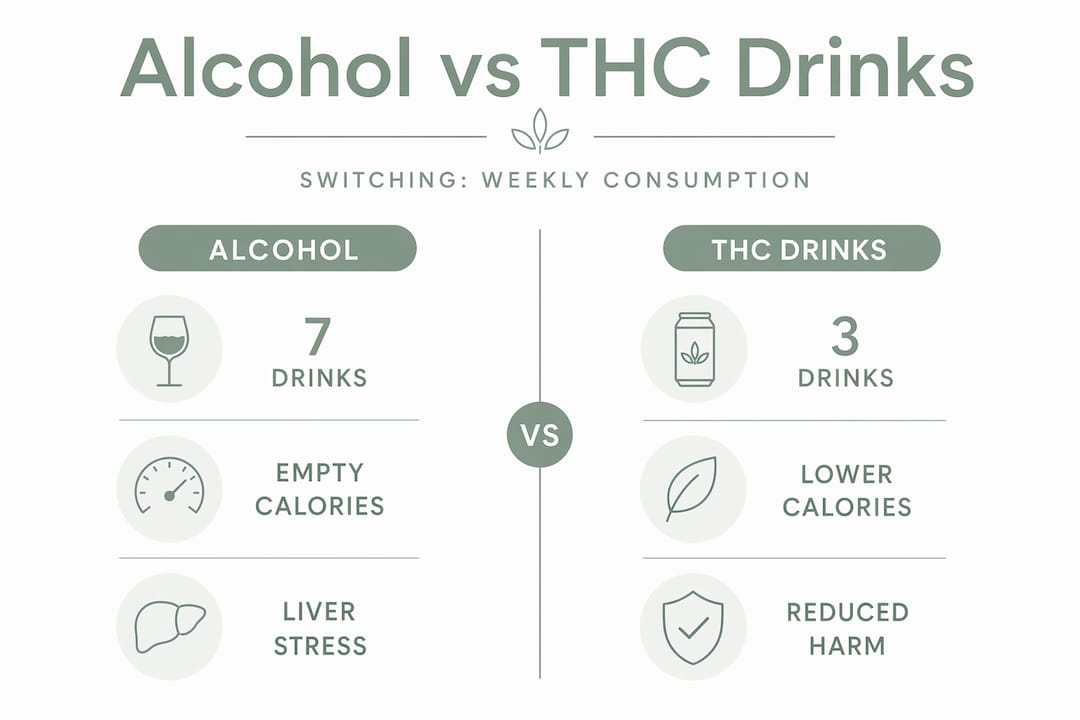
From a health perspective, fewer alcohol drinks means fewer empty calories, less liver stress, and a meaningful reduction in alcohol-related risk over time. THC beverages with zero calories, like most THC seltzers, replace alcohol’s calorie load entirely. You can read more about what to expect physically in the next-morning effects guide from Tryfloral.
The social dimension holds up, too. Learning how to build an alcohol-free social life with THC drinks is easier than most people expect. The act of drinking socially is largely preserved. What changes is how you feel the next morning.
My take on switching to THC beverages
I’ve followed this space closely enough to have a clear opinion: the people who succeed at switching from alcohol to THC drinks are the ones who treat it as a substitution, not a supplement. What I’ve seen repeatedly is that people who try to use cannabis beverages on top of alcohol, thinking they’ll drink a little less of each, end up consuming more overall and feeling worse. The benefit comes from replacement, not addition.
What I also find genuinely interesting is the harm reduction angle. The research from the University at Buffalo frames cannabis beverages as harm reduction because they preserve the social ritual while reducing alcohol exposure. That framing resonates with me. Most adults don’t drink because they love alcohol specifically. They drink because it’s the social medium. THC beverages can fill that role with fewer downsides.
My honest advice: give it four weeks before you decide it’s working or not. Your first couple of sessions will involve figuring out dosing. By week three, most people have found a rhythm. The mistake is quitting after one session that felt off. Adjust and try again.
— Adam
Try Tryfloral’s zero-calorie THC seltzers
If you’re ready to make the switch, Tryfloral makes it easy with a farm-to-fridge line of THC seltzers that are genuinely built for social drinking. Each can is zero calories, made with natural ingredients, and clearly dosed so you always know exactly what you’re getting. The Harvest Apple THC Seltzer and the Tropical THC Seltzer are two crowd favorites that sit comfortably in your hand at any gathering, taste great straight from the fridge, and deliver a mild, manageable buzz without the next-day regret. Start with one can, take your time, and see how it fits into your social routine. Please enjoy responsibly. You must be 21 or older to purchase.
FAQ
How much THC should I start with when replacing alcohol?
Start with 2.5mg to 5mg of THC per serving. Wait at least 90 minutes before considering a second serving, as THC beverages take longer to peak than alcohol.
Can I drink alcohol and THC beverages on the same night?
No. Combining alcohol and THC significantly increases impairment in unpredictable ways. Clinical research shows the combined effect can exceed the impairment of either substance alone.
Do THC drinks actually reduce alcohol consumption?
Yes. Research from the University at Buffalo shows that people who switched to cannabis beverages reduced their weekly alcohol intake by approximately 52%, going from about 7 drinks per week to just over 3.
Are THC beverages legal everywhere in the US?
No. Legality varies by state. Hemp-derived Delta-9 THC beverages that meet federal thresholds are legal in many states, but you should check your local laws before purchasing or consuming.
How long does it take to feel the effects of a THC drink?
Most people feel the effects of a THC beverage within 30 to 90 minutes, depending on the formulation, body weight, and whether they’ve eaten. This is significantly slower than alcohol, which typically begins to take effect within 15 to 30 minutes.
