

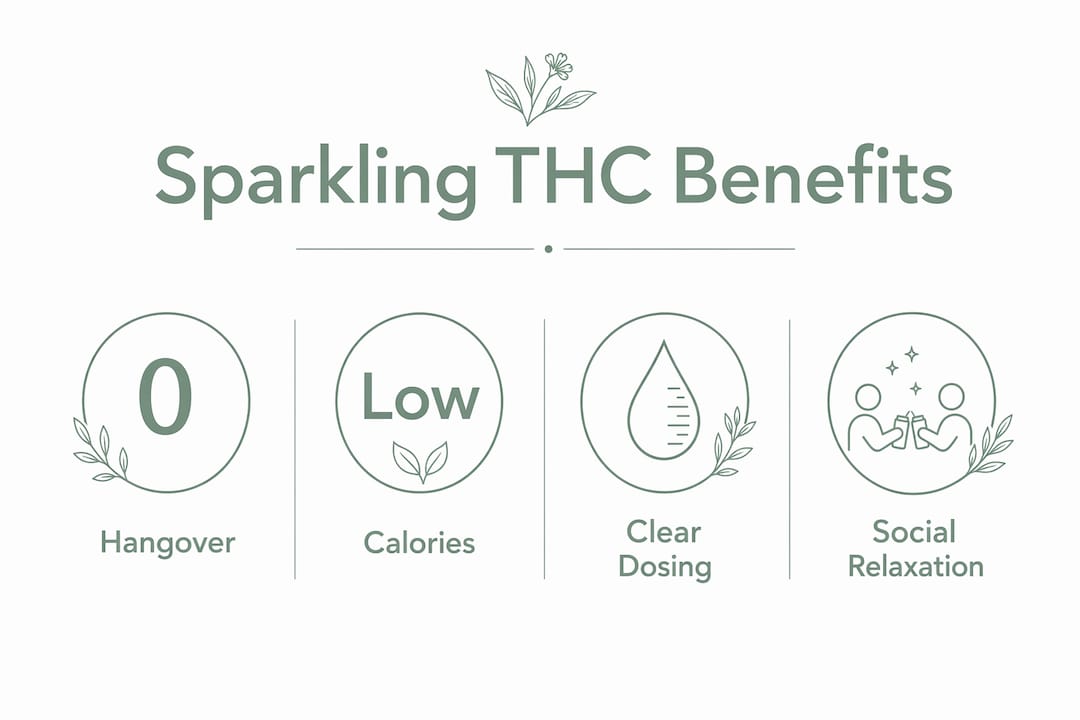
Women and Gen Z are choosing sparkling THC water for a clear set of reasons: fewer calories, predictable low-dose relaxation, no hangover, and the ability to hold a drink at a social gathering without the stigma or health toll of alcohol. The top drivers, according to women who’ve made the switch, include better sleep, clear mg-per-can dosing, and the simple pleasure of a ritual drink that doesn’t wreck the next morning. Dr. Staci Gruber, an associate professor of psychiatry at Harvard Medical School who directs the MIND Program at McLean Hospital, notes that people are leaning into cannabis drinks as part of the “Cali sober” trend, seeking relaxation without alcohol’s downsides. Tryfloral backs every product with lab-tested Certificates of Analysis (COAs) so you know exactly what’s in the can.
Quick safety note: Always start with a low dose, wait at least 45–60 minutes before having more, verify the product’s COA, and confirm it’s legal in your state before purchasing.
Table of Contents
- Why drinking culture is shifting toward sober curiosity
- How sparkling THC water actually works and what it feels like
- Practical benefits women report when switching from alcohol
- What to check for: safety, labeling, COAs, and legal status
- How to pick a sparkling THC water and use it responsibly
- Functional formulations and the farm-to-fridge difference
- Key Takeaways
- Why this trend matters more than most people realize
- Try a tested option from Tryfloral
- Useful sources
Why drinking culture is shifting toward sober curiosity
Women and Gen Z aren’t just drinking less alcohol. They’re actively replacing it with something that fits their wellness priorities. Survey data shows women represent a large and growing share of frequent cannabis consumers, with curiosity and alcohol alternatives ranking among the top reasons for trying hemp beverages. That’s not a niche trend. It reflects a real, broad shift in how a generation thinks about socializing and self-care.
The sober-curious movement sits at the center of this. Dry January became a cultural moment, then a year-round conversation. Fitness culture reinforced it: alcohol disrupts sleep, slows recovery, and adds empty calories. Cannabis beverages stepped into that gap with a format that looks and feels like a social drink but operates on a completely different physiological track. Female-led brands pushed the category forward by designing products with approachable packaging, clean labels, and messaging that spoke directly to wellness-minded women rather than the traditional cannabis consumer.
The sober-curious movement has created real market momentum. Low-dose THC beverages, typically low-dose THC beverages are now positioned squarely as social alcohol alternatives, are now positioned squarely as social alcohol alternatives, and women are both the primary buyers and the primary drivers of product design in the category.
How sparkling THC water actually works and what it feels like
At a low dose, sparkling THC water produces mild, manageable relaxation. You feel a gentle social buzz, a slight mood lift, and a reduction in tension. You stay clear-headed. That predictability is one of the biggest draws for women who’ve had unpredictable experiences with alcohol or traditional edibles.
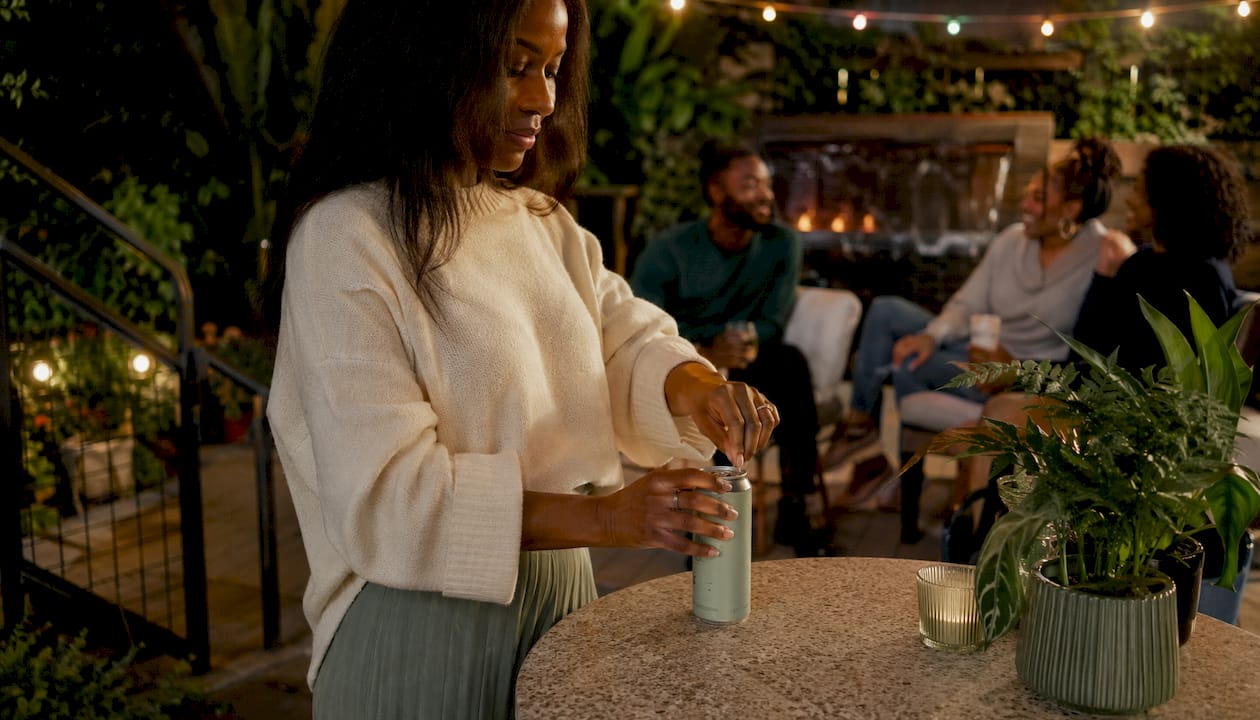
The technology behind it matters. Most quality THC beverages use nano-emulsification, a process that breaks oil-based THC into microscopic particles that disperse evenly in water. Because the particles are so small, they absorb through the soft tissues of your mouth and stomach lining before full digestion kicks in. According to Dr. Gruber, some people feel effects within 15–20 minutes, which is significantly faster than a gummy or brownie that must be digested and processed through the liver (typically 30–90 minutes). For format differences between still waters and seltzers, the onset timing is essentially the same.
| Format | Typical THC dose | Calories | Onset | Peak/Duration |
|---|---|---|---|---|
| THC still water | 2–5 mg | 0–15 | 15–30 min | 1–3 hours |
| THC sparkling seltzer | 5–10 mg | 0–60 | 15–30 min | 1–3 hours |
| Traditional edible | 5–10 mg | Varies | 30–90 min | 2–6 hours |
What to expect by timeframe:
- 0–15 minutes: Little to nothing; resist the urge to have another can
- 15–45 minutes: Onset begins, mild warmth or mood lift
- 45–90 minutes: Peak effects at low doses; social, relaxed, clear
- 1–3+ hours: Gradual taper; most people feel normal within 3 hours at 5 mg
Side effects to watch for, especially if you’re new:
- Increased heart rate or blood pressure
- Mild anxiety or unease (more common at higher doses)
- Nausea, particularly if you dose too quickly
- Dry mouth
Practical benefits women report when switching from alcohol
The most meaningful practical benefit is simple: you wake up functional. No headache, no anxiety spiral, no lost morning. For women who track sleep, calories, or workout recovery, that alone is a compelling reason to make the switch.

Alcohol disrupts sleep architecture, suppressing REM sleep even at moderate amounts. THC at low doses doesn’t carry that same disruption for most people, and many women report falling asleep more easily without the restless second half of the night that often follows wine. On the calorie side, a glass of wine runs a moderate number of calories with no nutritional upside. THC seltzers and still-format THC water generally contain fewer calories. For women who are calorie-conscious without wanting to feel deprived at a social event, that math is straightforward.
Hydration is another real difference. Alcohol is a diuretic: it actively removes water from your body. THC doesn’t work that way. Some THC waters include added electrolytes, which makes them genuinely useful for post-workout wind-down rather than counterproductive. Experts frame the swap as harm reduction and social inclusion: women keep the ritual of a drink without the health toll, which fits modern wellness priorities cleanly.
The swap from wine to a low-dose THC seltzer isn’t about giving something up. It’s about getting the social experience without the parts that cost you the next day.
Pro Tip: If you’re substituting a THC seltzer for a glass of wine at dinner, start with a 5 mg can and give it a full 45 minutes before deciding whether you want more. The timing is different from alcohol, and patience is the skill that makes the experience consistently good.
For more on how THC beverages replace wine for mindful drinkers, the behavioral and health reasoning goes deeper than just calories.
What to check for: safety, labeling, COAs, and legal status
Safety in this category varies significantly by product. The short answer: prioritize lab-tested products with a COA and clear mg labeling, and confirm legality in your state before buying. Hemp-derived THC (delta-9 derived from hemp) occupies a different legal space than cannabis-derived THC, and state rules differ widely.
A Certificate of Analysis (COA) is a third-party lab report that tells you the actual THC and CBD content per serving, confirms the absence of pesticides, heavy metals, and solvent residues, and verifies that what’s on the label matches what’s in the can. Any reputable brand makes its COAs publicly accessible. If you can’t find one, that’s a reason to choose a different product.
Dr. Staci Gruber warns that cannabis drinks lack standardized federal regulation, making consumer-level COA checks the primary safeguard for product purity and accurate dosing.
Common labeling problems to watch for: missing batch numbers (which means you can’t trace the COA to your specific product), vague serving sizes (“approximately 1 can”), and products that list THC content by the full bottle rather than per serving. Always check that the mg figure on the front of the can matches the COA for that batch.
Pro Tip: Search the brand’s website for “COA” or “lab results” before you buy. If the page doesn’t exist or the reports are undated, shop elsewhere.
Legally, you must be of legal age in your state, and the product must comply with your state’s hemp or cannabis regulations. The FDA has not approved cannabis-infused beverages for medical use and has noted that THC and CBD products may pose risks for people who are pregnant, breastfeeding, or taking certain medications. This article is general information, not medical or legal advice. Confirm current rules with your state’s cannabis regulatory authority or a qualified healthcare provider for your specific situation.
How to pick a sparkling THC water and use it responsibly
Choose a product by checking four things first: mg per serving, a linked COA, calorie and sugar content, and the ingredient list for anything unexpected (caffeine, alcohol, artificial sweeteners). Once those boxes are checked, format and flavor are personal preference.
Buying checklist:
- Confirm you meet the legal age requirement in your state
- Check mg per serving (not per bottle or per package)
- Locate the COA and verify it matches the batch number on your can
- Note calories and sugar (zero-sugar options exist in both formats)
- Check for added caffeine or alcohol, which change the experience
- Look for electrolytes if you plan to use it post-workout or for hydration
For responsible dosing guidance specific to women, Tryfloral’s guide covers timing, setting, and how to adjust for individual factors.
Dosing basics:
- Start at 2–5 mg if you’re new to THC beverages
- Wait a full 45–60 minutes before considering a second serving
- Body weight, metabolism, and hormonal cycle can all affect how you respond
- Menstrual phase matters: some women report heightened sensitivity to THC in the luteal phase
- Never mix with alcohol, especially when you’re still learning your response
- If you take prescription medications, check with your pharmacist or doctor first; THC can interact with blood thinners, antidepressants, and sedatives
Pro Tip: Your first time, try half a can (2.5 mg) at home in a comfortable setting before bringing it to a social event. Knowing how your body responds removes the guesswork entirely.
Functional formulations and the farm-to-fridge difference
Functional formulations are where the category is heading, and they’re a big part of why women are staying. Pairing THC with adaptogens, precise CBD ratios, or electrolytes reframes the product from a recreational drink into a wellness tool. A low-dose still water with ashwagandha positions itself as a daily calm supplement. A sparkling seltzer with a 1:1 THC:CBD ratio positions itself as a social drink with a softer edge. These aren’t marketing distinctions; the formulation choices genuinely change the experience.
Industry commentary points to functional formulations — pairing THC with adaptogens or tuned cannabinoid blends — as the pathway that moves beverages from “recreational” to “wellness” positioning.
Female-led brands have been the primary force behind this shift. They brought clean labeling, approachable flavors, and clear mg dosing to a category that previously skewed toward higher-dose, male-coded products. Women-driven product design emphasizes clear mg labeling, low calories, and packaging that preserves the social ritual, and those design choices have materially increased trial and repeat purchase among the sober-curious.
Tryfloral’s farm-to-fridge approach applies this thinking at the production level: sourcing transparency, traceability, and COA access built into the brand rather than bolted on. For a category where product quality varies this much, that kind of supply-chain visibility is a meaningful differentiator. Low-dose options for women span both formats, from daily-use still waters at 2–5 mg to social seltzers at 5–10 mg, so you can match the product to the occasion rather than defaulting to one format.
Key Takeaways
Women choose sparkling THC water primarily for predictable low-dose relaxation, zero hangover, and the ability to participate in social rituals without alcohol’s calorie load or next-day effects.
| Point | Details |
|---|---|
| Core reasons for switching | Lower calories, no hangover, clear mg dosing, and stigma-free socializing drive most women to try THC beverages. |
| Onset and dosing | Effects typically begin within a short time after consumption; start at 2–5 mg and wait 45–60 minutes before re-dosing. |
| Safety check before buying | Always locate the COA, verify the batch number, and confirm the product is legal in your state. |
| Format matters | Still THC water (2–5 mg, 0–15 calories) suits daily use; sparkling seltzer (5–10 mg, 0–60 calories) suits social occasions. |
| Tryfloral’s approach | Tryfloral offers COA-backed, farm-to-fridge THC seltzers with zero calories and clear per-can dosing for women who want a tested option. |
Why this trend matters more than most people realize
The conversation around why women choose sparkling THC water tends to focus on the obvious: fewer calories, no hangover. Those are real benefits. But the deeper shift is about agency. Women have historically been underserved by both the alcohol industry (which marketed to them while ignoring their health concerns) and the cannabis industry (which largely ignored them as a primary audience). THC beverages, done well, are one of the first product categories that actually started with women’s priorities and built backward from there: clear dosing, approachable format, clean ingredients, and a social experience that doesn’t require explaining yourself.
What I’d push back on is the idea that any THC beverage qualifies. The COA requirement isn’t a technicality. It’s the line between a wellness product and an unknown substance in a pretty can. Tryfloral’s farm-to-fridge model is the right framework for this category precisely because it treats transparency as a baseline, not a selling point. If you’re going to make the switch, make it with a product you can actually verify.
Try a tested option from Tryfloral
Tryfloral is built for exactly this: a clean, lab-verified THC seltzer you can bring to a girls’ night, a post-workout wind-down, or a quiet evening without the guesswork. Every can comes with zero calories, clear per-can dosing, and a COA you can actually find.
The Harvest Apple THC Seltzer is a good starting point if you’re new to the format: zero calories, a clean ingredient list, and a dose designed for the sober-curious. If you want to browse the full lineup and compare options by mg and format, the Floral THC Seltzers page has everything in one place, including COA access. Please enjoy responsibly, and only if you’re of legal age in your state.
Useful sources
- Cannabis drinks: How do they compare to alcohol? — Harvard Health
- Potential Risks from Cannabis-Infused Beverages: A Critical Review — PMC / NCBI
- 7 Reasons More Women Are Swapping Wine for THC Seltzers — NotSalmon
- Female-led brands fuel cannabis beverage market explosion — SupplySideFBJ
- Why Women Are Swapping Wine for Weed — Verdi Cannabis
- Women & THC Beverage Insights 2024 — April Pride
- Can Cannabis Drinks Be a Healthy Wellness Addition — The Fresh Toast
- Farm to Fridge Difference — Tryfloral
- How to Enjoy THC Drinks Responsibly: Women’s Guide — Tryfloral
- Low-Dose THC Drinks for Women: Top Examples in 2026 — Tryfloral
